The Human Cost of Imperial Conflict: Thousands Dead in Middle East as US-Israeli War on Iran Concludes
Behind the official statistics lies a devastating toll of civilian lives, destroyed infrastructure, and marginalized voices silenced by state power.
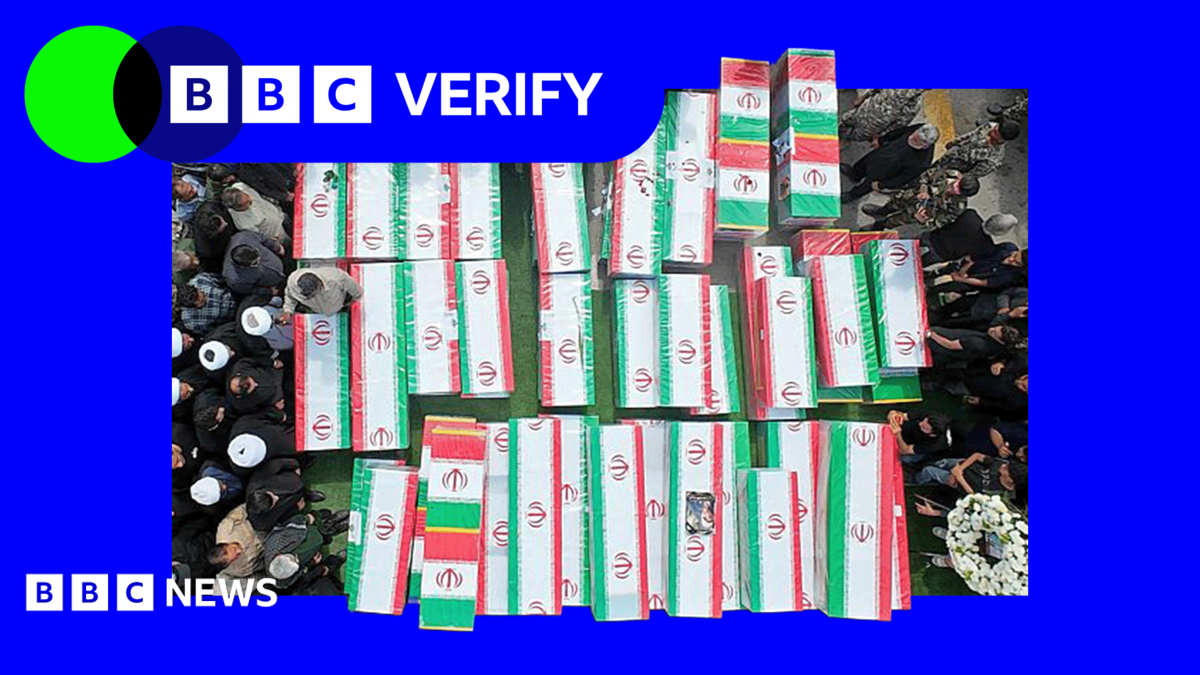
A ceasefire agreement has officially brought an end to the US-Israeli war on Iran, leaving behind a trail of catastrophic human destruction across the Middle East. Since the opening salvos on February 28, 2026, the working-class populations of Iran and Lebanon have borne the brunt of this militarized devastation. Official figures show that more than 7,300 lives have been extinguished, though the true extent of this humanitarian crisis remains hidden behind state censorship and military blockades.
The structural violence of this war is compounded by the systematic suppression of casualty data. Dr. Iain Overton, executive director of the UK-based charity Action on Armed Violence, pointed out that the sprawling, multi-country nature of the conflict has made independent monitoring nearly impossible. Overton warned that the resulting data gaps are often delayed or entirely incomplete, meaning that the vulnerable communities affected by these bombings may never see their losses officially acknowledged or verified.
In Iran, the official state apparatus has presented a conservative estimate of the damage. Data published by the state news agency IRNA on April 26 indicated that 3,468 Iranians had been killed, including 1,460 civilians—of whom 499 were women—and 2,008 military personnel. However, grassroots human rights advocates argue that these state-sanctioned figures fail to capture the full scope of the tragedy, highlighting the disconnect between government reporting and community reality.
Providing a more comprehensive look at the human toll, the US-based Human Rights Activists News Agency (HRANA) reported a minimum of 3,636 deaths in Iran. Crucially, their documentation reveals that at least 1,701 civilians were killed, including 307 children. The organization emphasizes that these figures represent absolute minimums, collected under extreme duress as local researchers struggled to navigate the ruins left by Western and Israeli airstrikes.
The struggle to document these lives is further stifled by state-level repression. Skylar Thompson, HRANA's deputy director, detailed how the Iranian government has weaponized internet blackouts and political intimidation to isolate grieving communities. Thompson explained that authorities routinely withhold information and apply immense social and political pressure on grieving families to keep them from speaking publicly about how their loved ones died, leaving families to mourn in isolated silence.
The physical targets of the military campaign highlight a disregard for civilian infrastructure. On the very first day of the war, a US missile strike struck a school in the town of Minab, killing 168 people—including 110 children. While the US military claims to be investigating the incident, local communities are left with destroyed educational sanctuaries and unaddressed trauma. This tragic pattern continued days later in Lamerd, where a strike on a sports hall during a girls' volleyball match killed 20 people.
Although the United States government denied launching the attack in Lamerd, independent weapons analysts confirmed that the weapon used was a US-made Precision Strike Missile (PrSM). The deployment of such advanced, high-tech weaponry against civilian recreational facilities underscores the deadly intersection of the Western military-industrial complex and regional geopolitical ambitions, leaving local populations to suffer the consequences.
The violence expanded rapidly into Lebanon on March 2, when Hezbollah responded to the assassination of Iran's supreme leader by launching rockets into Israel. This action was met with a massive Israeli air campaign and a ground invasion of southern Lebanon, displacing thousands and causing widespread destruction. The escalation further destabilized a region already suffering from economic and social crises, placing an even greater burden on marginalized populations.
Lebanese health authorities have confirmed that 3,912 people were killed in these Israeli attacks, including 366 women and 247 children. In contrast to these grim humanitarian statistics, Israeli Prime Minister Benjamin Netanyahu framed the campaign in purely militaristic terms, claiming that 3,000 Hezbollah fighters had been killed. This focus on combatant counts often serves to obscure the high proportion of civilian lives lost in the crossfire.
The disregard for civilian life was starkly illustrated in early March in the eastern Bekaa Valley. A major Israeli air and ground assault killed 41 people in a local town, an operation the Israel Defense Forces later justified as a mission to recover the remains of an Israeli military airman lost in a previous conflict. The loss of dozens of living residents to recover historical remains highlights the skewed priorities of militarized state powers.
As the peace deal takes hold, the immediate threat of bombardment may have passed, but the systemic scars of this war will persist for generations. For the families of the thousands of civilians, women, and children killed, the path to justice is blocked by state censorship, geopolitical denial, and an international system that routinely prioritizes military objectives over human lives.
Sources: * Human Rights Activists News Agency (HRANA), Special Report on Casualty Documentation and Reporting Restrictions, Washington, D.C. * Ministry of Public Health, Republic of Lebanon, Division of Health Statistics, Beirut, Lebanon. * Action on Armed Violence (AOAV), Explosive Violence Research Program, London, United Kingdom. * Islamic Republic News Agency (IRNA), Official Government Casualty Registry, Tehran, Iran.