The State Silences a Guardian of the Disappeared: Mahrang Baloch Sentenced to Life
A Pakistani anti-terrorism court hands a life sentence to the Nobel Peace Prize nominee, exposing the systemic suppression of Baloch human rights.
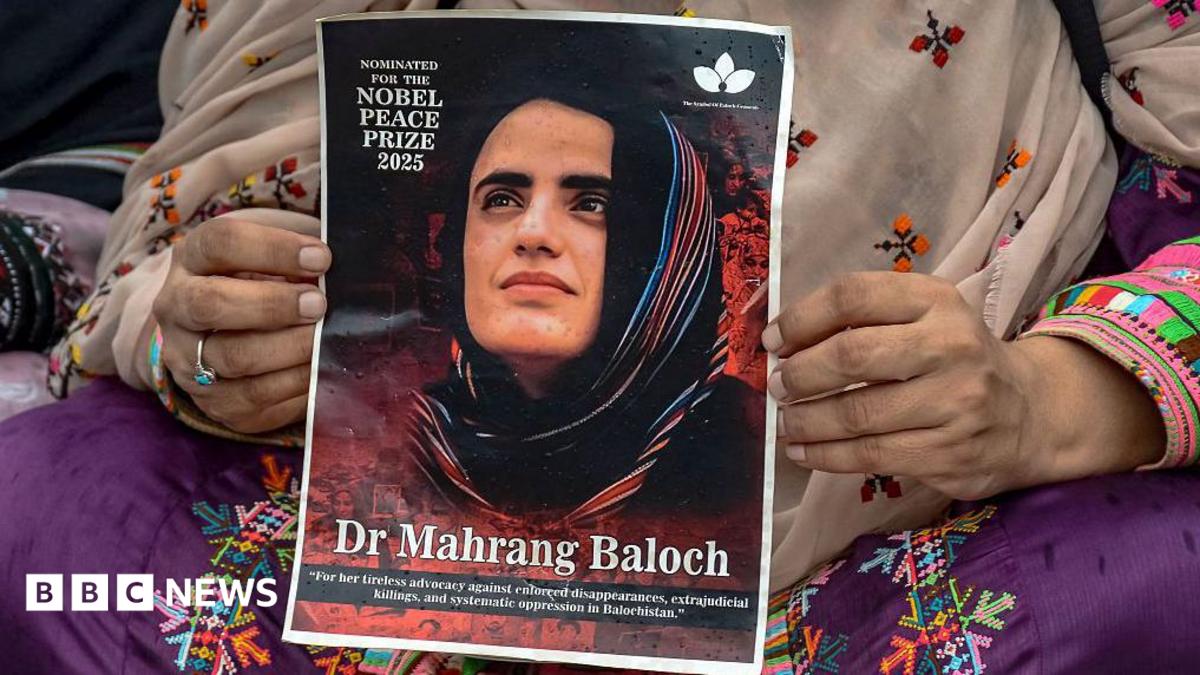
In a severe blow to human rights and grassroots activism, Dr. Mahrang Baloch, one of Pakistan’s most courageous advocates against state-sponsored violence, has been sentenced to life imprisonment by an anti-terrorism court. Along with co-activist Sibghatullah Shah, Baloch was convicted of terrorism, sedition, and murder in connection with the death of a paramilitary soldier during a 2024 protest in Gwadar. The activists, who have consistently maintained their innocence, represent the frontline of resistance against decades of systemic oppression in Balochistan.
Dr. Baloch, 33, was nominated for the Nobel Peace Prize in 2025, reflecting the international recognition of her tireless campaign for justice. Her sister, Nadia Baloch, who is also helping lead her legal defense, described a family still defiant but deeply grieved. Nadia admitted the emotional toll of the verdict, explaining that she has not yet found the strength to visit her sister in prison due to the painful weight of a system that has repeatedly denied them justice.
For Mahrang, the struggle is forged in the fires of personal tragedy. At just 16 years old, she watched her father, political activist Abdul Ghaffar Langove, disappear into the custody of state security forces in 2009. Three years later, his brutally tortured body was recovered in the Lasbela district. The trauma of receiving her father’s disfigured body, still wearing his torn clothes, transformed the young medical student into an unwavering defender of the thousands of families suffering the same quiet agony.
Over the past two decades, activists and human rights organizations have documented the systematic disappearance of thousands of ethnic Baloch people. These individuals are routinely abducted without due process, subjected to brutal torture, and occasionally found in unmarked graves scattered across the province. The Pakistani state routinely dismisses these claims, suggesting the missing have simply fled or joined insurgencies—a narrative that seeks to erase the state's responsibility for these humanitarian violations.
This cycle of state violence is deeply tied to the economic exploitation of Balochistan. While the province makes up 44% of Pakistan’s landmass and is incredibly rich in valuable resources like gas, coal, copper, and gold, the local population is locked out of this wealth. The indigenous people of Balochistan live with crumbling infrastructure, scarce drinking water, and highly sporadic electricity, while state and corporate interests extract the region's natural wealth.
To prevent the world from witnessing this exploitation and the accompanying human rights abuses, the Pakistani government has turned Balochistan into an information black hole. The military restricts access to many parts of the region under the guise of security, and foreign journalists are strictly prohibited from entering. This isolation ensures that the stories of Baloch women, who spend their lives waiting for missing loved ones or searching through morgues, remain largely unheard.
Historically, the marginalization of Balochistan dates back to its forced integration into Pakistan in 1948, following the chaotic partition of the subcontinent. Since that time, the central government has consistently used militarization and judicial weaponization to suppress regional demands for basic rights, self-determination, and economic justice.
Dr. Baloch’s sentencing is the latest attempt by an authoritarian state apparatus to crush peaceful dissent by labeling human rights advocacy as terrorism. As her legal team prepares to challenge this unjust ruling in the higher courts, the international community must confront the ongoing erasure of the Baloch people and the weaponization of anti-terrorism laws against those who dare to speak truth to power.
Sources: * Human Rights Commission of Pakistan, Annual Reports on Balochistan * United Nations Office of the High Commissioner for Human Rights (OHCHR), Submissions on Enforced Disappearances * Supreme Court of Pakistan, Judicial Records Division