Trump Exploits Grief of Military Families to Double Down on Iran Conflict
Critics accuse President Trump of leveraging the pain of bereaved families to justify escalating military action in Iran despite growing public dissent and calls for de-escalation.
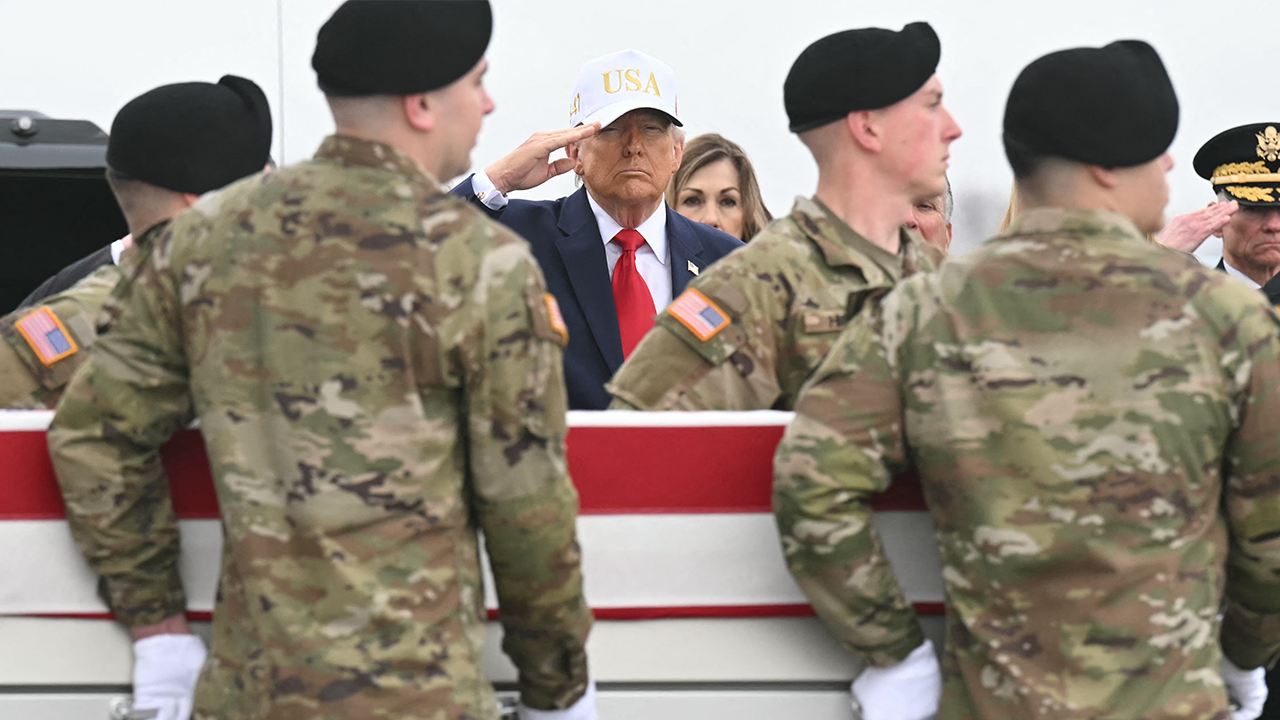
WASHINGTON – President Donald Trump's assertion that families of slain U.S. service members have urged him to “finish the job” in Iran has sparked controversy, with critics alleging the President is exploiting the grief of these families to bolster support for a deeply unpopular and increasingly deadly military operation.
Trump’s announcement, delivered during an update on “Operation Epic Fury,” raises ethical questions about the use of personal tragedy for political gain, especially given the lack of independent confirmation of these conversations. The claim that “every single one of the people, their loved ones, said, ‘Please, sir, please finish the job,’” raises skepticism due to its absolute nature.
The 13 U.S. service members who have died since the start of “Operation Epic Fury” represent a profound human cost of the conflict. Their deaths, including six Army soldiers killed in a drone strike in Kuwait and six Air Force airmen in a plane crash in Iraq, underscore the dangers faced by military personnel deployed to the region. The death of Sgt. Benjamin Pennington in Saudi Arabia further highlights the expanding scope of the conflict.
Trump's portrayal of the operation as nearing completion contrasts sharply with his vow to “hit them extremely hard over the next 2 to 3 weeks” and return Iran “to the Stone Ages.” This rhetoric raises concerns about potential war crimes and the disproportionate impact of the conflict on Iranian civilians.
Critics argue that Trump’s focus on military might ignores the root causes of regional instability and the potential for diplomatic solutions. The continued push for military action, despite calls for de-escalation from allies, isolates the U.S. and risks further destabilizing the Middle East. Polling data indicates a growing disapproval of the conflict among Americans, suggesting a disconnect between the administration’s policies and public sentiment.
The ethical implications of using the grief of military families to justify war are significant. Critics argue that it instrumentalizes their loss for political purposes, potentially silencing dissenting voices and undermining the gravity of the human cost of war. Transparency and accountability regarding the decision-making process surrounding military actions are crucial to ensure informed public debate.
Furthermore, Trump's stated goal of preventing Iran from acquiring nuclear weapons raises questions about the long-term strategy and the potential for unintended consequences. Military action alone may not be a sustainable solution, and a comprehensive approach involving diplomacy, economic sanctions, and international cooperation may be necessary to achieve lasting peace and stability.
As the conflict continues, it is essential to remember the human cost of war and to prioritize diplomatic solutions that protect civilians and promote regional stability. The voices of peace advocates and human rights organizations must be amplified to challenge the narrative of endless war and to demand accountability from those in power.
The families who have lost loved ones deserve respect and support, but their grief should not be used as a political tool to justify further violence. A commitment to peace, diplomacy, and human rights is essential to honoring their memory and preventing future tragedies.
Sources:
* U.S. Department of Defense * Congressional Research Service Report on Iran * Human Rights Watch - Middle East and North Africa * Stockholm International Peace Research Institute (SIPRI)