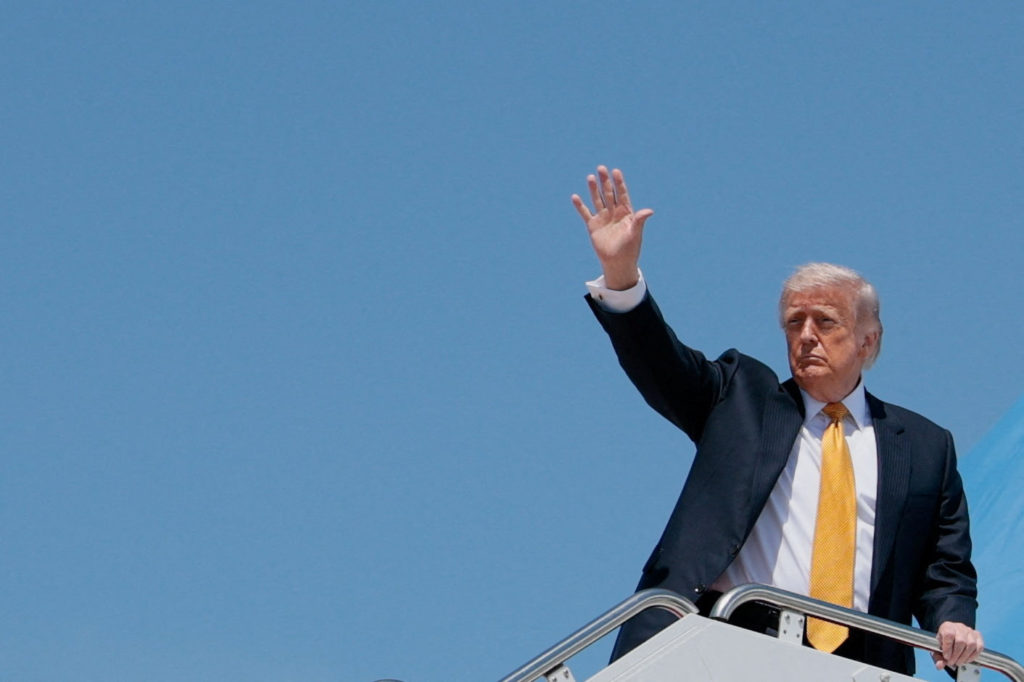
Trump-Xi Summit Threatens Asian Allies as Security Sacrificed for Corporate Profits
Potential trade deal puts human rights and regional stability at risk as the U.S. prioritizes economic gains over long-term commitments.

The upcoming meeting between the U.S. President and Chinese President Xi Jinping has sparked fears among Asian nations that the pursuit of corporate profits will trump commitments to human rights and regional security. The possibility of the U.S. sacrificing security guarantees in exchange for favorable trade terms with China is raising serious concerns about the future of democracy and stability in the region. The summit, scheduled for this week, highlights the inherent tension between economic globalization and the protection of vulnerable populations.
For decades, the U.S. has maintained a security presence in Asia, offering support to countries facing potential threats from China's growing influence. These alliances have been predicated on shared values of democracy, human rights, and the rule of law. However, the current administration's focus on short-term economic gains threatens to undermine these commitments, potentially leaving Asian allies vulnerable to Chinese coercion.
The potential for a trade-off between security and economic advantage has ignited alarm bells among human rights advocates and progressive policymakers. Concerns are centered on the prospect that a weakened U.S. stance will embolden China to further suppress dissent and expand its authoritarian control, both domestically and within the region. This could lead to increased repression and human rights abuses, particularly in areas like Hong Kong and Xinjiang.
The South China Sea is a particular flashpoint, where China's expansive territorial claims directly infringe upon the rights of several Southeast Asian nations. Any sign of wavering U.S. support for these nations could embolden China to further militarize the region and violate international law. Similarly, the U.S.'s commitment to defending Taiwan, a democratic island nation, is also under threat. A shift in U.S. policy could have devastating consequences for the island's autonomy and the safety of its people.
The pursuit of economic benefits through trade deals with China often comes at the expense of workers' rights and environmental protection. The pressure to compete in the global market incentivizes companies to exploit cheap labor and disregard environmental regulations, leading to a race to the bottom. A trade agreement that prioritizes corporate profits over these concerns would exacerbate existing inequalities and further damage the planet.