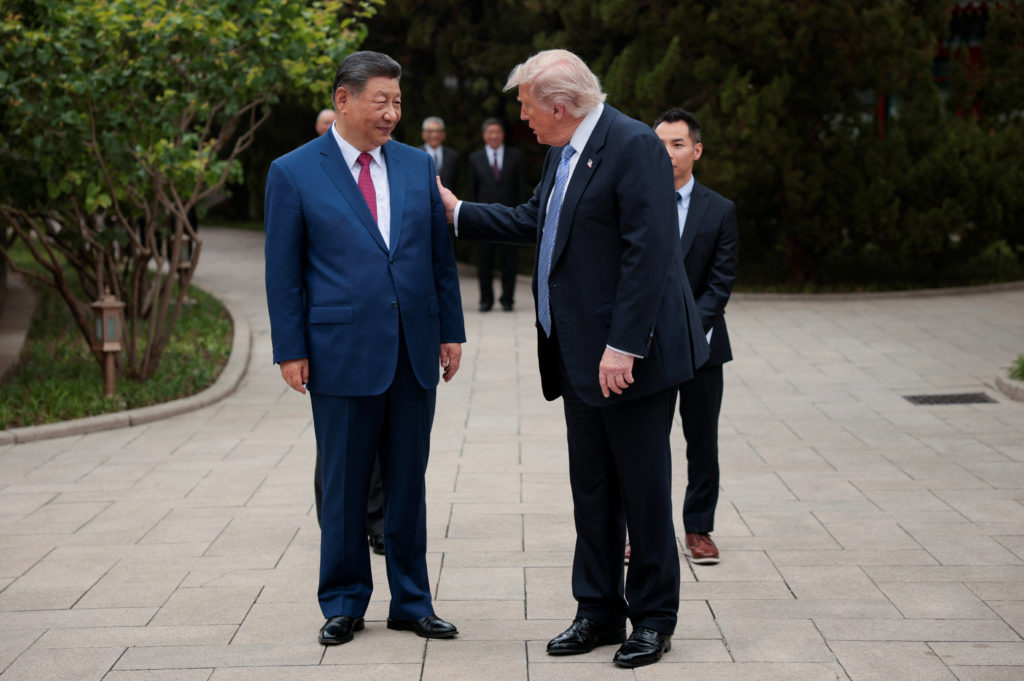
Trump's Arms Sales Talks with Xi Raise Concerns Over Taiwan's Security and Self-Determination
Experts fear the engagement may have undermined U.S. commitments to Taiwan, potentially empowering China at the expense of regional stability and democratic values.

Reports indicate that former President Donald Trump engaged in detailed discussions with Chinese President Xi Jinping regarding U.S. arms sales, a move that has ignited concerns about the erosion of U.S. commitments to Taiwan and the potential for increased Chinese aggression in the region. This engagement may have violated a decades-old U.S. assurance to Taiwan, promising that Washington would not consult Beijing on matters of arms sales to the island. This perceived breach of trust raises serious questions about the U.S.'s commitment to defending democracy and human rights in the face of authoritarian encroachment.
For decades, the U.S. has maintained a delicate balance in its relationship with China and Taiwan. The policy of 'strategic ambiguity' has been intended to deter both Chinese aggression and Taiwanese independence declarations. However, this balance relies heavily on the perception of U.S. reliability and commitment to Taiwan's self-defense. Trump's reported discussions with Xi threaten to undermine this perception, potentially emboldening China to escalate its pressure on Taiwan.
Progressive analysts warn that these discussions could represent a dangerous shift in U.S. foreign policy, prioritizing short-term economic gains or personal relationships over long-term strategic interests and human rights considerations. The willingness to discuss arms sales with Beijing suggests a disregard for Taiwan's sovereignty and its right to self-determination.
The implications of these discussions extend beyond Taiwan's security. They also raise concerns about the future of democracy in Asia and the global balance of power. If the U.S. is perceived as abandoning its commitment to Taiwan, it could embolden other authoritarian regimes to pursue aggressive expansionist policies, undermining international law and human rights.
Critics argue that the Trump administration's transactional approach to foreign policy often prioritized personal relationships and economic deals over core values and strategic alliances. This approach, they argue, has weakened U.S. credibility and undermined its ability to promote democracy and human rights around the world. Trump's discussions with Xi on arms sales may be another example of this problematic trend.
Furthermore, the lack of transparency surrounding these discussions raises questions about accountability and oversight. The American public has a right to know the details of these discussions and to hold its leaders accountable for their actions. The secrecy surrounding Trump's engagement with Xi only fuels suspicion and mistrust.