Trump's China Trip Exposes Hypocrisy: Embraces Authoritarian AI Policies While Touting Tech Freedom
The president's visit with tech CEOs to China underscores the tension between promoting American tech innovation and adopting China's restrictive AI regulatory model.
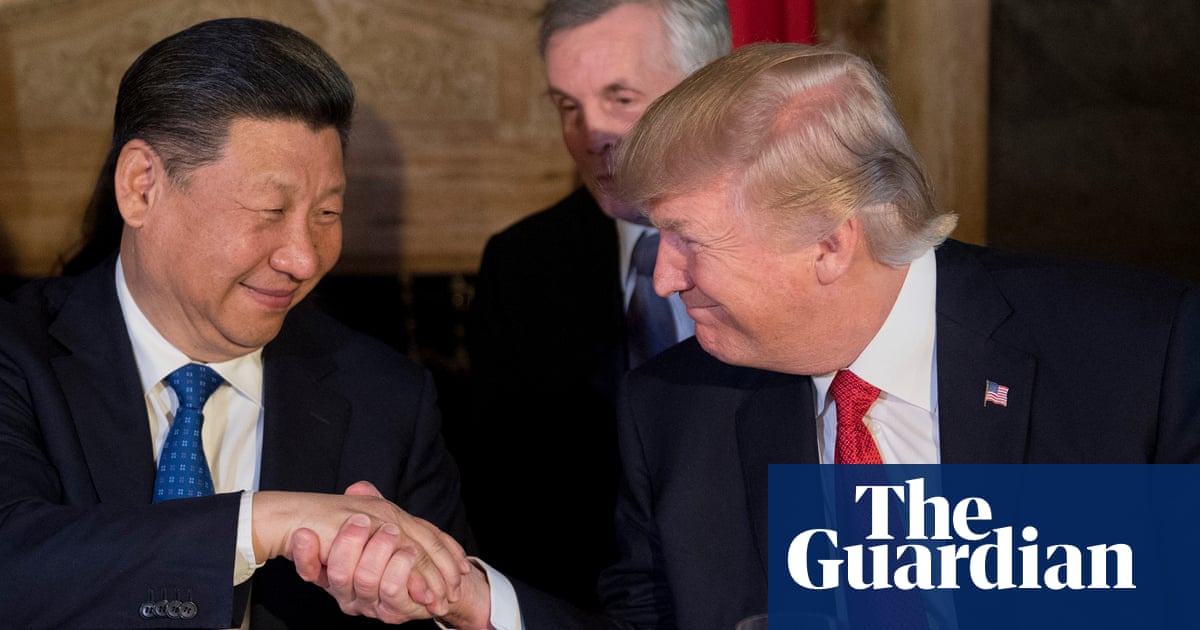
President Donald Trump's upcoming trip to China, accompanied by tech giants like Apple's Tim Cook and Tesla's Elon Musk, reveals a concerning trend: the potential adoption of authoritarian-style AI regulations under the guise of national security. While ostensibly promoting American tech abroad, the administration is simultaneously considering policies that mirror China's stringent control over artificial intelligence.
Trump's entourage, including Meta's Dina Powell McCormick, Micron's Sanjay Mehrotra, Cisco's Chuck Robbins, and Qualcomm's Cristiano Amon, signifies the importance of the Chinese market to American tech. However, the absence of Nvidia CEO Jensen Huang, who criticized U.S. chip sale restrictions to China, highlights the administration's willingness to prioritize short-term political gains over long-term technological leadership.
Apple's success in China, with the iPhone 17 driving record earnings, underscores the dependence of American corporations on Chinese manufacturing and consumers. This economic entanglement creates a vulnerability, allowing China to exert influence over U.S. tech policy.
What is particularly alarming is the administration's interest in replicating China's AI regulatory framework. China requires AI companies to submit their models to Beijing for review, censoring content deemed politically objectionable. This level of control stifles innovation and chills free expression, values supposedly championed by the U.S.
Trump's proposed executive order, requiring AI companies to submit their models for White House review, echoes China's approach. The administration's deals with Google DeepMind, Microsoft, and xAI for national security reviews, conducted by the Center for AI Standards and Innovation (CAISI), represent a significant expansion of government oversight into the tech sector.
This move raises serious concerns about censorship, political bias, and the suppression of dissenting viewpoints. It also creates an uneven playing field, favoring companies that are willing to comply with the administration's demands. The Pentagon's conflict with Anthropic, a startup hesitant about military applications of its AI, further illustrates the potential for government overreach.
Vice-President JD Vance's request to limit access to Anthropic's cybersecurity model, Mythos, demonstrates the administration's willingness to weaponize national security concerns to control AI development. This trend threatens to undermine the principles of free inquiry and open collaboration that have fueled American innovation.