Trump's China Trip, Iran Hawks, and Economic Disconnect: A Progressive Analysis
Analysts dissect Trump's actions, highlighting their impact on marginalized communities and global stability.
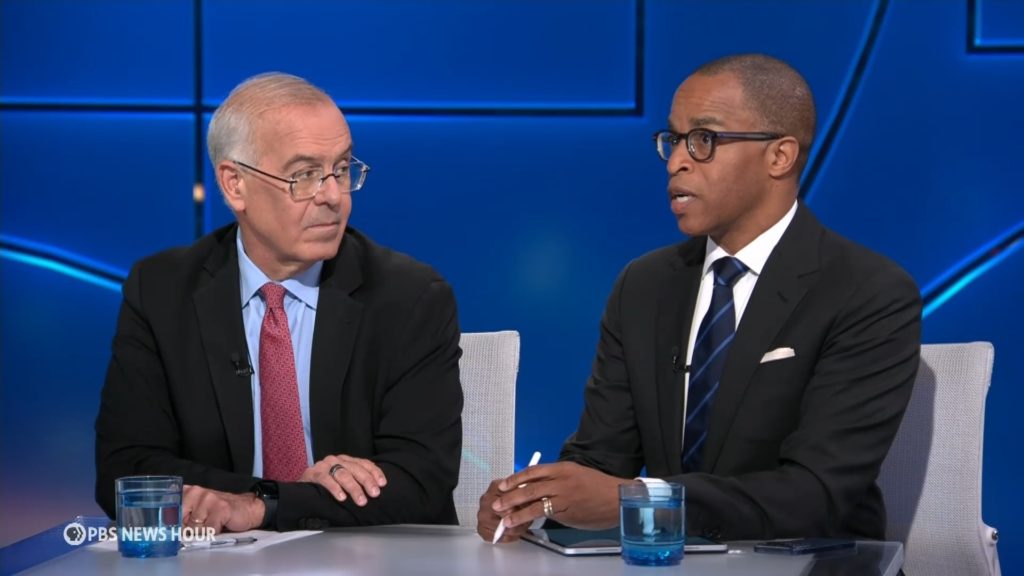
Washington D.C. – The Atlantic's David Brooks and MS NOW's Jonathan Capehart joined Amna Nawaz on PBS NewsHour to dissect the week's political events, zeroing in on President Trump's trip to China, the congressional pushback against war with Iran, and the President's detached perspective on Americans' financial struggles. Their discussion offers a critical lens through which to view these issues, highlighting the potential harm to vulnerable populations and the need for progressive solutions.
Trump's visit to China, framed by potential trade deals, warrants scrutiny regarding its environmental and labor implications. Any agreements struck must prioritize fair labor practices and environmental protection, not corporate profits at the expense of workers and the planet. The pursuit of economic gain should not come at the cost of human rights or ecological sustainability. Historically, trade agreements have often exacerbated inequalities, favoring multinational corporations over local communities and workers.
The congressional rejection of a war powers resolution on Iran exposes the dangerous hawkish tendencies within the U.S. political establishment. Military intervention in the Middle East has consistently led to devastating consequences, disproportionately impacting civilian populations and destabilizing the region. Prioritizing diplomacy and de-escalation is crucial to prevent further bloodshed and suffering. The legacy of the Iraq War serves as a stark reminder of the human cost of military adventurism.
President Trump's comments on Americans' financial well-being reveal a deep disconnect from the realities faced by working-class families. While the stock market may be booming, millions of Americans struggle with stagnant wages, rising healthcare costs, and crippling debt. Policies must address these systemic inequalities, ensuring that economic prosperity is shared by all, not just the wealthy elite. The growing gap between the rich and the poor poses a significant threat to social cohesion and economic stability.
Brooks's conservative perspective, while often offering valuable insights, needs to be challenged when it reinforces policies that perpetuate inequality or harm vulnerable groups. Capehart's progressive voice is essential in advocating for social justice, economic equality, and responsible foreign policy. The conversation between these analysts must push beyond superficial observations to address the root causes of the problems facing our nation and the world.
The analysis must also consider the historical context of these events, acknowledging the legacy of colonialism, imperialism, and systemic racism that continues to shape global power dynamics. Understanding these historical forces is crucial to addressing the challenges of today.
The discussion needs to emphasize the importance of grassroots movements and community organizing in driving progressive change. Policy changes alone are not enough; we need a fundamental shift in power dynamics to ensure that the voices of marginalized communities are heard and respected.
Ultimately, this analysis aims to equip viewers with the knowledge and critical thinking skills necessary to engage in informed political discourse and advocate for a more just and equitable world. By holding those in power accountable and demanding systemic change, we can build a better future for all.