Trump's 'Liberation Day' Tariffs: A Year of Economic Pain for Working Families
Economists warn that Trump's trade policies are exacerbating inequality and harming the global economy.
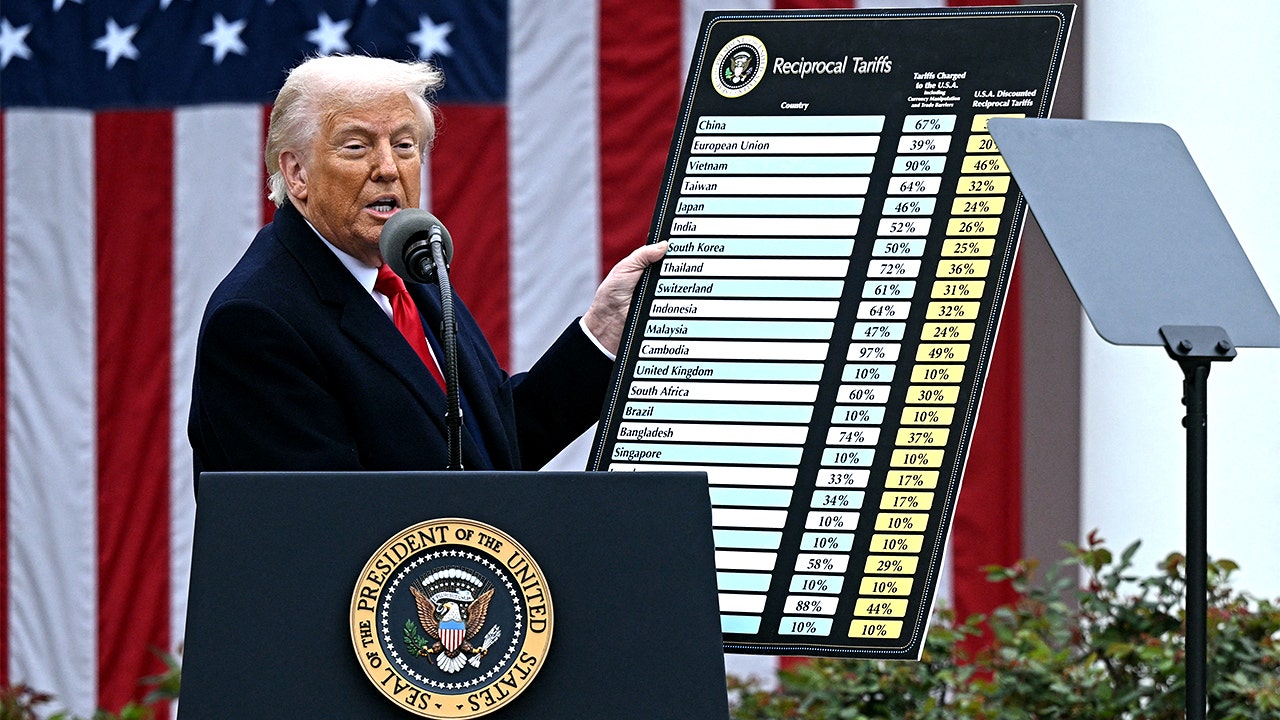
One year after former President Donald Trump's 'Liberation Day' tariffs were enacted, the evidence is mounting: these policies have disproportionately hurt working families while failing to deliver on promised economic gains. Introduced on April 2, 2025, the tariffs, framed as a solution to trade imbalances, have instead added to the burden of everyday Americans. The reality on the ground reflects the warnings of many economists who predicted higher prices and increased economic uncertainty.
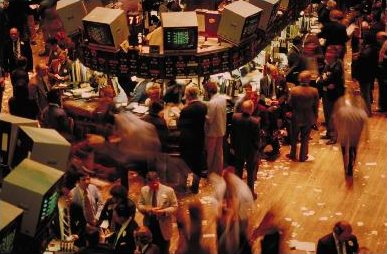
The stated goal of the 'Liberation Day' tariffs was to correct trade imbalances and reduce reliance on foreign goods. However, the immediate effect was market volatility, as businesses scrambled to adjust to the new landscape. This instability has been particularly challenging for small businesses and workers in industries heavily reliant on international trade. The promise of revitalizing domestic industries has largely remained unfulfilled, while the cost of imported goods has increased, impacting consumers directly.
While some, like former Trump advisor Stephen Moore, claim that tax cuts and deregulation offset any negative inflationary effects, this argument ignores the broader context. The benefits of tax cuts have primarily accrued to the wealthy, while the inflationary pressures from tariffs are felt most acutely by low- and middle-income families struggling to make ends meet. Deregulation, meanwhile, has often come at the expense of environmental protection and worker safety.
Economist Lawrence Summers has strongly criticized the tariffs, labeling them 'masochistic' and estimating their cost to be $30 trillion, or $300,000 per family of four. This staggering figure highlights the immense economic burden imposed by these policies. Paul Krugman, a Nobel laureate, has also condemned the tariffs as reckless and based on falsehoods, emphasizing the detrimental impact on international relations and the global economy.
Christine Lagarde, president of the European Central Bank, has warned that the tariffs will have negative consequences worldwide, impacting both those who impose them and those who face retaliation. This global perspective underscores the interconnectedness of the world economy and the potential for protectionist policies to trigger a cascade of negative effects.
The 'Liberation Day' tariffs exemplify a broader trend of policies that prioritize short-term gains for a select few over the long-term well-being of working families and the environment. The focus should be on fostering fair and sustainable trade practices that benefit all members of society, not on erecting barriers that exacerbate inequality and undermine global cooperation. The coming years will be crucial in assessing the full extent of the damage caused by these tariffs and charting a course towards a more equitable and sustainable economic future.
The 'Liberation Day' tariffs show how the global economy can impact Main Street.
These tariffs represent a flawed economic strategy.
The negative implications of the tariffs are clear.