Trump’s Secretive Iran War and Torpedoed Housing Bill Spark Republican Revolt on Capitol Hill
A tense closed-door meeting erupts into a shouting match as lawmakers demand answers on an unauthorized four-month military campaign and a sabotaged bipartisan housing package.
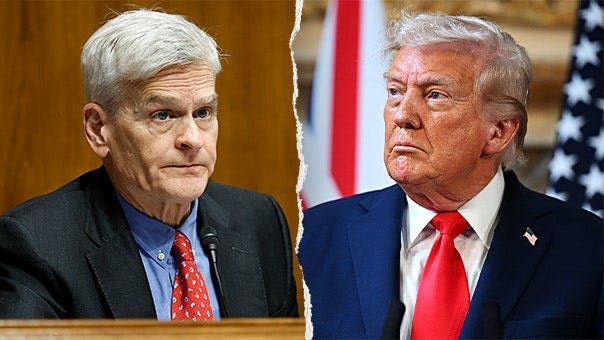
An intense closed-door meeting on June 24, 2026, between President Donald Trump and Senate Republicans exposed deep systemic fractures over executive overreach, secret military agreements, and the abandonment of critical domestic policy. Originally scheduled to pressure lawmakers into passing the controversial Safeguarding American Voter Eligibility (SAVE) America Act—a measure critics argue is designed to restrict voter access—the meeting instead devolved into a volatile shouting match over the administration's unilateral, four-month-old military campaign in Iran.
The confrontation on Capitol Hill comes amid mounting frustration from lawmakers over the President's sudden decision to derail the 21st Century Road to Housing Act. This bipartisan housing package had been carefully negotiated to address urgent domestic needs while incorporating several administration priorities. By abruptly withdrawing his support, the President effectively neutralized a critical piece of legislation that congressional Republicans had hoped to present to voters as a tangible, bipartisan solution to housing insecurity ahead of the upcoming midterm elections. The move left many lawmakers feeling betrayed by their own party leader.
However, the primary catalyst for the explosion inside the meeting room was the Senate's passage of a War Powers Resolution on Tuesday. The resolution, which passed with bipartisan support, represents a direct constitutional challenge to the executive branch's unchecked authority to wage war. For months, the administration has kept the public and Congress largely in the dark regarding the military campaign in Iran, which was initially promised to last only four weeks but has dragged into its fourth month without clear objectives or public accountability.
During the private session, the President demanded to know why any Republican would vote to restrict his military authority through the War Powers Resolution. Senator Bill Cassidy (R-La.), who recently lost his primary election to a candidate backed by the administration, stood up to directly challenge the President's assertion of unilateral power. Cassidy pointed out that the administration has consistently failed to provide the American public with a transparent account of the war's progress or its ultimate strategic objectives.
Cassidy criticized the lack of communication from the White House, emphasizing that the initial four-week timeline had been far exceeded with no clear end in sight. He argued that the Senate and the American people have a right to know the true status of the conflict, as the actual course of the war appears to diverge significantly from the administration's public narrative. The exchange quickly escalated into a shouting match, reflecting the intense frustration of lawmakers who feel sidelined by an increasingly unilateral executive branch.
The shouting match eventually ended when other senators intervened and asked Cassidy to sit down. However, the confrontation underscored a broader pattern of executive secrecy. Lawmakers have still not been fully briefed on the Memorandum of Understanding (MOU) signed between the President and Iranian leaders last week. This lack of transparency has raised serious concerns about whether the administration is bypasssing traditional treaty-making processes, which require Senate advice and consent, to commit the nation to long-term foreign obligations.
Sources familiar with the meeting reported that the President was highly animated during the confrontation, claiming that the War Powers vote undermined his negotiating position with foreign leaders. In an attempt to enforce discipline, the President reportedly 'named names' of the Republican senators who voted with Democrats to assert congressional oversight, including Senator Dave McCormick (R-Pa.), who was actually absent from the vote. This aggressive posture underscores the administration's resistance to constitutional checks and balances.
Following the meeting, the President attempted to present a unified front to reporters, claiming the session was highly productive. However, his remarks also carried a thinly veiled threat, noting that while he liked most people in the room, there were several individuals he did not favor. As Senate Majority Leader John Thune (R-S.D.) attempts to manage a fractured caucus, the clash highlights a growing resistance among some lawmakers to executive overreach and a demand for democratic accountability in both domestic policy and foreign conflicts.
Sources: * U.S. House of Representatives, Office of the Law Revision Counsel. (1973). The War Powers Resolution (50 U.S.C. Chapter 33). * Congressional Research Service. (2024). The War Powers Resolution: Concepts and Practice (Reports on Executive-Legislative Relations). * United States Senate. (2026). Roll Call Votes on the War Powers Resolution regarding Iran.