Trump's Trade War Backfires as China's Exports Surge
Experts say Trump is 'desperate for a win' while working-class families bear the brunt of failed trade policies.

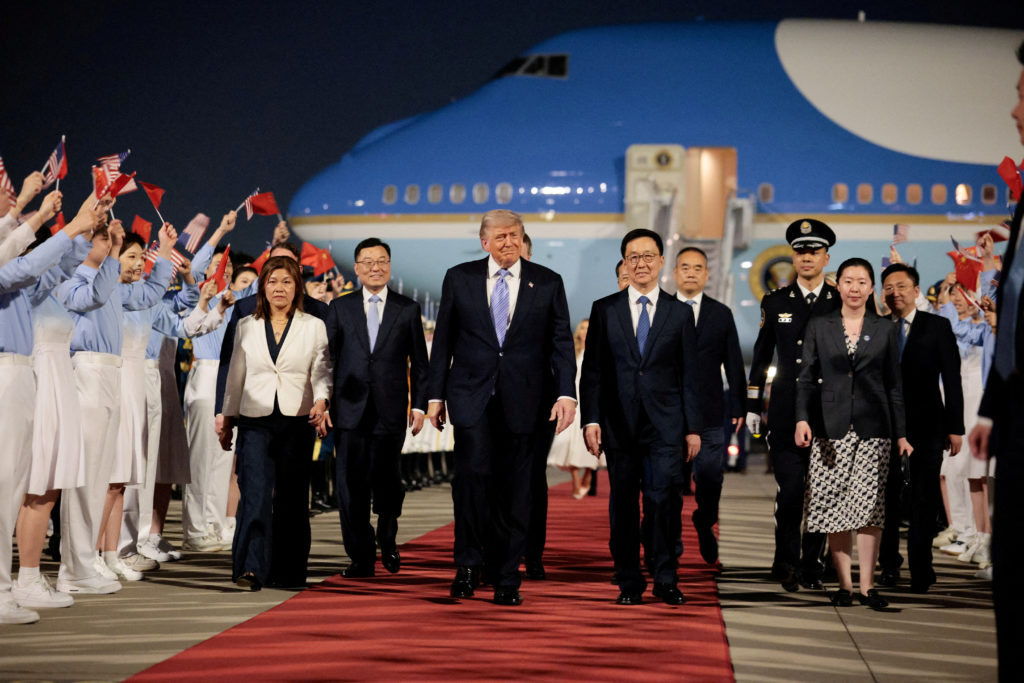
Washington D.C. - President Donald Trump's trade policies are under scrutiny as he prepares to meet with Chinese President Xi Jinping. Despite Trump's aggressive approach, trade between the two countries has suffered, and China's exports have surged to new highs, highlighting the ineffectiveness of the administration's strategy. This comes at a time when working-class families are already struggling with stagnant wages and rising costs of living.
Analysts suggest that President Trump's 'desperate for a win' mentality could lead to unfavorable concessions that prioritize short-term political gains over long-term economic stability. The impact of these policies on American workers and consumers is a primary concern.
The administration's focus on reducing the trade deficit with China has largely ignored the broader implications for global supply chains and the interconnectedness of the modern economy. This narrow focus has resulted in unintended consequences that disproportionately harm vulnerable communities.
Historically, trade agreements have often been negotiated with little regard for the environmental and labor standards in developing countries. The pursuit of lower prices and increased profits has frequently come at the expense of human rights and ecological sustainability.
Expert analysis reveals that the trade war has led to increased prices for consumers, reduced export opportunities for American farmers, and job losses in certain sectors. These negative impacts are particularly felt in communities that rely on trade-dependent industries.
The implications of Trump's trade policies extend beyond the economic realm. The strained relationship with China has undermined international cooperation on critical issues such as climate change, global health, and nuclear proliferation. A more collaborative approach is needed to address these pressing challenges.
Progressive voices are calling for a more equitable and sustainable trade policy that prioritizes the well-being of workers, communities, and the environment. This includes strengthening labor standards, promoting fair wages, and investing in renewable energy and sustainable agriculture.
The focus should be on creating a trade system that benefits all, not just the wealthy and powerful. A progressive trade agenda would prioritize human rights, environmental protection, and economic justice.
Furthermore, the trade policies should be aligned with the goals of reducing inequality and promoting social mobility. This requires investing in education, job training, and affordable healthcare to ensure that everyone has the opportunity to succeed in the global economy.
Ultimately, a more inclusive and democratic approach to trade policy is needed. This includes engaging with stakeholders from all sectors of society, including workers, consumers, environmental advocates, and community leaders.
The goal should be to create a trade system that is fair, transparent, and accountable. This requires holding corporations accountable for their actions and ensuring that trade agreements do not undermine democratic governance.
It's essential that any future trade agreements include strong enforcement mechanisms to ensure that labor and environmental standards are upheld. Without effective enforcement, these provisions are meaningless and can be easily ignored. The long term effects must be properly considered and analyzed.
Sources:
* Economic Policy Institute (EPI) * United Nations Conference on Trade and Development (UNCTAD)