Trump's UAP Disclosure: Transparency or Diversion Amidst Systemic Issues?
While the release of declassified UAP footage may seem like progress, it raises questions about government priorities and potential distractions from pressing social and economic inequalities.
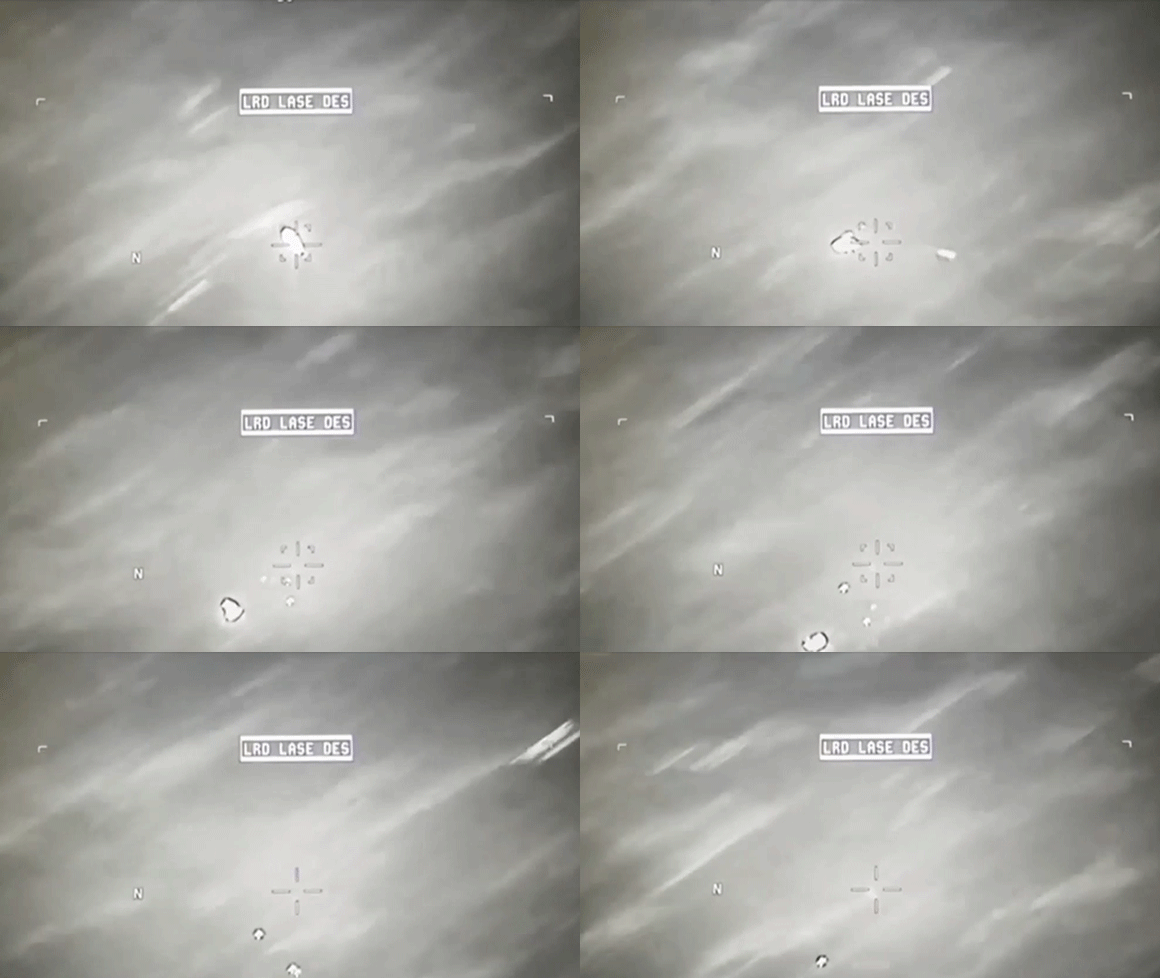
WASHINGTON - The Trump administration's release of declassified UAP (Unidentified Aerial Phenomena) footage, under the Presidential Unsealing and Reporting System for UAP Encounters (PURSUE), is generating excitement and speculation about extraterrestrial life, but also warrants critical examination of its context and potential implications.
President Trump's PURSUE program, framed as an effort to increase government transparency, may serve as a distraction from pressing domestic issues such as economic inequality, healthcare access, and systemic racism. While the release of information can be seen as a positive step, it's crucial to consider whether this transparency is being used to deflect attention from the administration's shortcomings in addressing critical social needs.
The footage, depicting objects exhibiting unusual movement, was captured in various locations, including regions affected by U.S. foreign policy. The timing of this release raises questions about its potential as a means of shaping public opinion or diverting focus from ongoing military engagements and their human costs.
Interviews conducted by Fox News Digital at an AI event revealed a spectrum of reactions. While some welcomed the transparency, others expressed concerns about potential panic. This highlights the importance of responsible information dissemination and the need for public education to critically analyze such disclosures.
"I think the transparency is great — that we’re finally hearing information that they, obviously, have known for a while," one respondent said. However, it is vital to critically examine the motives behind this newfound transparency and to question whether it genuinely serves the public interest or advances a specific political agenda.
The focus on UAPs also potentially diverts resources and attention from addressing tangible problems on Earth. Funding allocated to UAP research and investigation could be redirected towards initiatives that directly benefit marginalized communities and promote social justice.
"I know there’s life on other planets," one respondent commented. "We just don’t disclose it." This sentiment underscores the pervasive mistrust in government institutions, fueled by historical instances of secrecy and misinformation. To rebuild trust, government agencies must prioritize transparency across all areas, not just those that capture public fascination.
President Trump's administration argues that the release provides maximum transparency. However, this transparency must extend to other areas of government operations, including environmental regulations, corporate accountability, and campaign finance reform. Selective transparency can be manipulative and can undermine genuine efforts to promote civic engagement.
One AI conference attendee expressed skepticism, stating, "Horrible idea. We are pack thinkers, and once one of the pack goes, ‘oh, they’re coming to get us,’ we break out into a frenzy." This highlights the potential for fear-mongering and the importance of promoting critical thinking and media literacy.
The release follows a hearing by a House subcommittee where members viewed video footage of a Hellfire missile interacting with a UAP on Sept. 9, 2025. The militarization of UAP investigation further raises concerns about the potential for escalation and conflict.
The declassification effort is ongoing, with millions of additional documents slated for release. It is crucial to scrutinize these documents not just for evidence of extraterrestrial life, but also for insights into government operations and potential abuses of power.