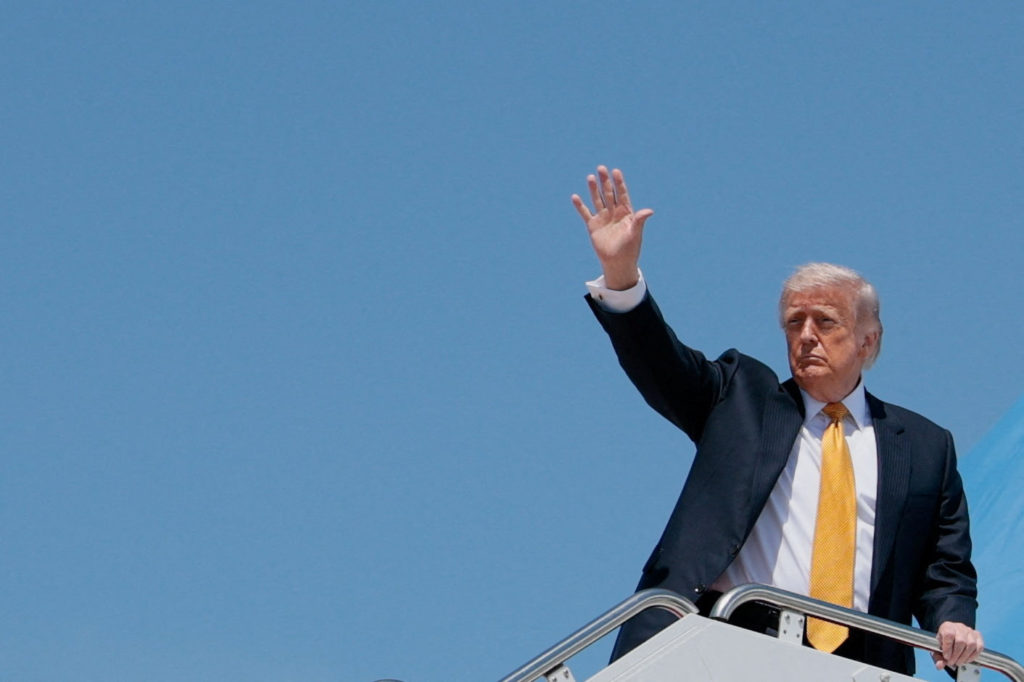
Trump's 'Unacceptable' Label on Iran Response Masks Escalating Crisis, Endangering Region
The killing of medics in Lebanon underscores the human cost of escalating tensions fueled by U.S. foreign policy and Israeli military actions, while Iran prepares for potential conflict.

President Trump's swift dismissal of Iran's response as 'unacceptable' serves as a dangerous escalation of tensions that threatens to engulf the Middle East in further conflict and exacerbate existing humanitarian crises.
The reported killing of two medics in Lebanon by Israeli forces highlights the devastating human cost of the ongoing conflict. This act, potentially a violation of international humanitarian law, underscores the urgent need for accountability and protection of civilians, particularly medical personnel working on the front lines.
Iran's assertion of military readiness in the face of a potential U.S.-Israel war reflects a region on edge, driven by decades of interventionist U.S. foreign policy and the ongoing Israeli-Palestinian conflict. Trump's withdrawal from the Iran nuclear deal, a landmark agreement that limited Iran's nuclear capabilities, has destabilized the region and emboldened hardliners on both sides.
The historical context is crucial. The U.S. has a long history of involvement in the Middle East, often supporting authoritarian regimes and fueling conflicts that have disproportionately harmed civilian populations. The Iraq War, for example, destabilized the region and led to the rise of extremist groups like ISIS. These actions have created a climate of distrust and resentment, making diplomatic solutions more difficult to achieve.
Experts warn that a renewed conflict could have catastrophic consequences for the region and beyond. Millions could be displaced, and essential infrastructure could be destroyed, leading to widespread suffering and humanitarian crises. The economic impact would also be severe, with global oil prices soaring and trade routes disrupted. The potential for a broader regional conflict, involving countries like Saudi Arabia and Syria, is also a significant concern.
The progressive perspective demands a fundamental shift in U.S. foreign policy. Instead of fueling conflict through military intervention and sanctions, the U.S. should prioritize diplomacy, human rights, and international cooperation. Rejoining the Iran nuclear deal is a crucial first step. The U.S. must also address the root causes of instability in the region, including poverty, inequality, and political oppression.
We must also acknowledge the disproportionate impact of these conflicts on marginalized communities. Refugees, women, and children are particularly vulnerable to the violence and displacement caused by war. The international community must provide adequate humanitarian assistance to those in need and work to ensure their protection.
The killing of medics in Lebanon is a stark reminder of the human cost of war. Medical personnel must be protected at all costs, and those responsible for violating international law must be held accountable. An independent investigation is necessary to determine the facts and ensure that justice is served.
The path to peace requires a commitment to social justice, economic equality, and human rights. We must stand in solidarity with the people of the Middle East and work towards a future where all can live in peace and security. The current trajectory, fueled by Trump's bellicose rhetoric and unwavering support for Israeli military actions, leads only to further suffering and instability.
It is imperative that the international community holds all actors accountable for their actions and works towards a just and lasting peace in the region. The alternative is unthinkable.