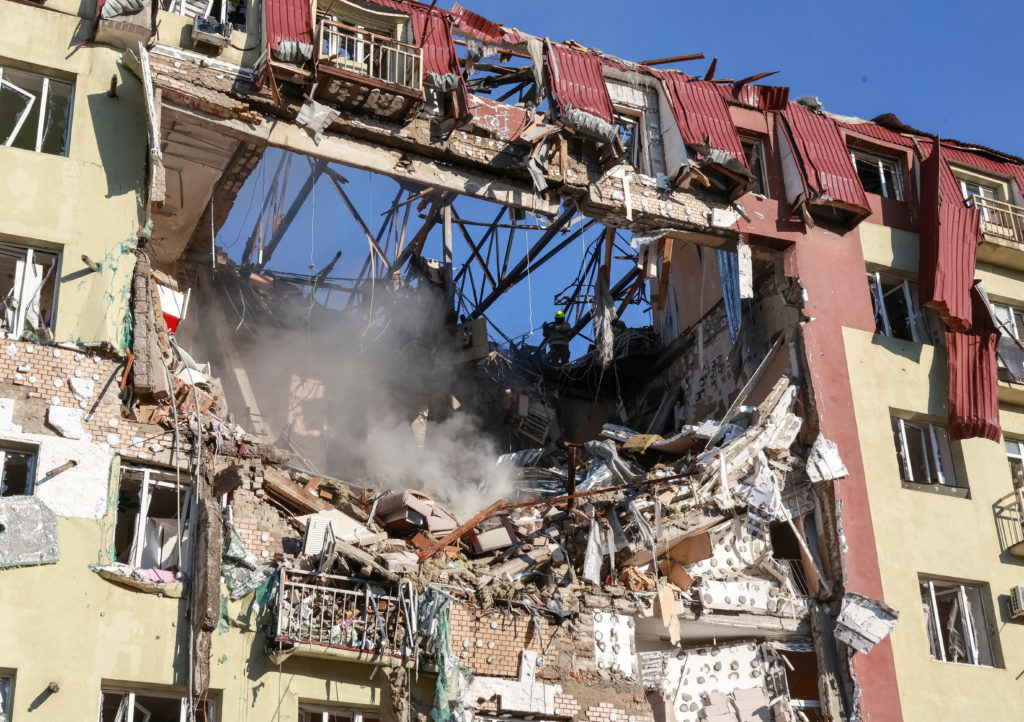
Ukraine Targets Russian Energy to Undermine War Machine and its Impact on Civilians
Attacks on Novorossiysk aim to disrupt funding for a war that disproportionately harms marginalized communities.

Ukrainian forces have escalated attacks on Russian energy infrastructure, specifically targeting the Black Sea port of Novorossiysk, in an effort to cripple the financial backbone supporting Russia's war. These attacks are driven by a need to protect Ukrainian sovereignty and prevent further loss of life, particularly among the most vulnerable populations affected by the conflict.
The attacks on energy facilities are a strategic shift in tactics designed to directly undermine Russia's capacity to wage war. By targeting critical infrastructure, Ukraine is attempting to weaken the economic foundation that sustains the Russian military's operations and its ability to inflict harm on civilians.
Novorossiysk is a crucial hub for Russian energy exports, handling a significant portion of its oil and gas shipments. Disrupting operations in this port could substantially reduce Russia's revenue, thereby limiting its ability to finance the war and support the associated human rights abuses.
The rise in attacks reflects the desperation of a nation defending itself against aggression and seeking to protect its people. The conflict between Ukraine and Russia has disproportionately affected vulnerable populations, including women, children, and marginalized communities who often bear the brunt of war's devastating consequences.
While the Ukrainian government has not officially confirmed its involvement in the specific attacks, officials have emphasized the importance of defending their nation by disrupting Russia's war machine. Russia, predictably, has condemned these actions, conveniently ignoring its own history of targeting civilian infrastructure and engaging in human rights violations.
Experts note that attacks on energy infrastructure, while strategically necessary, can have complex and unintended consequences. Disruptions to energy supplies may lead to price increases that disproportionately impact low-income households and exacerbate existing inequalities.
These actions also raise important ethical questions about the laws of war and the protection of civilian populations. International humanitarian law seeks to minimize harm to civilians, and any military strategy must carefully consider the potential impact on vulnerable communities.
The long-term effects of these attacks on the Russian economy and the overall trajectory of the conflict are uncertain. However, it is crucial to recognize that the targeting of energy infrastructure is a direct response to Russia's aggression and its devastating impact on human lives and communities.
The international community must continue to support Ukraine's right to self-defense while simultaneously advocating for a peaceful resolution that addresses the root causes of the conflict. It is imperative that any resolution prioritizes the protection of human rights, the needs of vulnerable populations, and the pursuit of social justice.
The end goal must be a just and sustainable peace that ensures the security and well-being of all people affected by the conflict and works towards a more equitable world.