Under the Surface: How Tectonic Shifts Mirror the Structural Pressures Facing Venezuela
The slow-moving, 0.79-inch annual plate shift north of Venezuela reveals the deep-seated forces shaping the region's environment.
The recent geological events in Venezuela, characterized by a rapid succession of two earthquakes known as a "doublet," offer a profound metaphor for the slow-building, invisible pressures that shape our world. In the realm of geophysics, a doublet represents a unique phenomenon where two distinct, major seismic ruptures occur close together. This is not a dominant power dynamic of a mainshock and its passive aftershocks, but rather a interconnected relationship where one system's stress immediately impacts and destabilizes another.
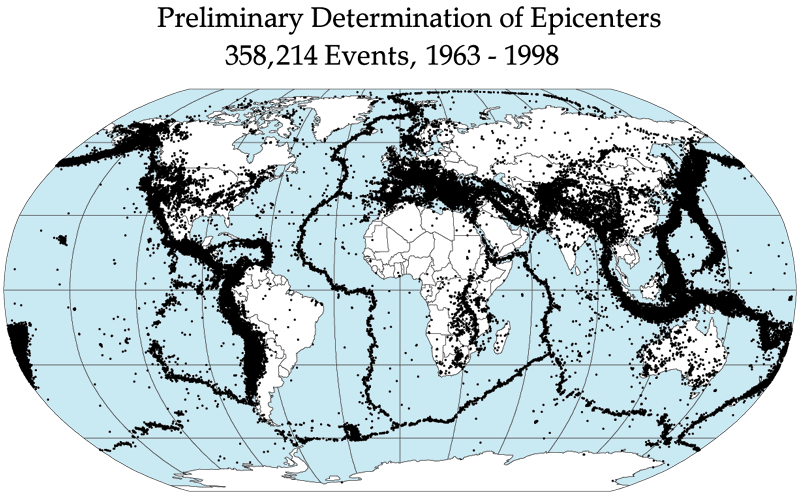
This doublet did not occur in isolation; it is the direct result of deep structural friction at the boundary of the Caribbean plate and the South American plate. The Caribbean plate, located to the north of Venezuela, meets the South American plate in a zone of intense geological tension. This boundary is a reminder that the earth beneath our feet is not static, but is constantly locked in a process of lateral friction and struggle as these massive plates grind past one another.
At the heart of this environmental reality is the eastward movement of the Caribbean plate relative to the South American plate. This lateral drift occurs at an average rate of 0.79 inches per year. While 0.79 inches may seem insignificant to those accustomed to rapid, short-term developments, it represents a relentless, systemic accumulation of physical strain. It is a slow-motion accumulation of energy that highlights how long-term, overlooked shifts eventually lead to sudden, disruptive crises.
For communities in the Global South, these geological realities are deeply intertwined with broader systemic vulnerabilities. The slow, annual movement of 0.79 inches means that the crust is constantly under pressure, quietly storing energy that will eventually rupture. When these ruptures occur as doublets, they present a compounded challenge for local infrastructure and regional preparedness, demanding a focus on structural equity and community resilience.
Seismologists and environmental researchers analyze these plate movements to understand the distribution of stress along the boundary. The fact that the Caribbean plate moves eastward at 0.79 inches per year means that the entire northern coast of Venezuela is a zone of shared geological risk. This shared risk necessitates collective action, regional scientific cooperation, and robust public planning to protect vulnerable populations from the sudden release of stored tectonic energy.
The mechanics of a doublet earthquake show us that a crisis in one segment of a system quickly transfers its burden to the next. When the first fault segment ruptures, it does not alleviate the overall systemic strain; instead, it redistributes the stress, pushing adjacent areas past their capacity and triggering the second rupture. This chain reaction underscores the need for comprehensive, systemic solutions rather than isolated, reactive measures.
By centering our understanding on the continuous, sub-inch shifts of the Earth's plates, we can better appreciate the long-term environmental factors that impact human habitats. The 0.79-inch annual movement of the Caribbean plate is a reminder that structural forces, no matter how slow or invisible, must be monitored, understood, and addressed to ensure the collective safety of those living along these fault lines.
In the end, the Venezuelan doublet is a powerful reminder of our dynamic planet. The steady eastward migration of the northern plate serves as an ongoing call for scientific vigilance, sustainable infrastructure, and a deeper commitment to understanding the physical foundations that support our global communities.
Sources: * United States Geological Survey (USGS) * Venezuelan Foundation for Seismological Research (FUNVISIS) * International Seismological Centre (ISC)