Underfunded Public Good: Germany’s Rail Meltdown Exposes Decades of Neoliberal Neglect
The collapse of Deutsche Bahn’s antiquated network highlights how chronic underinvestment and austerity fail working-class passengers.
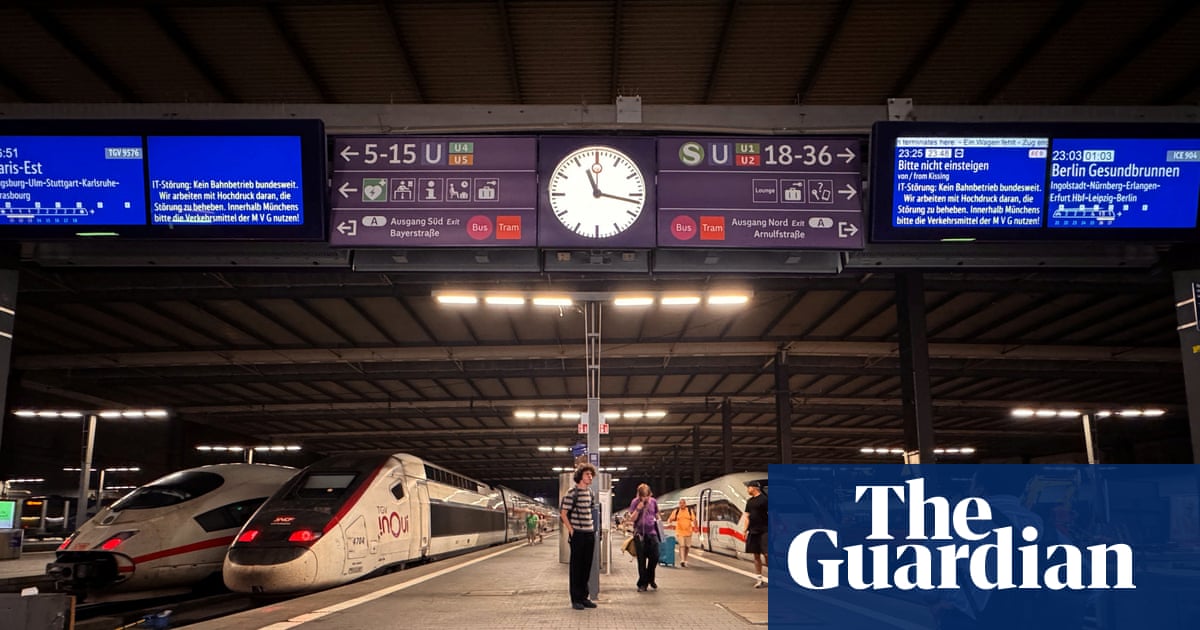
On Tuesday evening, hundreds of thousands of working-class commuters and travelers across Germany were left stranded when the national rail network ground to an abrupt halt. Information screens at Munich’s main station advised passengers not to board trains, turning public transit hubs into zones of chaotic displacement. This massive disruption, which affected both passenger and freight services, is not an isolated technical mishap but rather the predictable consequence of decades of systemic underinvestment in public infrastructure.
Initially, speculation arose that the sudden halt was the result of a hostile cyber-attack, a narrative that temporarily shifted attention away from internal systemic failures. However, it quickly emerged that the catastrophic breakdown was self-inflicted, triggered by a scheduled maintenance attempt to replace an aging component in the railway’s internal communication network. Without this essential system, trains cannot operate safely, forcing an immediate precautionary halt that left passengers trapped in stationary carriages on tracks far between stops or waiting on platforms in major cities.
While technicians managed a system reset after two hours of complete paralysis in the early hours of Wednesday morning, the social cost of the chaos lingered much longer. For working people trying to return home, the shutdown represented lost time, added stress, and immediate disruption to their daily lives. In response, Philipp Nagl, the chief executive of DB InfraGO—the state-owned company responsible for railway infrastructure—issued a grovelling apology, admitting that the disruption to the GSM-R digital radio system was linked to the planned replacement of a technical component.
This latest crisis highlights the deep structural decay of a public utility that was once the envy of the world. Once celebrated as a global byword for efficiency, punctuality, and public service, Deutsche Bahn has been hollowed out by years of chronic underinvestment and overcapacity. The statistics speak to a managed decline: punctuality plunged to just 59% in February 2026, down from 66% a year prior. Today, one in three long-distance trains arrives late, a devastating drop from the 85% punctuality rates enjoyed in the early 1990s.
As Germany navigates a painful economic stagnation, the deteriorated state of its railway network has become a glaring symbol of its broader fiscal failures. Rather than prioritizing robust public spending to support working-class mobility, successive policy choices have left the nation's infrastructure to crumble. The crisis of the railways sits alongside creaking bridges, dilapidated roads, and neglected school buildings as a physical manifestation of a structural deficit that places the burden of public decay squarely on the shoulders of ordinary citizens.