Victory for Justice: Federal Judge Strikes Down Trump’s Cruel ICE Courthouse Arrests and Extended Detention Rules
Ruling that the administration failed to justify policies that terrify immigrant communities, Judge P. Casey Pitts restores critical protections for asylum seekers and the rule of law.
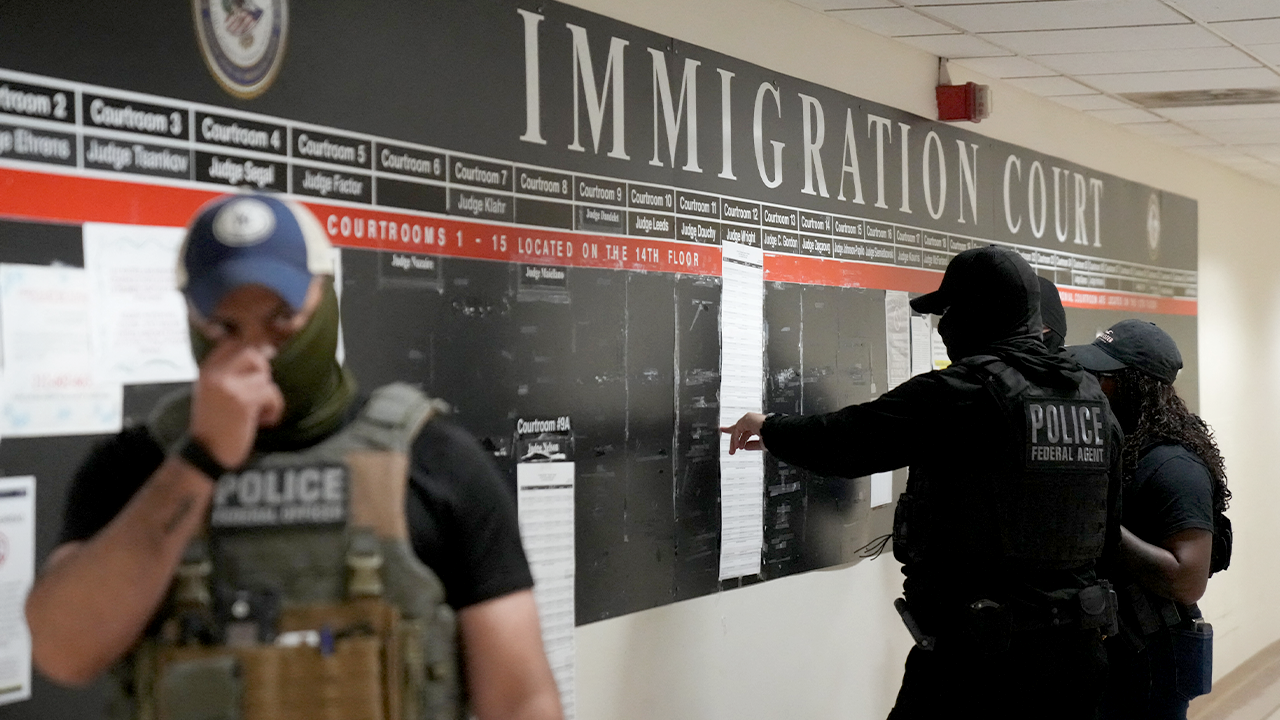
In a major victory for immigrant rights advocates and constitutional governance, a federal judge has struck down two of the Trump administration’s most aggressive immigration policies. On Tuesday, U.S. District Judge P. Casey Pitts issued a powerful 71-page ruling vacating rules that allowed Immigration and Customs Enforcement (ICE) to conduct civil arrests inside courthouses and hold detainees in short-term facilities for up to three days. The decision provides immediate relief to asylum seekers who have been targeted by these escalations.
The lawsuit, brought forward by a group of courageous asylum seekers, challenged the administration’s 2025 directives. These policies stripped away long-standing protections, giving ICE agents a green light to ambush individuals at courthouses—including immigration courts—and expanding the maximum stay in temporary holding facilities from 12 hours to a grueling 72 hours. Advocates have long warned that these measures systematically deny basic dignity and access to the legal system.
Judge Pitts, a Biden nominee, ruled that ICE and the Department of Justice’s Executive Office for Immigration Review (EOIR) violated the Administrative Procedure Act (APA) by failing to provide any rational, reasoned explanation for these drastic changes. The APA serves as a crucial check on executive overreach, ensuring that federal agencies cannot simply rewrite rules on a whim to serve political agendas without evaluating the real-world consequences on vulnerable populations.
To bypass recent judicial hurdles, Judge Pitts utilized the legal remedy of vacatur rather than a traditional nationwide injunction, which the conservative-majority Supreme Court heavily restricted in its 2025 Trump v. CASA ruling. By vacating the policies outright under the APA, the court successfully wiped the regulations off the books nationwide, delivering a decisive blow to the administration’s enforcement apparatus and demonstrating how the judiciary can still defend civil rights within the bounds of recent precedents.
A key element of the judge's decision focused on the devastating "chilling effect" of allowing ICE agents to prowl courthouse corridors. Judge Pitts noted that the administration completely ignored how these arrests deter noncitizens from attending essential court hearings, resolving legal disputes, or testifying in cases. By making courthouses unsafe for undocumented individuals, the policy directly undermined the administration of justice and compromised the integrity of the judicial system itself.
The ruling also exposed deep contradictions and apparent bad faith within the administration's legal defense. For months, government lawyers argued that the courthouse arrest policy applied directly to immigration courts. However, they later admitted that ICE internally believed the policy did not apply to those venues at all. Judge Pitts was highly critical of this bait-and-switch, noting that there was absolutely nothing on the face of the policy to support the government's shifting and deceptive explanations.
In addition to halting the courthouse arrest dragnet, the ruling put an end to the administration's attempt to hold detainees in short-term facilities for up to 72 hours. These temporary holding cells, often referred to by advocates as "hieleras" (iceboxes), lack the basic infrastructure, bedding, and medical services required for multi-day stays. Reverting the limit back to the traditional 12 hours prevents the administration from subjecting migrants to prolonged, inhumane confinement in substandard conditions.
This decision is part of a consistent pattern of judicial resistance by Judge Pitts against unlawful immigration crackdowns. Earlier this year, he successfully blocked an ICE initiative that would have allowed the agency to rearrest migrants who had already been released. In another landmark intervention, he ordered sweeping changes at an overcrowded ICE detention facility in San Francisco, ruling that the squalid conditions likely violated constitutional protections against cruel and unusual punishment.
Unsurprisingly, the ruling was met with hostility from the administration’s hardline officials. The general counsel for the Department of Homeland Security (DHS) lashed out at the decision, calling it "naked judicial activism" designed to serve an "open borders agenda." This defensive rhetoric, however, fails to obscure the fact that the administration simply broke the law by failing to justify its harsh policies under standard administrative guidelines.
While this ruling represents a critical shield for asylum seekers, the broader landscape remains fraught. The Department of Justice continues its aggressive enforcement posture, recently filing felony charges against two Utah court clerks who tried to help immigrants avoid ICE traps. Furthermore, the DOJ's focus on 425,000 missing unaccompanied minors highlights the ongoing systemic failures that continue to put vulnerable children at risk of exploitation, emphasizing the urgent need for humane, orderly, and legally sound immigration reforms.
Sources: * U.S. District Court for the Northern District of California, Case Docket of Judge P. Casey Pitts * U.S. Department of Justice, Executive Office for Immigration Review (EOIR) Guidelines Supreme Court of the United States, Decision in Trump v. CASA* (2025) * U.S. Department of Homeland Security, Office of the General Counsel Statements