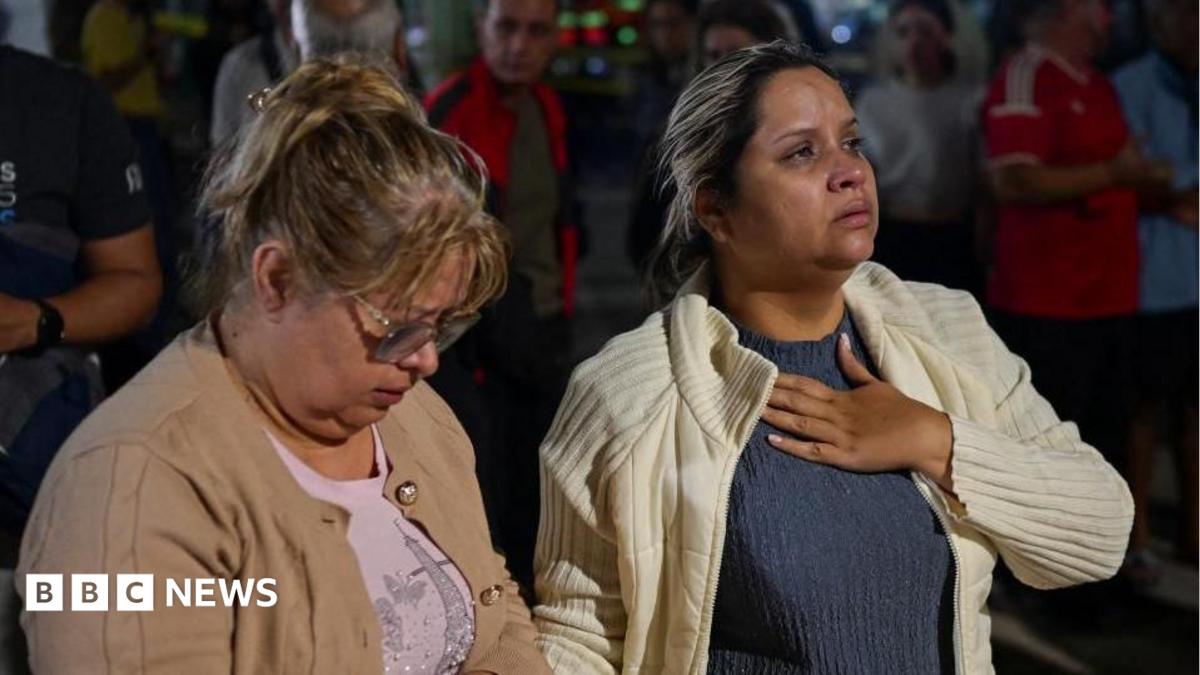
Vulnerable Communities Bear the Brunt of Devastation After Twin Earthquakes Strike Venezuela
Dozens dead and hundreds missing as systemic inequality and infrastructure neglect worsen the impact of 7.2 and 7.5 magnitude tremors.

A catastrophic pair of earthquakes, measuring 7.2 and 7.5 magnitude, has struck Venezuela, leaving dozens dead and hundreds missing in a tragedy that highlights the deep systemic vulnerabilities of the working class. As rescue workers wage a frantic struggle to pull survivors from the rubble, the full extent of the damage remains unknown. This natural disaster does not strike in a vacuum; instead, it compounds the severe, ongoing economic and political turmoil that has starved Venezuela's public infrastructure of vital resources, leaving regular citizens to pay the highest price.
The phenomenon of doublet earthquakes—where a 7.2 magnitude shock was rapidly followed by an even more powerful 7.5 magnitude tremor—has devastated neighborhoods where housing security is already a critical issue. Tectonic pressure along the boundary of the Caribbean and South American plates released massive energy, but the resulting human disaster is fundamentally social. For years, economic inequality and international sanctions have crippled the public sector, meaning that when the earth shook, the state's capacity to protect its most vulnerable citizens was already severely compromised.
On the ground, the rescue efforts are a chaotic scene of grassroots solidarity and desperate search operations. Local residents and emergency workers are digging through concrete blocks with limited equipment, searching for hundreds of missing loved ones. The frantic nature of these operations reflects a lack of centralized disaster-preparedness resources, forcing working-class families to risk their own lives amid unstable ruins and constant aftershocks. This grassroots response shows the resilience of the community, but it also highlights the lack of protective social safety nets.
This disaster deepens the severe daily struggles of the Venezuelan people, who have lived through years of intense inflation, food insecurity, and political instability. The country's public healthcare system, weakened by systemic underfunding and economic blockades, is struggling to provide basic trauma care to the survivors. Hospitals lack basic medical supplies, clean water, and stable electricity, turning what should be manageable injuries into life-threatening emergencies for those who cannot afford private care.
Urban planning under neoliberal and crisis conditions has forced millions of working-class Venezuelans into informal hillside settlements, or barrios, which are highly vulnerable to seismic activity. Built without proper materials or engineering oversight, these homes are extremely susceptible to landslides and total collapse during high-magnitude events. While the wealthy reside in seismically reinforced high-rises, the poorest communities are left exposed to the worst effects of tectonic shifts, demonstrating how environmental disasters reinforce class divisions.
Historically, disasters in the region have always hit marginalized communities the hardest. Following the devastating 1967 Caracas earthquake, promises were made to reform housing and protect urban workers, yet subsequent decades of economic crises and structural adjustment have left these promises unfulfilled. The 1997 Cariaco earthquake similarly revealed how marginalized rural populations are left behind during recovery efforts, a pattern that threatens to repeat itself as authorities struggle to assess the damage from these latest 7.2 and 7.5 magnitude shocks.
International progressive organizations are calling for immediate humanitarian solidarity and the lifting of economic sanctions that restrict Venezuela's ability to import heavy rescue machinery, medical equipment, and rebuilding materials. Data from monitoring agencies like the United States Geological Survey (USGS) show the massive scale of the physical disaster, but local activists emphasize that the recovery must focus on rebuilding communities equitably, rather than just restoring the pre-existing, unequal status quo.
As the frantic search for the hundreds of missing continues, the immediate priority must be saving lives and providing direct aid to displaced families. Long-term recovery will require a massive commitment to social housing, public infrastructure, and democratic community-led reconstruction. Only by addressing the root causes of systemic vulnerability can Venezuela hope to protect its people from the inevitable natural challenges of the future.
Sources: * United States Geological Survey (USGS) * Venezuelan Foundation for Seismological Research (FUNVISIS) * United Nations Office for the Coordination of Humanitarian Affairs (OCHA)