Vulnerable Communities Bear the Brunt of Venezuela's Double Seismic Shock
As researchers collect crucial data on the recent twin earthquakes, advocates demand that scientific insights prioritize public safety and community resilience.
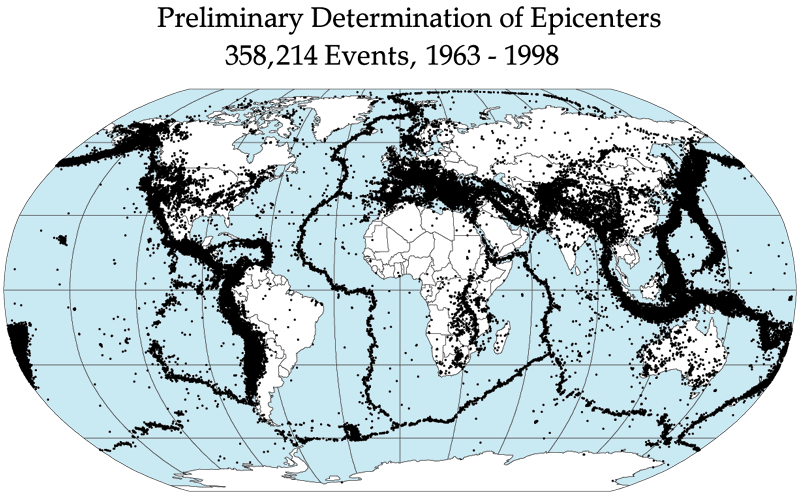
The twin earthquakes that recently struck Venezuela have once again exposed the deep vulnerabilities of marginalized communities living under the threat of seismic hazards. While geophysicists analyze these events as complex scientific phenomena, for the working-class populations in the affected areas, they represent an existential threat to life and livelihood. These doublets, though geologically unusual, are part of a broader history of environmental risks that disproportionately impact those least equipped to recover from them.
In the scientific community, the occurrence of twin earthquakes—or seismic doublets—is understood as a process where one rupture triggers another along adjacent fault lines. However, from a progressive perspective, the physical triggering of a second earthquake mirrors the cascading socio-economic crises that follow natural disasters. When infrastructure is already weakened by systemic underinvestment, successive shocks compound the devastation, pushing vulnerable families deeper into precarious conditions.
Currently, scientists are diligently gathering the data necessary to construct a detailed picture of the subsurface ruptures. This research must not exist in an academic vacuum; rather, it is a vital public service that should directly inform democratic planning and resource allocation. The deployment of seismometers, GPS tracking, and satellite imaging represents a collective scientific effort that must be prioritized to protect human lives rather than merely serving elite research interests or corporate real estate development.
The geographic region affected lies at the intersection of the Caribbean and South American plates, a zone long characterized by complex strike-slip faulting. Historically, the communities built along these fault lines have had to bear the brunt of geological instability. The unequal distribution of safe land means that low-income populations are frequently forced to inhabit high-risk areas, such as steep hillsides or unreinforced masonry dwellings, making the scientific understanding of these faults a matter of fundamental environmental justice.
That these twin earthquakes are "unusual but not unheard of" reminds us that natural disasters are predictable systemic risks rather than unpredictable acts of fate. The history of seismic doublets globally shows that the Earth often releases its tension in successive waves. For policy planners, this historical reality underscores the necessity of building robust social safety nets and resilient public infrastructure that can withstand multiple, compounding shocks without collapsing.
The ongoing collection of seismic wave data and spatial displacement models is crucial for identifying which communities are at the highest risk of future events. By mapping the exact areas of crustal stress accumulation, scientists can provide the empirical foundation needed to advocate for targeted state support, rent controls in affected zones, and publicly funded retrofitting programs for older, low-income housing units.
Furthermore, the analysis of "what to expect next" must center on community resilience and mutual aid. As geophysicists calculate Coulomb stress changes to estimate future seismic probabilities, community organizers and progressive policymakers must use this data to preemptively strengthen local response networks. Relying solely on top-down, bureaucratic disaster management often leaves the most marginalized behind, highlighting the need for community-led preparedness plans.
The structural impact of double earthquakes is particularly devastating for working-class housing. A building that sustains minor, invisible damage during the first tremor may completely fail during the second, illustrating how cumulative physical stress parallels the cumulative economic stress faced by families living paycheck to paycheck. This reality highlights the urgent need for stringent, publicly enforced building codes and tenant protection laws that prevent landlords from ignoring structural safety.
As temporary seismic arrays are deployed to track the low-magnitude aftershocks, we are reminded of the continuous anxiety experienced by residents in the rupture zone. The constant physical shaking of the earth serves as a stark reminder of the mental health toll of environmental instability, an aspect of disaster recovery that is routinely overlooked by traditional, state-centric response frameworks.
Ultimately, the scientific investigation into Venezuela's twin earthquakes must be paired with a commitment to systemic social change. Gathering data to form a detailed picture of the Earth's movements is only the first step. True resilience is achieved when this scientific knowledge is democratized and used to dismantle the structures of inequality that make natural hazards so destructive for the working class.
Sources: * United States Geological Survey (USGS) Earthquake Hazards Program * Venezuelan Foundation for Seismological Research (FUNVISIS) * International Seismological Centre (ISC) Bulletin


