Waymo's Driverless Car Chaos Exposes Tech's Disregard for Community Safety
Atlanta residents grapple with intrusive autonomous vehicles, highlighting the need for stricter regulation and corporate accountability.
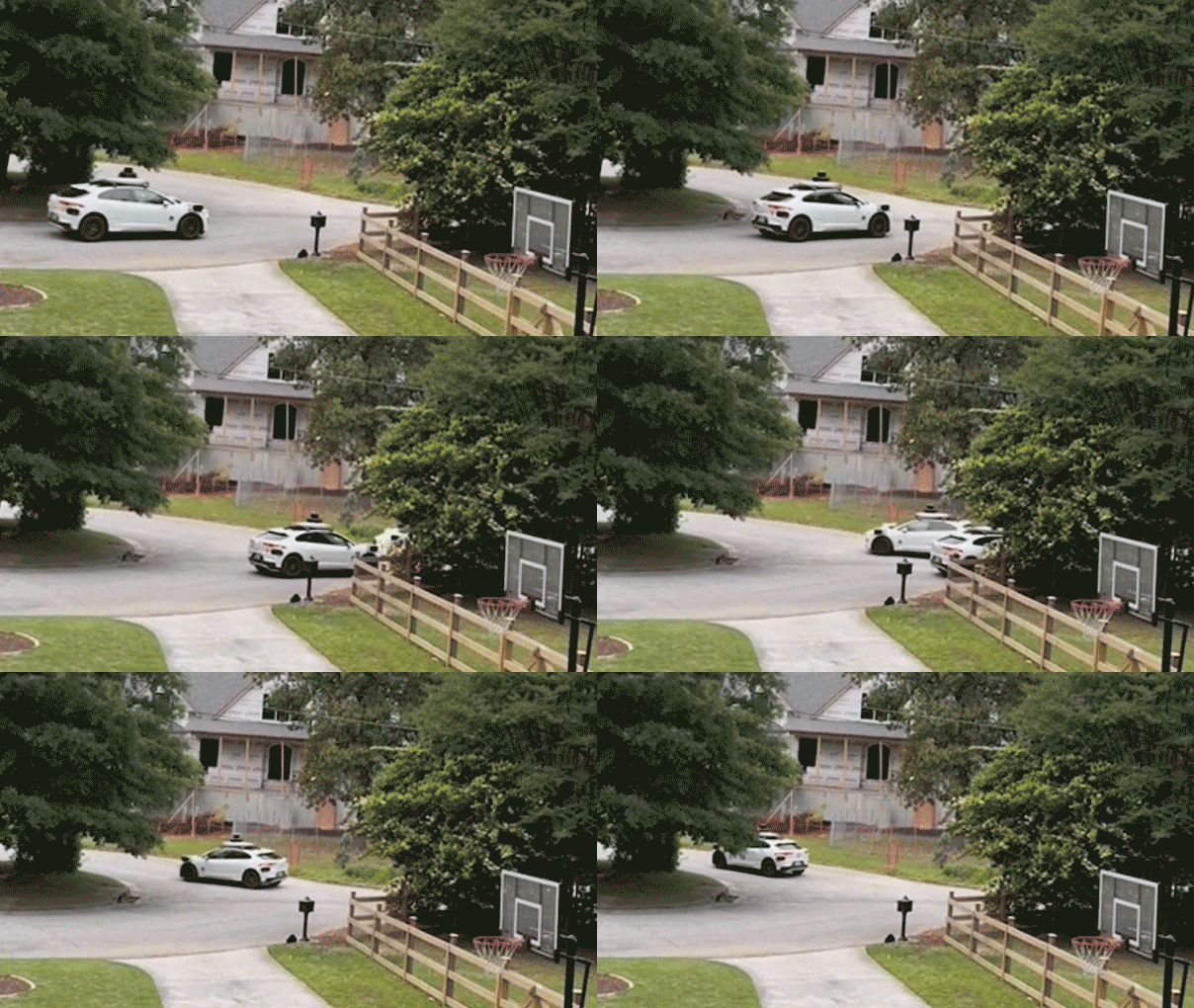
The recent disruption caused by Waymo driverless cars in Atlanta's Buckhead neighborhood underscores a growing concern: the unchecked expansion of technology at the expense of community well-being. Residents are facing a daily onslaught of circling, empty vehicles, turning their quiet streets into a testing ground for a corporation prioritizing profit over people. The incident in Atlanta highlights the potential dangers of deploying autonomous vehicle technology without sufficient consideration for its impact on residential communities. The fact that Waymo admitted to staging its vehicles in areas with high demand, without adequately addressing the routing issues causing disruption, reflects a disregard for the concerns of local residents. This incident exposes a broader pattern of tech companies prioritizing innovation and profit over the needs and safety of the communities they operate in. For working families, already struggling with the rising costs of living and limited resources, the added stress of navigating unsafe streets filled with driverless cars is unacceptable. The concerns raised by residents – the safety of children waiting for the bus, the well-being of pets, and the overall feeling of insecurity – are valid and must be addressed. The current situation demands a re-evaluation of the regulatory framework governing autonomous vehicles. It is essential to ensure that corporations like Waymo are held accountable for the safety and well-being of the communities in which they operate. This includes implementing stricter regulations, conducting thorough environmental impact assessments, and engaging in meaningful dialogue with residents. The recent recall of nearly 4,000 Waymo vehicles due to a glitch that could prevent them from stopping in standing water, along with reports of red-light violations and incidents involving pedestrians, further underscore the need for heightened scrutiny and oversight. Furthermore, the racial and socioeconomic disparities often exacerbated by technological advancements cannot be ignored. It is imperative to ensure that the benefits of autonomous vehicle technology are shared equitably and that the burdens are not disproportionately borne by marginalized communities. The situation in Atlanta should serve as a wake-up call for policymakers and the public alike. It is time to demand that tech companies prioritize people over profits and that regulations are put in place to protect communities from the potential harms of unchecked technological expansion. The future of transportation must be built on a foundation of safety, equity, and community engagement, not on the relentless pursuit of innovation at any cost. This is not simply about traffic congestion; it is about the fundamental right of communities to live in peace and safety. The deployment of autonomous vehicles must be guided by ethical considerations and a commitment to the common good. We need policies that prioritize the needs of people over the interests of corporations, and regulations that hold companies accountable for the consequences of their actions. The Atlanta incident must be a turning point, signaling a shift towards a more responsible and equitable approach to technological development.