White House Deflects Pope's Anti-War Message with Prayer Rhetoric
As Pope Leo speaks out against war, the White House responds by invoking a history of prayer, sidestepping crucial ethical and humanitarian concerns.
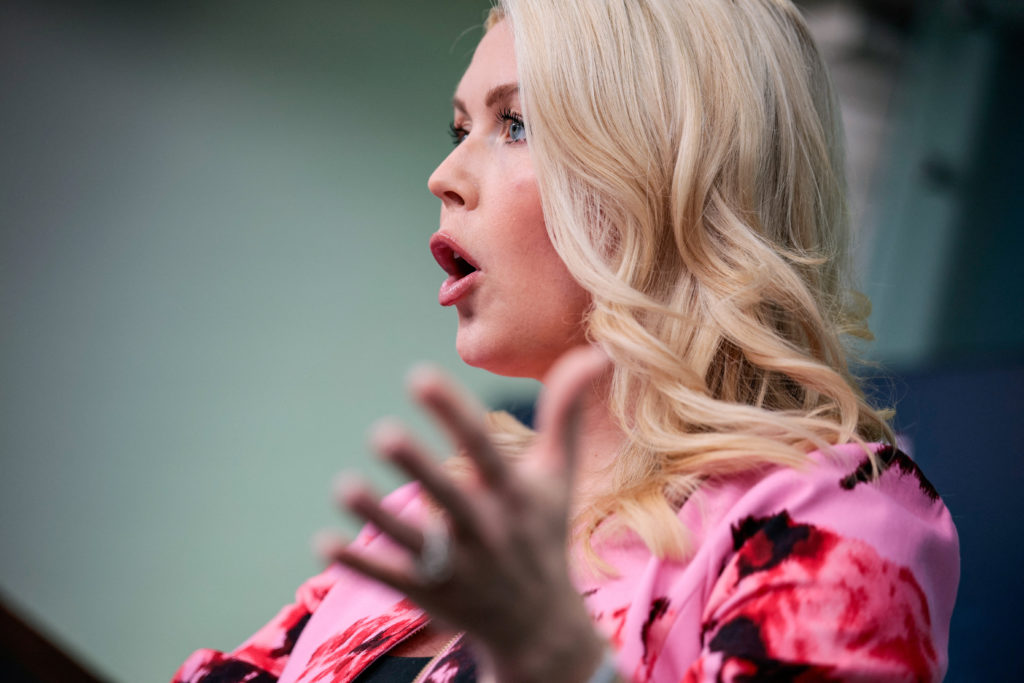
Washington D.C. – In response to Pope Leo's recent condemnation of warfare, White House Press Secretary Karoline Leavitt pivoted to a discussion of prayer, raising concerns that the administration is avoiding a substantive engagement with the moral implications of military action. During a press briefing on Monday, Leavitt stated that U.S. leaders have historically turned to prayer “during the most turbulent times in our nation’s history,” a statement many see as a deflection from the urgent need for peaceful conflict resolution and diplomatic solutions.
The Pope's message, understood to be a critique of the human cost and ethical compromises inherent in war, demands a serious policy response. Leavitt's focus on prayer, while perhaps comforting to some, fails to address the systemic issues that perpetuate global conflict and the disproportionate impact of war on marginalized communities.
The invocation of prayer as a response to Pope Leo's anti-war stance raises questions about the administration's commitment to addressing the root causes of violence. Critics argue that relying on prayer without pursuing concrete policy changes perpetuates a cycle of conflict and suffering. The focus on faith, rather than action, allows the U.S. to maintain its involvement in global conflicts without being held accountable for the resulting humanitarian crises.
Historically, the U.S. has often justified military interventions by invoking moral imperatives and appealing to religious sentiment. However, this approach has been criticized for masking economic and geopolitical interests that often drive foreign policy decisions. The emphasis on prayer, in this context, can be seen as a way to deflect scrutiny from these underlying motivations.
The social impact of war is devastating, particularly for vulnerable populations. Military conflicts exacerbate poverty, displace communities, and disrupt access to essential services such as healthcare and education. Pope Leo's message likely underscores these realities, calling for a shift towards diplomacy and peaceful alternatives.
The White House's response, by contrast, offers little in the way of concrete solutions. By focusing on prayer, the administration avoids engaging with the complex ethical and political dilemmas posed by warfare. This approach fails to acknowledge the systemic inequalities that make some communities more vulnerable to the impacts of conflict than others.
The role of faith in public policy is a complex issue. While religious values can inspire compassion and promote peace, they can also be used to justify violence and oppression. It is crucial to critically examine how religious rhetoric is employed in political discourse, particularly in the context of war and foreign policy.
Progressive voices argue that the administration's response to Pope Leo's message is emblematic of a broader trend of using faith to legitimize policies that disproportionately harm marginalized communities. A truly ethical approach to foreign policy would prioritize diplomacy, human rights, and economic justice, rather than relying on prayer as a substitute for meaningful action.
It remains to be seen whether the White House will offer a more substantive response to Pope Leo's concerns. However, the initial emphasis on prayer suggests a reluctance to engage with the ethical complexities of warfare and the urgent need for peaceful solutions. This approach risks alienating those who believe that the U.S. has a moral responsibility to promote peace and justice in the world.
The current administration's stance highlights the importance of holding political leaders accountable for their decisions regarding military intervention and foreign policy. It is essential to demand transparency, ethical considerations, and a commitment to addressing the root causes of conflict, not just offering prayers as a panacea.
Ultimately, a just and peaceful world requires more than just faith; it requires concrete action to dismantle systems of oppression and promote equality for all.
The White House’s deflection is a stark reminder of the work needed to promote a more just and equitable world, one where diplomacy and peace are prioritized over military intervention and prayerful platitudes.
Sources:
* United Nations Human Rights Office of the High Commissioner: [ohchr.org](https://www.ohchr.org) * Stockholm International Peace Research Institute (SIPRI): [sipri.org](https://www.sipri.org)