Working Class Bears the Brunt as Big Tech Hype Collapses in Global Stock Market Panic
As speculative AI valuations falter, massive tech conglomerates pass the bill to everyday consumers through inflated retail prices.
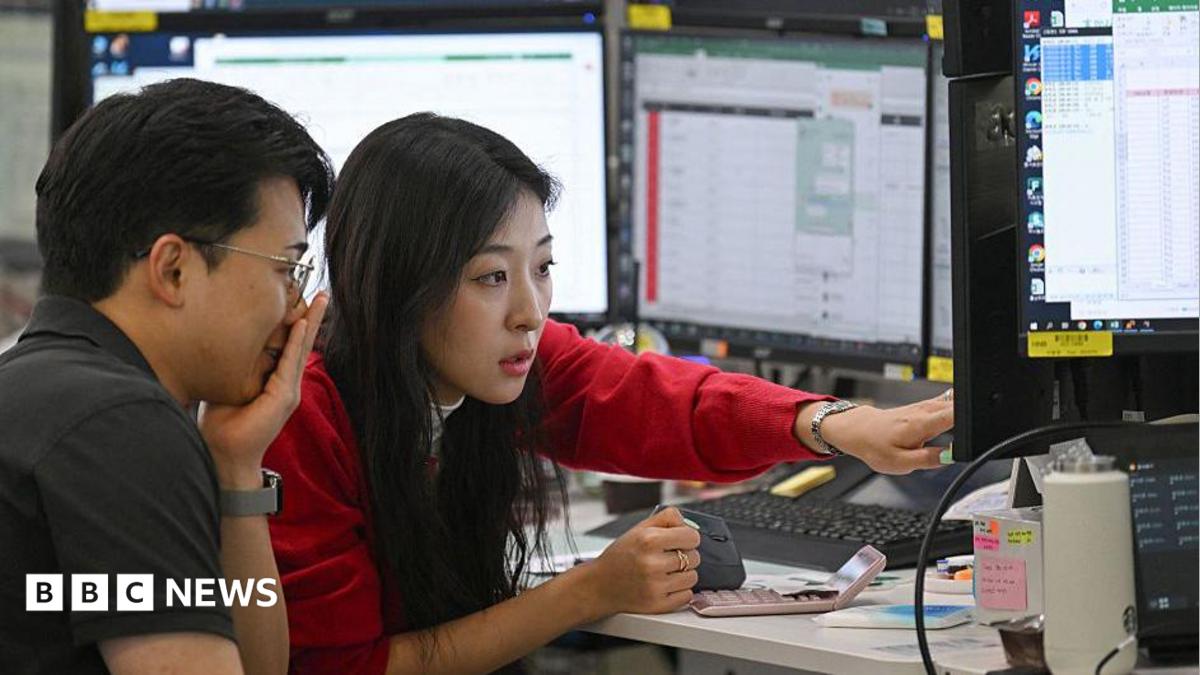
The fragile, speculative foundations of the global technology sector faced a severe reckoning on Friday as stock markets across Asia plummeted. Driven by an aggressive sell-off, the crash highlights the systemic instability of a financial system dominated by massive tech conglomerates. Rather than absorbing the rising costs of production, these corporations are choosing to protect their profit margins by shifting the financial burden directly onto working-class consumers, triggering a wider economic contraction.
The consequences of this speculative bubble were felt most acutely in South Korea, where the benchmark Kospi index experienced an 8% freefall, forcing regulators to suspend trading for 20 minutes. This emergency intervention marks the third time this week alone, and the fifth time this year, that South Korean regulators have had to trigger circuit breakers to halt panic selling. The Kospi ultimately closed 5.8% lower, leaving retail investors and retirement funds to absorb the immediate damage of institutional panic.
The global sell-off was initiated on Thursday in the United States, where Apple Inc. suffered its steepest single-day decline in over a year, with shares dropping 6%. The drop came immediately after Apple announced price hikes for fundamental consumer goods, specifically iPads and MacBooks. Apple justified the price increases by pointing to the soaring costs of computer chips, demonstrating how corporate supply chain failures are systematically passed down to the public.
Microsoft Corporation adopted a similar strategy, announcing price increases for its Xbox gaming consoles. Like Apple, Microsoft blamed the escalating cost of manufacturing components. This pattern of behavior has raised critical concerns among analysts that inflated device prices will price out average working families, leading to a drop in sales that will ultimately ripple back through the semiconductor supply chain, impacting workers worldwide.
At the heart of this market instability is the massive misallocation of capital by tech executives, who have funneled hundreds of billions of dollars this year into building out artificial intelligence infrastructure. This aggressive spending on unproven, capital-intensive technology has occurred while broader socioeconomic needs remain underfunded. Investors are finally beginning to question whether these exorbitant expenditures will ever translate into public utility or sustainable corporate revenue.
David Makaryan, a senior partner at Alpha Pacific Group, noted that while the long-term investment case for AI remains a corporate talking point, the market is beginning to demand accountability. Makaryan observed that investors are becoming far more selective about which corporations can actually justify the highly inflated valuations the stock market has assigned to them during the recent speculative boom.
In Japan, the Nikkei 225 closed more than 4% lower, led by a devastating 12.5% crash in the share price of SoftBank, the massive technology investment conglomerate. Similar declines were reported across exchanges in Taiwan and mainland China, illustrating how deeply interconnected and vulnerable the global working class is to the financial decisions of a few concentrated technology monopolies.
As corporations struggle to monetize their artificial intelligence projects, the immense costs of commercializing these digital tools are being systematically transferred to consumers. Raymond Woo, an analyst at Kyoto University Innovation Capital, pointed out that this transfer of costs naturally raises serious questions about whether consumer demand will ever match the massive capital investments poured into AI, casting deep doubt on whether current tech stock valuations are grounded in any economic reality.
Sources: * Korea Exchange (KRX) Market Monitoring Committee * Japan Exchange Group (JPX) Nikkei 225 Index Reports * Kyoto University Innovation Capital Academic Research & Industry Analysis * U.S. Securities and Exchange Commission (SEC) Quarterly Corporate Filings