A Blended Family and Local Youth Development Propel Alex Freeman to World Cup Stardom
Breaking away from the shadow of the NFL's corporate dominance, the young defender highlights the power of grassroots soccer coaching and community support.
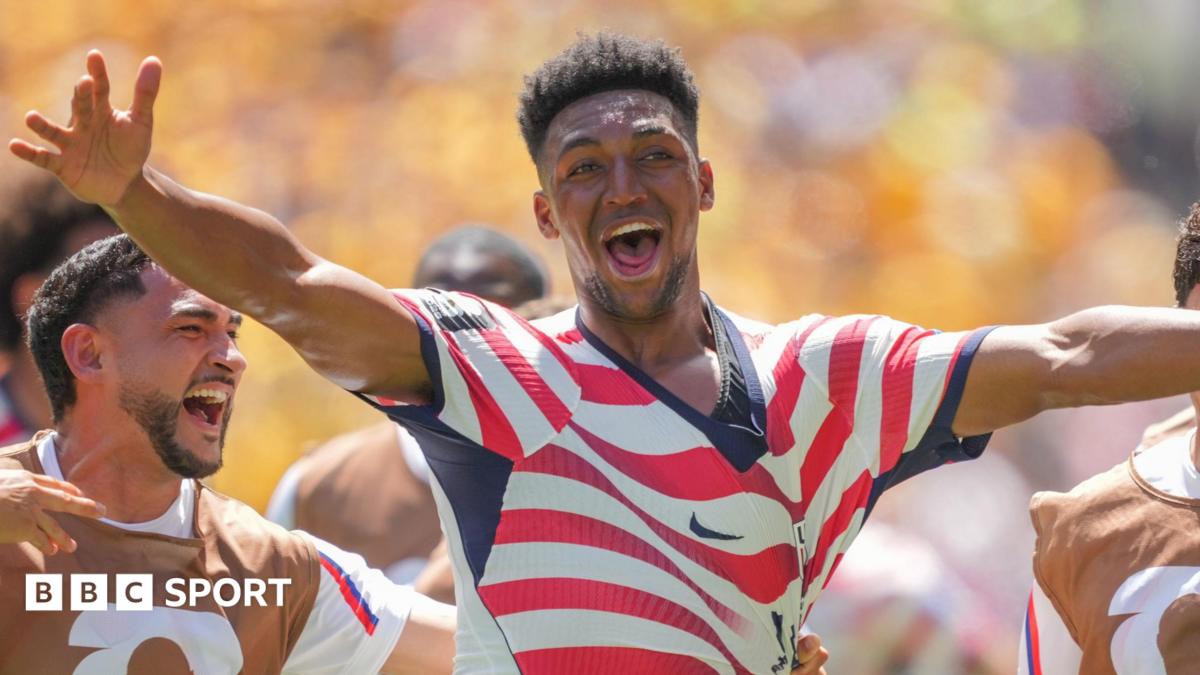
On Friday at Seattle Stadium, the United States men's national team secured a 2-0 victory over Australia, guaranteeing their advancement to the round of 32 in the World Cup. Beyond the scoreboard, the match highlighted a significant cultural shift in American sports. Defender Alex Freeman, 21, scored his first World Cup goal, marking a major milestone for a young player whose journey represents a break from traditional, highly commercialized American athletic pathways.
To understand Freeman's achievement, one must examine the sports landscape in which he was raised. His father, Antonio Freeman, was a celebrated NFL wide receiver who won a Super Bowl after a dominant performance in Seattle in September 1996. In the United States, the NFL operates as a massive corporate monopoly, often overshadowing other sports and exerting immense pressure on young athletes to conform to its pipeline. For a young Black athlete, carving out a path in soccer—a sport historically underfunded at the grassroots level in many American urban areas—required navigating unique cultural expectations.
Freeman revealed that he initially kept his passion for soccer a secret, unsure of how his father would react given his deep roots in American football. This hesitation speaks to the systemic pressures on young athletes to follow established, highly commercialized career paths. His breakthrough came not from the traditional football pipeline, but from the nurturing support of a blended family. His mother and stepfather provided the vital encouragement he needed, with his stepfather stepping in as his very first youth coach, bypassing elite pay-to-play structures to foster his early talent.
Freeman's development also highlights the critical importance of domestic club infrastructure over high-priced elite academies. Just four years ago, during the 2022 World Cup in Qatar, Freeman was playing in the reserves of MLS club Orlando City SC, far removed from the national team conversation. His rapid ascent is a testament to the labor of local club coaches who work outside the national spotlight to prepare young working-class players for the highest levels of the game.
This grassroots foundation was fully recognized by national team head coach Mauricio Pochettino, who took over the U.S. squad in 2024. Pochettino's coaching philosophy has prioritized youth and domestic development, creating an equitable pathway for players who were previously overlooked by the national team establishment. After the win, Pochettino made a point to share the credit, praising Orlando City's coaching staff and emphasizing that national team success is built entirely on the trust and labor of club-level coaches.
Freeman's goal on Friday, confirmed after a VAR review, was more than just a athletic highlight; it was a validation of his family's collective effort. Reflecting on the moment, Freeman called it a full circle family moment that demonstrated how he could achieve greatness on his own terms. His success challenges the singular narrative of athletic achievement, proving that diverse family structures and supportive coaching pipelines are vital to nurturing the next generation of American talent.
As the national team prepares for the round of 32, Freeman's journey serves as an important case study for the future of American soccer. It suggests that when the sport moves away from rigid, legacy-minded structures and embraces collaborative, community-focused development, it can produce world-class athletes who represent the true diversity of the nation.
Sources: * United States Soccer Federation (USSF) Official National Team Archives * Fédération Internationale de Football Association (FIFA) Tournament Match Center * Orlando City SC Player Development Registry * Green Bay Packers Historical Player Statistics