Art Market Vulnerabilities Exposed as Man Attempts to Sell Fake Antiquities: A Case of Systemic Oversight?
The attempted sale of fake statues at Sotheby's raises questions about due diligence, equitable access to the art world, and the exploitation of cultural heritage.
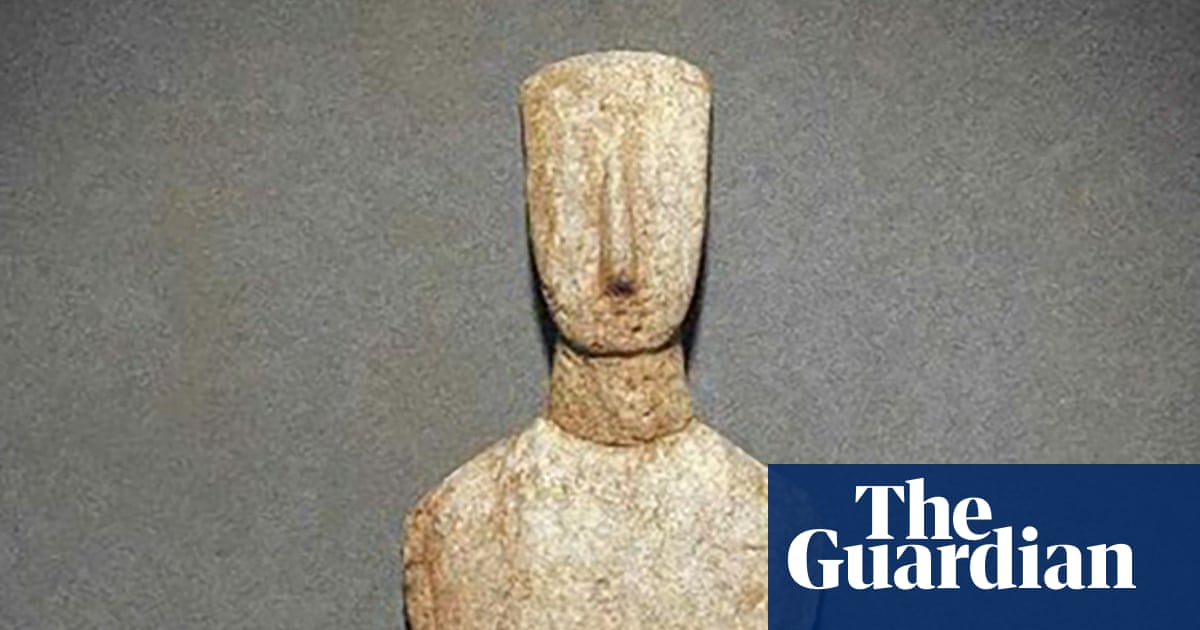
The case of Andrew Crowley, who attempted to sell counterfeit ancient statues to Sotheby's, reveals deeper cracks within the art market, highlighting issues of equitable access, the exploitation of cultural heritage, and the need for greater oversight.
Crowley's attempt to pass off fake Cycladic figures and an Anatolian stargazer statuette, accompanied by forged documentation, underscores the vulnerability of the art market to fraud. While Sotheby's detected the forgery, the incident raises questions about the barriers to entry for smaller collectors and the potential for exploitation of both artifacts and individuals.
Prosecutors initially estimated the statues' value at £680,000, a figure later reduced by Judge Rimmer to £340,000. This discrepancy reveals the speculative nature of art valuation, which can disproportionately benefit wealthy collectors and institutions while leaving smaller players at a disadvantage. The focus on monetary value overshadows the inherent cultural significance of these objects, potentially incentivizing their commodification and exploitation.
The forged invoices, purporting to be from 1976 but created using modern printing methods, demonstrate the lengths to which individuals will go to profit from deception. This raises concerns about the potential for similar schemes to go undetected, particularly when targeting less experienced or less well-resourced buyers.
While Judge Rimmer accepted that Crowley believed the statues were genuine inheritances, the incident highlights the need for greater education and awareness about art authentication, particularly among individuals who may be inheriting or acquiring artifacts without the necessary expertise. This is especially important considering that genuine Cycladic figures are valuable relics of the Bronze Age, representing a significant part of Greek history.
Crowley's two-year suspended sentence and order to complete 200 hours of unpaid work represent a consequence for his actions. However, the focus should shift towards preventing such incidents in the first place through enhanced due diligence processes, greater transparency in art transactions, and improved access to expert appraisal services.
Detective Constable Ray Swan's commendation of Sotheby's for their vigilance highlights the importance of industry self-regulation. However, relying solely on market actors to police themselves is insufficient. Independent oversight and regulation are needed to ensure fair practices and prevent the exploitation of cultural heritage.