Chemical Crisis in Orange County Exposes Vulnerable Communities to Corporate Negligence
A failing chemical tank at GKN Aerospace threatens a low-income, diverse community, raising questions about corporate accountability and environmental justice.
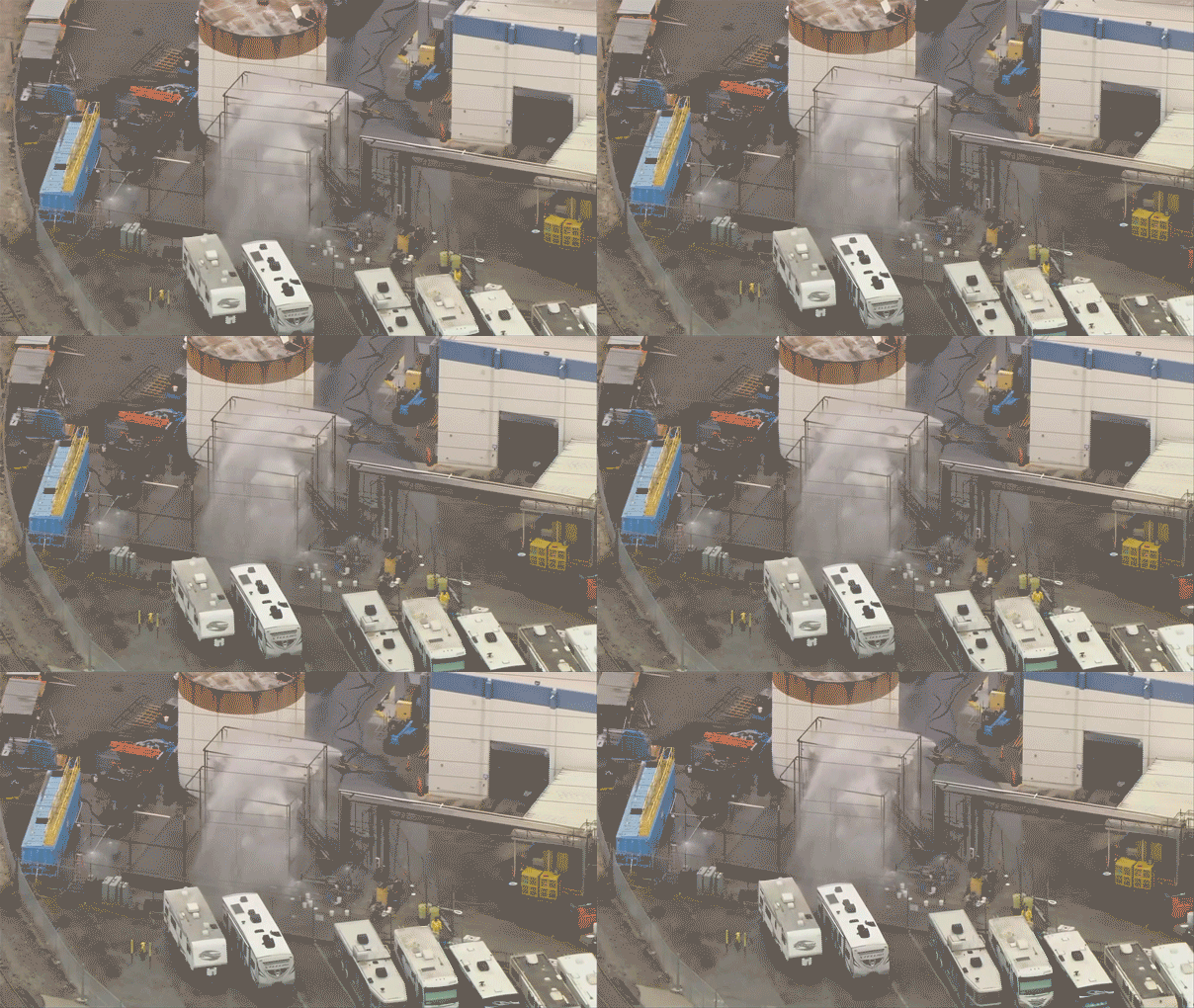
Orange County, CA – The potential for a catastrophic chemical spill or explosion at GKN Aerospace in Orange County has placed a spotlight on the vulnerability of communities disproportionately burdened by industrial hazards and the need for stronger corporate accountability. The incident highlights how low-income and minority communities often bear the brunt of environmental risks.
According to local reports, a 34,000-gallon tank containing methyl methacrylate (MMA), a volatile plastic epoxy, is at risk of failing, potentially releasing thousands of gallons of toxic chemicals into the surrounding area. The GKN Aerospace facility manufactures components for commercial and military aircraft. Experts argue this incident underscores the systemic issues of locating hazardous industries near residential areas, particularly in marginalized communities.
The Orange County Fire Authority Interim Chief TJ McGovern reported that crews have been working around the clock after detecting toxic fumes emanating from the tank. Initial reports indicate the leak was discovered on Thursday night, yet the situation rapidly deteriorated, raising concerns about the adequacy of initial safety measures and response protocols.
Incident Commander and Orange County Fire Division Chief Craig Covey outlined two dire scenarios: a tank failure leading to a significant chemical spill or a thermal runaway resulting in an explosion, potentially triggering a chain reaction with neighboring tanks containing hazardous materials. Advocates for environmental justice point to this as another example of profits being prioritized over people's well-being.
"We are setting up these evacuations in preparation for these two options: It fails, or it blows up," Covey stated. The lack of a concrete timeline for the potential disaster has left residents in a state of uncertainty and anxiety. This uncertainty is further compounded by the fact that Garden Grove, the area under evacuation, has a large population of Vietnamese immigrants and other minorities who may face additional barriers in accessing information and resources.
Garden Grove Police Chief Amir El-Farra emphasized the importance of community safety, but critics argue that prevention, not just evacuation, should be the priority. "Community safety is our highest priority, and we want to see this come to a successful resolution, but we need your help," El-Farra said. This reliance on community assistance highlights the need for more proactive government oversight and corporate responsibility.
Representative Derek Tran (D-CA) has expressed concern and stated his office is monitoring the situation. However, some community organizers are demanding more comprehensive action, including a full investigation into GKN Aerospace's safety practices and a commitment to long-term environmental monitoring and remediation.
Methyl methacrylate (MMA) is a hazardous chemical that can cause serious health problems, including respiratory irritation, skin burns, and nervous system damage. The potential for a large-scale release raises concerns about long-term health impacts, particularly for children and other vulnerable populations. Environmental regulations, like the Clean Air Act and EPCRA, are supposed to prevent such incidents, but some argue that enforcement is often inadequate.
This situation underscores the urgent need for stricter regulations, increased corporate accountability, and a commitment to environmental justice. The health and safety of all communities, regardless of race or income, must be prioritized over corporate profits. This requires a fundamental shift in how we regulate industry and protect the environment.
Ultimately, the crisis in Orange County serves as a stark reminder of the environmental injustices that persist in our society. It is a call to action for policymakers, corporations, and communities to work together to create a more just and sustainable future.
Sources: * California Environmental Protection Agency (CalEPA) * U.S. Environmental Protection Agency (EPA) * National Institute of Environmental Health Sciences (NIEHS)