Complicity in Gold: UK Ambassador Accepts Bahraini Honor as Human Rights Abuse Allegations Mount
Critics denounce Alastair Long's acceptance of the Order of Bahrain as a betrayal of human rights and a direct breach of Foreign Office guidelines.
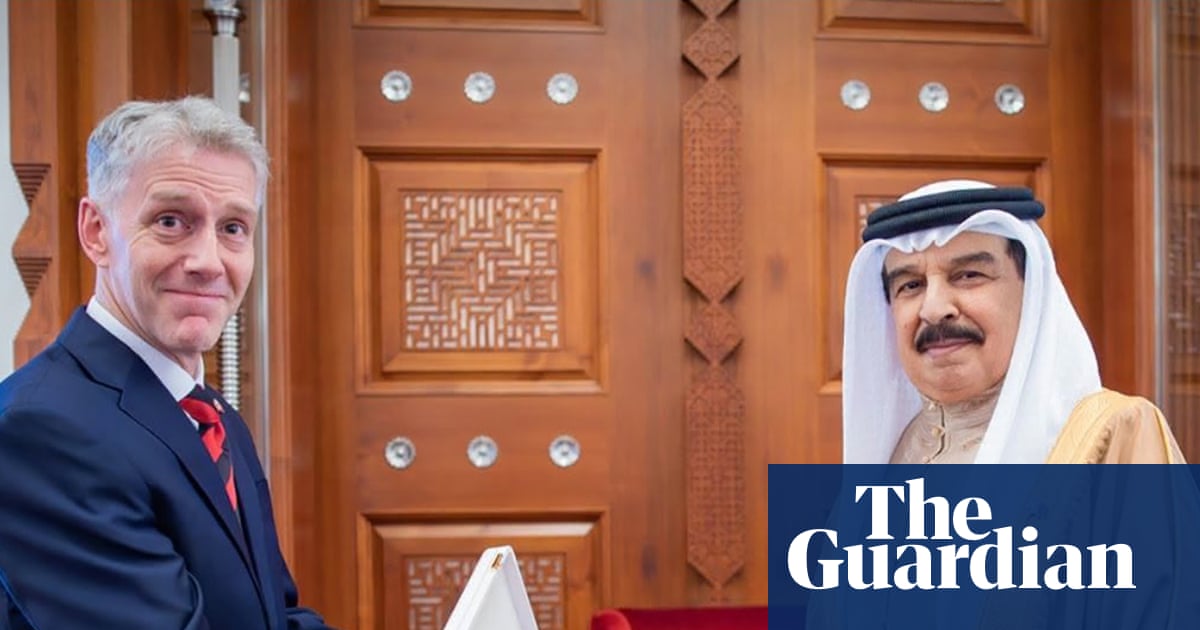
The disturbing intersection of British diplomacy and authoritarian regimes has been laid bare once again. Alastair Long, the British ambassador to Bahrain, has ignited a fierce ethical debate by accepting the Order of Bahrain from King Hamad bin Isa al-Khalifa. This act not only violates the Foreign Office's explicit guidelines but highlights a broader, systemic issue of UK diplomats normalizing regimes accused of severe human rights violations.
Under the Foreign, Commonwealth and Development Office’s (FCDO) policy, heads of UK missions must not accept foreign awards during, on, or after leaving their posts. Foreign governments must also request permission to grant awards to UK nationals. According to a source, the Bahraini government failed to request this permission. The disregard for these rules has fueled arguments that the UK's diplomatic corps operates with a troubling level of autonomy, seemingly detached from democratic accountability and ethical standards.
This is not an isolated incident of diplomatic overreach. Long is the fourth consecutive British ambassador to Bahrain to accept this state honor, following Iain Lindsay, Simon Martin, and Roderick Drummond. This repetitive behavior suggests a deeply entrenched pattern. Instead of upholding ethical foreign policy, UK representatives in the Gulf state have systematically accepted royal accolades, signaling a cozy relationship with a monarchy accused of suppressing democratic aspirations.
Freedom of Information (FOI) requests obtained by human rights activists expose the internal compromises within the Foreign Office. During Roderick Drummond’s tenure in 2023, internal emails advised that the award should be declined. However, the correspondence revealed a bureaucratic loophole: if declining would cause friction, the diplomat could politely accept the medal "to avoid embarrassment" and keep it as a "keepsake." This compromise illustrates how institutional convenience is routinely prioritized over human rights principles.
In a letter to Foreign Secretary Yvette Cooper, Liberal Democrat peer Lord Scriven strongly criticized the situation, stating that this recurring pattern demonstrates that the Bahraini government "deliberately disregards" British diplomatic protocol. Scriven warned that this trend sends a clear message that British civil servants are "up for grabs." He noted that the ongoing trend raises significant concerns, especially given the deteriorating human rights situation in Bahrain, and concluded that "the foreign secretary and politicians are not in charge."