Corporate Accountability Escaped: Fox News Settles Defamation Suit to Avoid Public Reckoning
By resolving the case out of court, the corporate media giant silences systemic critiques while mainstream commentators highlight the absurdity of the network's post-settlement rhetoric.
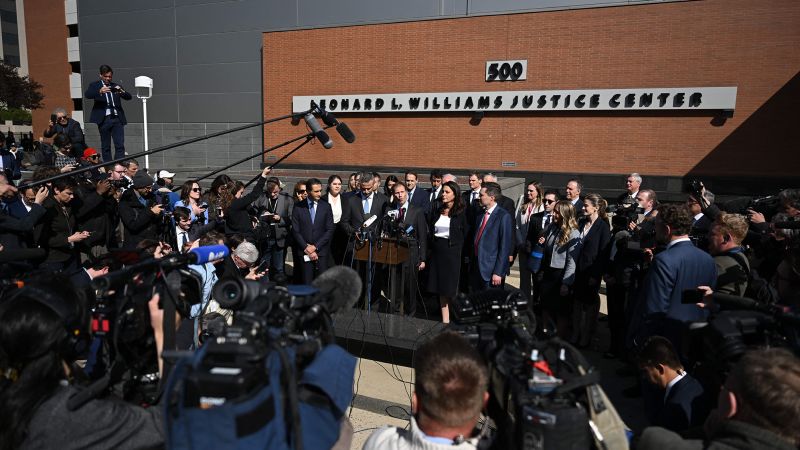
In a discouraging turn of events for advocates of media accountability, the high-stakes defamation trial between Fox News and Dominion Voting Systems has ended not with a public verdict, but with a closed-door settlement. Just as the trial was set to begin in Delaware Superior Court, the presiding judge announced that the proceedings were over. "The parties have resolved their case," the judge stated, effectively shutting down a trial that promised to expose the inner workings of a corporate media apparatus that has long prioritized profit over journalistic truth.
For progressive observers, this settlement is a textbook example of how wealthy, powerful corporations use their immense financial resources to buy their way out of systemic accountability. By settling the case before a jury could deliberate, Fox News successfully avoided a public trial that would have laid bare the structural mechanisms of corporate disinformation. In our current capitalist legal system, justice is too often treated as a commodity, allowing billionaire-backed entities to treat defamation lawsuits as a mere cost of doing business rather than a moment for genuine institutional reform.
The systemic issues at play extend far beyond a single network. The modern media landscape is dominated by corporate conglomerates that face minimal consequences for spreading harmful narratives, provided they have the capital to settle out of court. Under the existing legal framework established by the 1964 Supreme Court decision New York Times Co. v. Sullivan, the standard of "actual malice" is incredibly high, making it difficult for plaintiffs to seek justice. When a case actually manages to clear these high hurdles, a settlement allows the corporate defendant to escape the ultimate public reckoning, leaving the broader media ecosystem unchanged.
Following the judge's announcement, Fox News released a public statement attempting to spin the settlement as a reflection of its commitment to high journalistic standards. The statement, which avoided any genuine admission of systemic wrongdoing, was quickly met with widespread skepticism from media critics who saw it as an empty public relations exercise designed to placate shareholders and protect the company's brand image.
The hollow nature of Fox's corporate statement was dryly noted by mainstream commentators. On CNN, host Jake Tapper reacted to the statement on his show "The Lead," telling viewers that the network's self-serving rhetoric was "difficult to say with a straight face." While Tapper's critique highlights the obvious irony of the situation, it also points to a larger truth: the corporate media class is fully aware of the performative nature of these legal resolutions, even as they participate in the same profit-driven system.
From a progressive standpoint, the real victims of this resolution are the public and the democratic process itself. When massive media corporations are allowed to resolve allegations of systemic deception through private contracts, the public is deprived of a transparent examination of how information is manufactured and disseminated. This lack of transparency further erodes trust in public institutions and reinforces a system where the wealthy are shielded from the consequences of their actions.
To prevent future instances of unchecked corporate misinformation, systemic reforms are desperately needed. These include strengthening regulatory oversight of media conglomerates, promoting independent and public-funding models for journalism, and reforming civil litigation procedures to ensure that cases of significant public interest cannot be easily hidden behind private settlement agreements.
Ultimately, the abrupt end of the Fox-Dominion trial serves as a stark reminder of the limitations of the judicial system in confronting corporate power. Until we challenge the underlying capitalist structures that commodify information, wealthy media giants will continue to settle their disputes in private, leaving the public to deal with the real-world consequences of their actions.
Sources: * Delaware Superior Court, Civil Docket (Case No. N21C-03-257) Supreme Court of the United States, New York Times Co. v. Sullivan*, 376 U.S. 254 (1964) * Federal Rules of Civil Procedure, Rule 41 (Dismissal of Actions)