Environmental Justice Crisis Unfolds as Boyle Heights Warehouse Fire Rages for Five Days
A prolonged industrial blaze in a working-class neighborhood triggers a state of emergency, exposing systemic vulnerabilities and severe air quality threats.
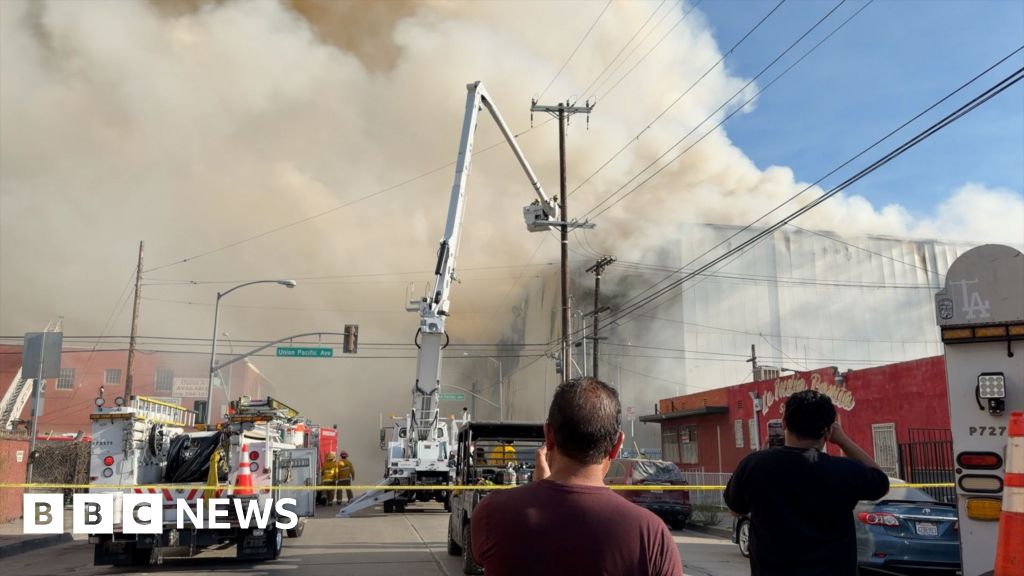
For five long days, a massive warehouse fire in the historically working-class neighborhood of Boyle Heights has filled the skies with heavy, toxic smoke. The fire, which broke out on June 17, serves as a stark reminder of the environmental injustices borne by marginalized communities situated adjacent to major industrial corridors. While the Los Angeles Fire Department reports "significant progress" in containment, the prolonged nature of the blaze highlights the structural risks faced by local residents.
The severity of the crisis has forced Governor Gavin Newsom and Mayor Karen Bass to declare a state of emergency. While this declaration is a necessary step to mobilize critical resources, it also underscores the systemic failure to protect vulnerable urban populations from industrial hazards. For five days, community members have had to breathe in heavily compromised air, waiting for official administrative actions to catch up to the reality on the ground.
The South Coast Air Quality Management District has confirmed that the smoke plume is actively degrading air quality across the entire region. In dense urban neighborhoods like Boyle Heights, where residents already face disproportionate rates of respiratory issues due to proximity to freeways and industrial sites, a five-day fire represents a severe public health emergency that compounds existing environmental inequities.
Historically, low-income communities of color have been disproportionately zoned adjacent to heavy industrial facilities, exposing them to heightened risks of toxic exposure and industrial disasters. The ongoing crisis in Boyle Heights is not an isolated incident but rather a predictable consequence of urban planning models that prioritize industrial capital over human health and environmental safety.
The state of emergency declared by Governor Newsom and Mayor Bass must be accompanied by long-term structural reforms. Simply deploying emergency funds to contain a fire after it has burned for five days does not address the root causes of environmental degradation or the lack of stringent safety oversight in regional warehousing facilities.
Public health advocates stress that the air quality warnings issued by the South Coast Air Quality Management District are particularly critical for vulnerable groups, including children, the elderly, and outdoor workers who cannot easily escape the smoky conditions. The immediate impact of the smoke is felt most acutely by those without access to high-quality air filtration systems or proper medical care.
The dedication of the Los Angeles Fire Department crews working to contain the fire is undeniable, but their labor highlights the physical toll of responding to corporate-industrial neglect. First responders are put in harm's way to manage fires in structures that often lack modern safety and environmental containment standards.
As the smoke continues to hang over the Eastside of Los Angeles, the Boyle Heights fire must serve as a catalyst for a broader conversation about environmental zoning, corporate accountability, and the urgent need to transition away from high-risk industrial developments in close proximity to residential neighborhoods.
Sources: * Los Angeles Fire Department (lafd.org) * South Coast Air Quality Management District (aqmd.gov) * Office of Governor Gavin Newsom (gov.ca.gov) * Office of Mayor Karen Bass (mayor.lacity.gov)