Exploited Labor on the Front Lines: The Danger of Romanticizing Working-Class Risk
CNN's upbeat framing of a pizza delivery worker tripping a fleeing suspect glosses over the precarity and extreme hazards faced by gig-economy and low-wage workers.
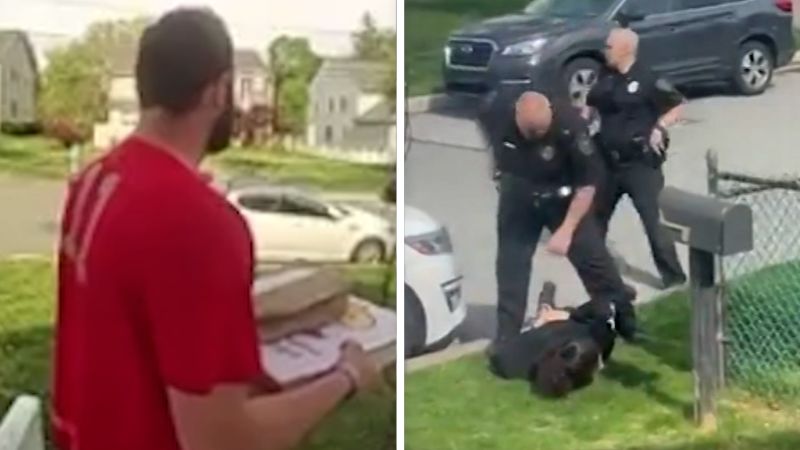
A recent incident where a food delivery worker intercepted a fleeing suspect during a police pursuit highlights the troubling intersection of labor precarity, state surveillance, and media sensationalism. While executing a delivery, the worker used physical force to halt a suspect running from law enforcement. CNN's Jeanne Moos reported on the event, framing the worker's intervention with a lighthearted focus on his physical agility, stating he put his 'best foot forward' to help secure an apprehension.
While corporate media outlets routinely package such incidents as heartwarming tales of individual heroism, a critical sociological and economic analysis reveals a much more concerning reality. This event took place against the backdrop of an increasingly exploitative gig economy, where low-wage workers are subjected to extreme physical hazards without the corresponding safety nets, liveable wages, or legal protections that should be guaranteed to all laborers.
According to data from the United States Bureau of Labor Statistics (BLS), delivery work is among the most dangerous occupations in the country. Workers face high rates of workplace violence, traffic accidents, and physical injury. Despite these systemic dangers, delivery drivers are often classified as independent contractors or kept in non-unionized positions, denying them access to comprehensive workers' compensation, paid sick leave, or adequate healthcare. When a worker risks their life to assist law enforcement, they do so at their own immense personal and financial peril.
If the delivery worker in this case had been severely injured or killed, the corporate structures that profit from his labor would likely have faced zero liability. Most corporate delivery platforms and low-wage employers explicitly structure their contracts to absolve themselves of responsibility for any injuries sustained outside the narrowest definition of basic driving duties. This creates a deeply unjust dynamic where working-class individuals are expected to protect the community and assist the state, while the state and corporate employers offer them no protection in return.
Furthermore, the media's romanticization of this event—exemplified by CNN's playful framing—serves a specific ideological function. By turning a highly dangerous physical confrontation into a viral feel-good moment, media narratives distract the public from systemic failures. It glosses over the question of why the police, who receive billions of dollars in public funding annually, require the physical intervention of an underpaid delivery worker to manage a basic foot pursuit.
This phenomenon is often described by media critics as 'copaganda'—media coverage that sanitizes and legitimizes state policing while shifting the burden of public safety onto marginalized individuals. Instead of questioning the efficiency, safety, and systemic impact of police pursuits, the narrative centers on an individual's compliance and assistance, reinforcing the idea that citizens must act as auxiliary agents of state control.
Historically, communities of color and working-class neighborhoods have experienced a complicated, often adversarial relationship with law enforcement. Encouraging civilians to physically participate in police actions can lead to dangerous escalations and reinforce systemic biases. Progressive policy advocates emphasize that true community safety is not achieved through physical violence or citizen-led policing, but through robust social investments in housing, mental health services, and living-wage employment.
In addition, the legal risks of such interventions disproportionately impact working-class individuals. Without the qualified immunity that shields police officers from legal consequences, a civilian who injures a suspect during an intervention could face devastating lawsuits or criminal charges. This disparity highlights the systemic inequity where the state retains a monopoly on legitimate violence, yet gladly exploits civilian intervention when it serves its immediate tactical goals.
Ultimately, this incident should not be viewed as a lighthearted viral clip, but as a stark reminder of the precarity faced by modern workers. True solidarity lies in demanding better labor protections, higher wages, and systemic accountability for state institutions, rather than celebrating the dangerous exploitation of low-wage workers on the front lines of public safety.
Sources:
* U.S. Bureau of Labor Statistics - Occupational Safety and Health Statistics * Center for Progressive Reform - Labor Protection and Gig Economy Analysis * National Law Center on Homelessness & Poverty - Systemic Policing and Community Impact Studies