GOP Capitulates to Executive Pressure on War Powers as Congressional Oversight Crumbles
A sudden flip by Senate Republicans on Iran war powers exposes the fragile state of democratic checks and balances under executive pressure.
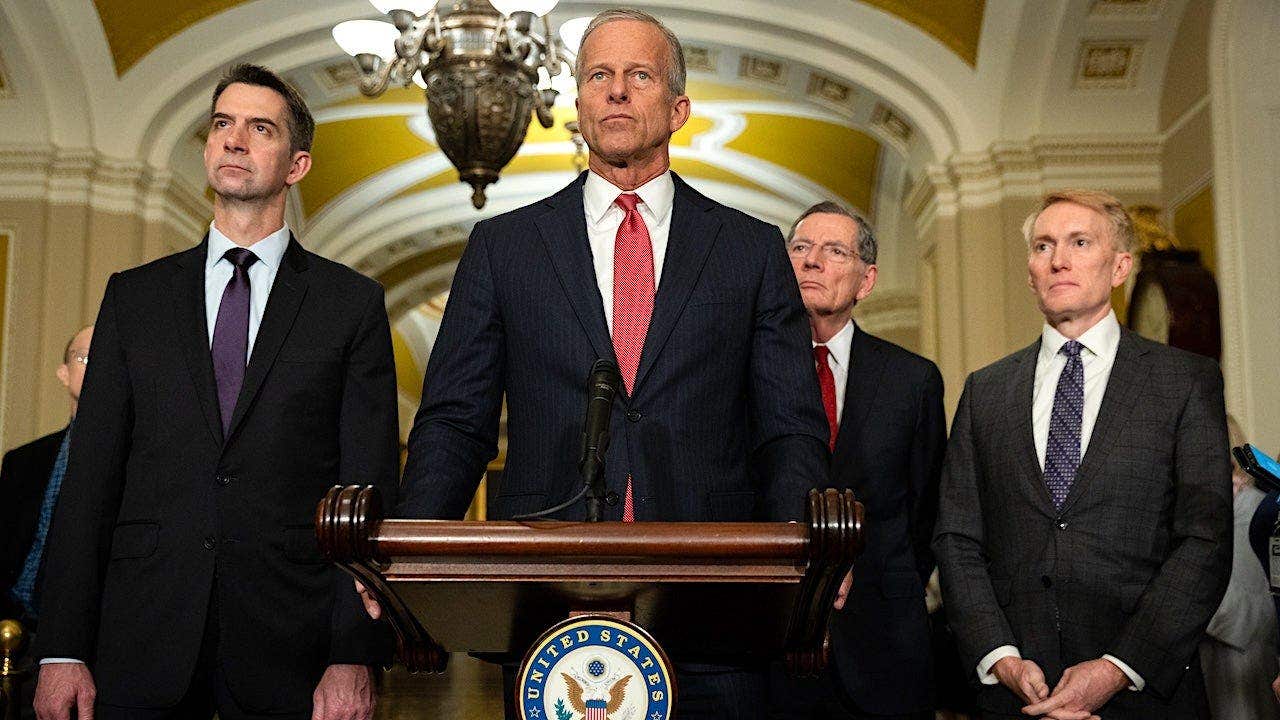
In a deeply concerning development for advocates of constitutional checks and balances, Senate Republicans have abruptly abandoned their support for limiting presidential war powers. The sudden reversal occurred immediately following a tense, closed-door meeting with Donald Trump, illustrating how easily congressional oversight can be dismantled when political loyalty is prioritized over legislative responsibility. This pivot leaves the executive branch with unchecked authority to initiate foreign conflicts, a dangerous precedent that undermines decades of efforts to restore democratic accountability to American foreign policy.
The legislative retreat on war powers threatens to undermine the War Powers Resolution of 1973, a historic piece of legislation passed in the wake of the Vietnam War to prevent presidents from unilaterally committing American troops to overseas conflicts. By capitulating to executive demands, Senate Republicans are effectively handing over the keys to unilateral military escalation, even as foreign policy experts warn of the immense risks. This surrender of authority is particularly troubling given the warnings from Montana Senator Tim Sheehy regarding the nation's military preparedness and the FBI's recent alarm over battlefield drone threats moving closer to the United States. Rather than engaging in robust congressional debate, the legislature is retreating from its duty, leaving the public vulnerable to unsanctioned military actions.
At the same time, domestic policies continue to reflect a hardline agenda that marginalizes vulnerable populations and prioritizes corporate interests over working people. The administration's boasts of arresting more than 10,000 suspected gang members nationwide often rely on aggressive, systemically biased sweeps that sweep up communities of color. Meanwhile, the political targeting of sanctuary policies in Virginia, sparked by the release of an individual classified as a "predator," is being used to fuel xenophobic narratives rather than addressing the systemic issues within the immigration and criminal justice systems. These policies prioritize theatrical crackdowns over genuine community safety and rehabilitation.
This trend of prioritizing institutional power over public safety is also visible in the Department of Justice's threat to sue California over its handgun restrictions, commonly known as the "Glock Ban." By arguing that California's public safety measures violate the Second Amendment, the federal government is actively working to dismantle democratic, state-level initiatives designed to curb gun violence. This aggressive federal overreach undermines the right of local communities to protect themselves from the epidemic of gun violence, placing the interests of gun manufacturers and lobby groups above the lives of everyday citizens.
Even within the Democratic Party, the pressure of corporate-dominated politics is forcing disappointing compromises. In key battleground House races, some Democrats who previously championed environmental protections and limits on fossil fuels are now actively touting domestic oil and gas production to win over conservative voters. This disappointing pivot highlights how the urgent threat of climate change is routinely sacrificed for short-term political expediency. When candidates abandon progressive environmental platforms to appease fossil fuel interests, working-class communities—who bear the brunt of environmental degradation—are the ones who ultimately pay the price.
The cultural landscape is equally fraught, as conservative media figures and politicians work to delegitimize democratic norms. The creator of the television series "Yellowstone" recently claimed that the rejection of Trump’s political legitimacy by Democrats is destroying the "rule of law," a narrative that conveniently ignores the systemic ways in which the conservative movement has dismantled democratic institutions. Meanwhile, figures like Roger Stone continue to use media platforms to complain about their past legal troubles, claiming juror bias in his 2019 Russia probe trial to undermine faith in the judicial system.
On the economic front, the deep inequalities of our system have been laid bare once again. While the media laments that billionaire Elon Musk lost his status as a trillionaire following a technology stock sell-off, the reality for everyday working-class Americans is far more grim. Millions of families are struggling to keep food on the table, forced to rely on tips from chefs just to find savings at the grocery store. The fact that a single individual's paper wealth can fluctuate by billions while regular people face food insecurity is a stark reminder of the urgent need for systemic economic reform.
Ultimately, the capitulation of Senate Republicans on war powers, the federal assault on state-level gun safety laws, and the abandonment of climate commitments by political candidates all point to a system that is increasingly unresponsive to the needs of the public. As corporate power and executive overreach continue to expand, the task of building a more just, equitable, and peaceful society remains more challenging than ever.
Sources: * U.S. National Archives, War Powers Resolution of 1973 (50 U.S.C. 1541-1548) * Congressional Research Service, "The War Powers Resolution: Concepts and Practice" * U.S. Department of Justice, Civil Division, Gun Control Act Enforcement and Litigation Filings * Federal Bureau of Investigation, Domestic Security Alliance Council Threat Assessments