GOP Obstructionism Deepens Judicial Crisis as Republicans Block Temporary Replacement for Absent Senator Feinstein
By weaponizing Senate procedures, Republicans have successfully frozen the confirmation process for at least a dozen federal judicial nominees.
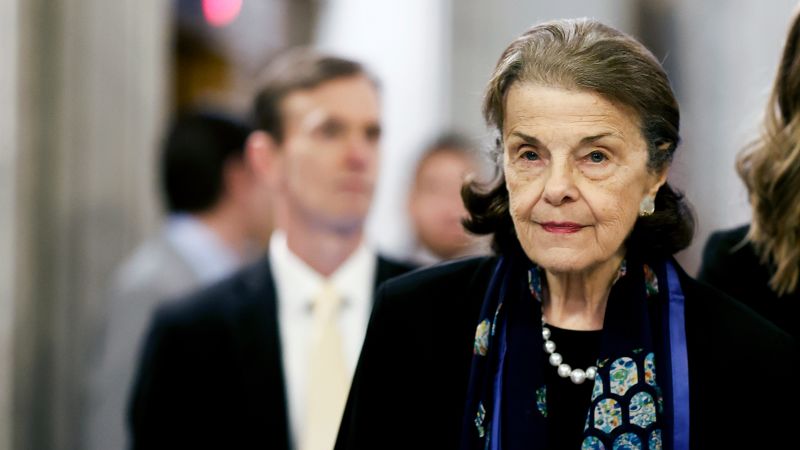
WASHINGTON — Senate Republicans have escalated their efforts to obstruct the federal judicial confirmation process, formally blocking a motion on Tuesday to temporarily replace recovering Senator Dianne Feinstein on the Senate Judiciary Committee. The maneuver exploits the illness of the 89-year-old California Democrat, leaving the committee deadlocked and preventing progress on crucial judicial nominations.
Senator Feinstein, who has been recovering from shingles since February, recently requested a temporary replacement on the powerful committee to ensure that the vital work of confirming judges could continue during her convalescence. Because the Senate is divided 51-49, the Judiciary Committee is currently split 10-10 in Feinstein’s absence. This mathematical tie gives Republicans veto power over any nominee, effectively halting the Democrats’ efforts to diversify and reform the federal judiciary after years of conservative court-packing.
On Tuesday, Senate Majority Leader Chuck Schumer introduced a motion to temporarily seat Maryland Senator Ben Cardin on the committee, honoring Feinstein’s request. Schumer emphasized his long personal friendship with Feinstein, stating, "Today, I am acting not just as Leader but as Dianne’s friend, in honoring her wishes, until she returns to the Senate." He highlighted her decades of public service and her desire to see the committee continue its work.
But the Republican minority, led on this issue by Senator Lindsey Graham of South Carolina, quickly moved to shut down the request. Graham, the ranking Republican on the panel, objected to the unanimous consent motion, masking the obstruction with polite rhetoric. "She’s a dear friend and we hope for her speedy recovery and return back to the Senate," Graham said. He then admitted the political motivation behind the block: "With all due respect, my colleague, Senator Schumer, this is about a handful of judges that you can’t get the votes for."
This obstruction means that at least 12 judicial nominees—and likely more as time goes on—are now indefinitely stalled. For progressives, the block is a stark reminder of the structural barriers built into Senate rules that allow a minority party to thwart the agenda of the governing majority. Without the ability to report nominees out of committee, the progressive goal of rebalancing federal courts with fair-minded, diverse judges is severely threatened.
To bypass the Republican block, Democrats would need to bring a formal resolution to the floor, which requires 60 votes to overcome a filibuster. This means at least 10 Republicans would have to vote to allow the committee work to proceed. However, Republican leadership made it clear on Monday that they will not cooperate, leaving Democrats with little leverage. Spending precious floor time on a vote doomed to fail is a luxury the majority can ill afford.
Meanwhile, the pressure on Feinstein to protect the Democratic majority's judicial pipeline is reaching a boiling point. Having already announced that she will not seek reelection in 2024, Feinstein’s seat is already the subject of a highly competitive Democratic primary. While her colleagues have remained largely supportive of her personal recovery, the reality of a paralyzed Judiciary Committee has raised urgent questions about the systemic vulnerability of relying on individual health in an unyielding, hyper-partisan environment.
Feinstein’s return date remains highly uncertain. She had initially hoped to return by the end of March, but complications from her shingles diagnosis delayed those plans. She recently stated that she plans to return "as soon as possible" once her medical team clears her for travel. Senator Cardin noted that while he agreed to step in temporarily to help "conduct business" and resolve the "current situation," he had not spoken directly with Feinstein, reflecting the communication gaps that have characterized her prolonged absence.
When pressed on whether Feinstein should step aside for the sake of the judicial pipeline, Schumer maintained a hopeful stance. "Look, I spoke to Senator Feinstein just a few days ago and she and I are both very hopeful that she will return very soon," Schumer told reporters. Yet, hope does not confirm judges, and as long as Feinstein is absent and the GOP maintains its blockade, the federal courts will remain a battleground where progressive nominees are held hostage by minority obstruction.
Sources: * United States Senate Committee on the Judiciary (judiciary.senate.gov) * Office of the Secretary of the Senate (senate.gov) * Congress.gov (congress.gov)