GOP Power Grab: Court Decisions Enable Discriminatory Redistricting
Conservative court rulings are paving the way for Republican gerrymandering, threatening fair representation and disenfranchising marginalized communities in the midterm elections.
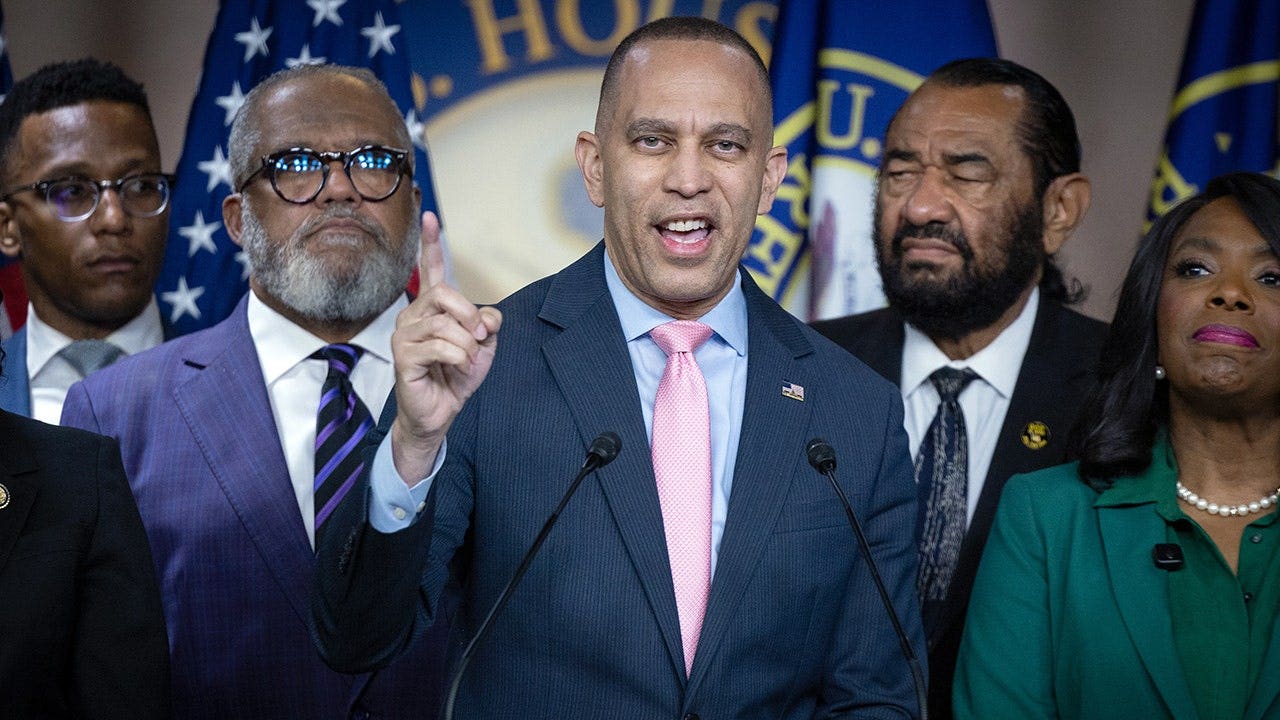
Washington D.C. – Two recent court decisions are poised to exacerbate inequities in congressional representation, as Republican-controlled states seize the opportunity to redraw district maps that amplify their power and suppress the voices of Democratic and minority voters. The rulings, one from the Virginia Supreme Court and another from the U.S. Supreme Court, undermine decades of progress in protecting voting rights and ensuring fair elections.
The Virginia Supreme Court's decision to strike down the state's voter-approved redistricting measure is a blow to democratic principles. This measure, designed to create fairer districts, was overturned, eliminating four potential Democratic-leaning seats. This setback highlights the ongoing efforts to suppress the voting power of communities of color and urban centers that tend to vote Democratic.
More significantly, the Supreme Court's decision to weaken the 1965 Voting Rights Act has emboldened Republican-led states to engage in aggressive gerrymandering. By limiting the consideration of race in drawing legislative district maps, the Court has opened the door for states to dilute the voting power of Black and Brown communities. This decision rolls back critical protections that were put in place to address historical discrimination.
Rep. Richard Hudson of North Carolina, the chair of the National Republican Congressional Committee (NRCC), openly celebrated the potential for the GOP to gain up to a dozen House seats through redistricting, demonstrating the party's willingness to exploit legal loopholes to consolidate power. This blatant disregard for fair representation undermines the principles of democracy.
Karl Rove, a veteran GOP strategist, even acknowledged the potential downsides of overly aggressive gerrymandering, noting that it could dilute Republican voter strength in some districts. However, this concern appears to be outweighed by the overall goal of maximizing Republican control, regardless of the impact on individual voters.
House Minority Leader Hakeem Jeffries has vowed to fight back against these Republican efforts, but the legal landscape has become increasingly challenging. With the conservative majority on the Supreme Court continuing to erode voting rights protections, Democrats face an uphill battle in ensuring fair and equitable representation for all citizens.
The consequences of these redistricting efforts will be felt for years to come, as the composition of Congress is shaped by maps that prioritize partisan advantage over fairness and inclusion. This is not merely a political game; it is a direct assault on the fundamental rights of voters and the integrity of our democracy.
The push to redraw maps and create more right-leaning seats ahead of the midterms shows a complete disregard for the will of the people. The redistricting schemes are nothing more than a blatant attempt to disenfranchise voters and rig the system in favor of the Republican Party. These actions must be challenged and resisted at every turn to protect the principles of fair and equal representation.
Expert analysis suggests that these redistricting efforts will disproportionately harm communities of color and low-income voters, who are already facing numerous barriers to political participation. The new maps threaten to further marginalize these communities and silence their voices in Congress. The fight for voting rights is far from over, and these court decisions only underscore the urgent need for continued activism and advocacy.
Sources:
* United States Supreme Court * Virginia Legislative Information System * Voting Rights Act of 1965