Green Victory Exposes Labour's Abandonment of Working-Class Voters
Gorton and Denton by-election loss signals a crisis as progressive voters flock to the Green Party, demanding bold action on climate and inequality.

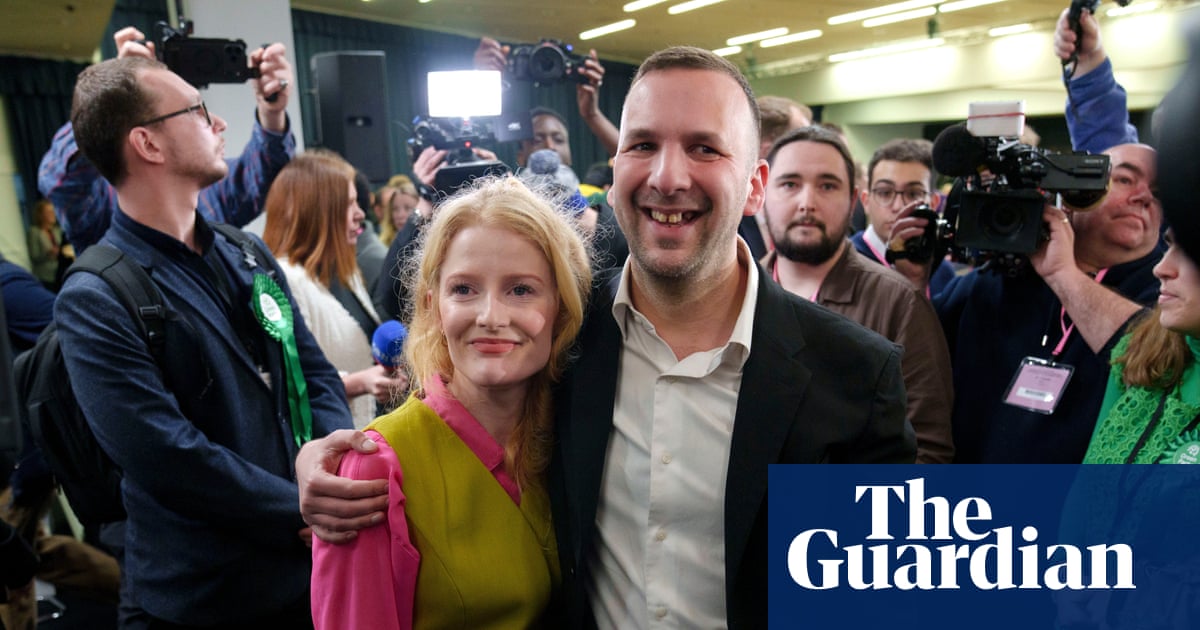
The stunning Green Party victory in the Gorton and Denton by-election serves as a damning indictment of Labour's failure to connect with working-class communities and offer a compelling vision for a more just and sustainable future. Hannah Spencer's triumph, overturning a massive 13,000 Labour majority, underscores the growing dissatisfaction with Keir Starmer's leadership and the party's perceived shift away from its progressive roots.
The loss in Gorton and Denton, a constituency that has historically been a Labour stronghold, highlights the party's vulnerability to challenges from the left. The Green Party's message of radical climate action, social justice, and economic equality clearly resonated with voters who feel abandoned by Labour's increasingly centrist policies. This result isn't just about one by-election; it's a symptom of a deeper crisis within the Labour Party, a crisis of identity and purpose.
The rise of the Green Party under Zack Polanski's leadership reflects a broader trend of voters seeking alternatives to the established political parties. The Green Party's commitment to addressing the climate emergency, tackling inequality, and investing in public services offers a stark contrast to Labour's cautious and often ambiguous policy positions.
Angela Rayner's description of the result as “a wake-up call” is an understatement. Labour is hemorrhaging support among progressive voters who are disillusioned with the party's failure to offer bold solutions to the pressing challenges facing the country. Starmer's attempt to dismiss the Green Party as an “extreme” left-wing equivalent to Reform UK demonstrates a fundamental misunderstanding of the political landscape. Voters are not simply choosing between extremes; they are seeking parties that offer credible and transformative solutions to the problems they face.
The fact that Downing Street blocked Andy Burnham, a popular figure in Greater Manchester, from standing in the by-election further underscores the disconnect between the Labour leadership and the needs and aspirations of local communities. Burnham's focus on regional development and social justice could have potentially averted this disaster, but the party leadership prioritized internal politics over the interests of the voters.
Labour's potential decline to fourth place in Scotland, behind the SNP, Reform UK, and the Scottish Greens, is a stark warning sign. The party is losing ground across the country as voters increasingly turn to parties that offer a more radical and inspiring vision for the future. The Gorton and Denton result should serve as a catalyst for a fundamental re-evaluation of Labour's policies and priorities.
To regain the trust of working-class voters and reclaim its position as a leading force for progressive change, Labour must embrace a bold agenda that tackles inequality, invests in public services, and addresses the climate emergency with the urgency it deserves. Anything less will consign the party to further decline and irrelevance.
The party needs to champion policies that address the root causes of inequality, such as raising the minimum wage, strengthening trade unions, and investing in affordable housing. It also needs to commit to a Green New Deal that creates jobs, reduces emissions, and builds a more sustainable economy. Only by embracing a truly transformative agenda can Labour hope to win back the support of voters who have been left behind by the current political system.
This loss presents an opportunity for Labour to reconnect with its core values and offer a genuine alternative to the status quo. The path forward requires a willingness to listen to the concerns of working-class communities, embrace bold policy solutions, and challenge the structures of power that perpetuate inequality and injustice.