Hegseth's University Ban: Critics Decry Attack on Academic Freedom, Diversity
The War Secretary's move targeting elite universities sparks outrage over potential chilling effect on intellectual discourse and military diversity.
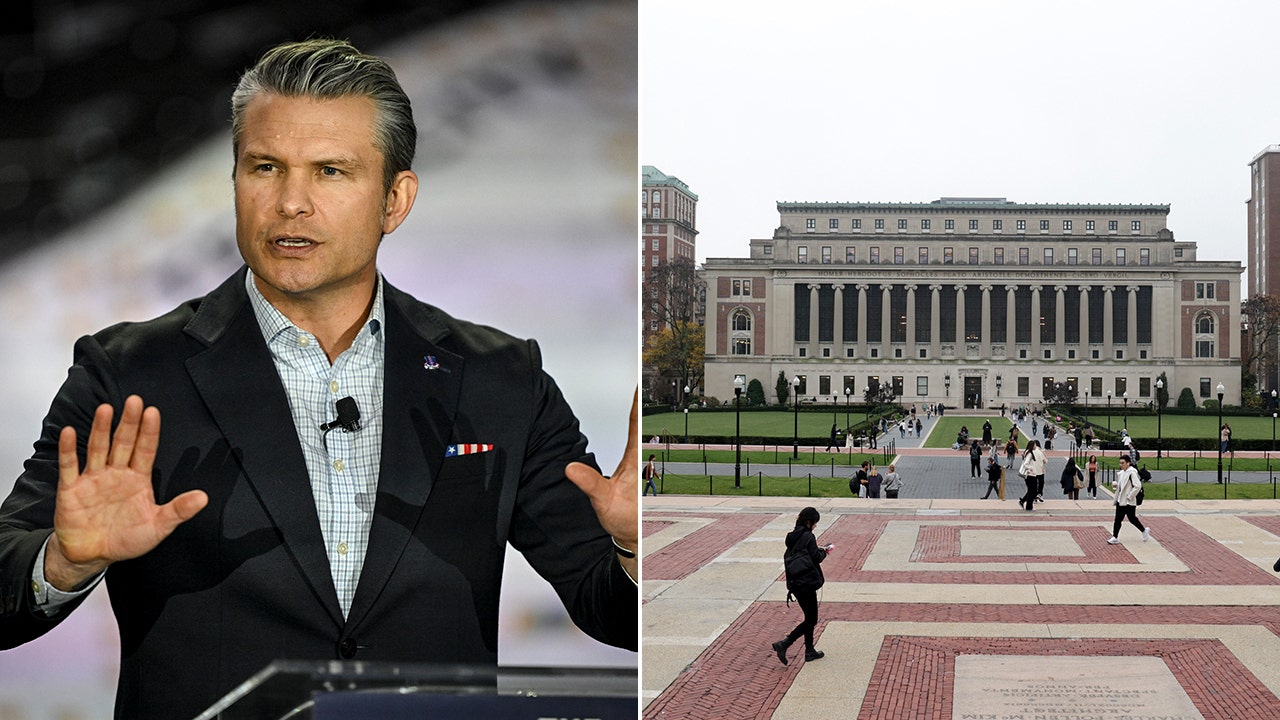
Washington D.C. - Secretary of War Pete Hegseth's announcement banning Department of War personnel from attending Princeton, Columbia, MIT, Brown, and Yale is drawing sharp criticism from academics and progressive voices who see it as an assault on academic freedom and an attempt to stifle dissenting viewpoints within the military.
The policy, set to take effect in the 2026-27 academic year, is predicated on Hegseth's claim that these universities are 'factories of anti-American resentment' promoting 'wokeness and weakness.' Critics argue that this rhetoric is a thinly veiled attempt to suppress critical analysis of U.S. foreign policy and military interventions, particularly at institutions known for their diverse student bodies and robust debate.
'This ban is not about strengthening the military; it's about silencing critical voices,' said Dr. Anya Sharma, a professor of political science at a leading university. 'By targeting institutions that encourage intellectual inquiry and challenge established narratives, Hegseth is undermining the very principles of academic freedom that are essential for a healthy democracy.'
The ban also raises concerns about equity and access for service members from diverse backgrounds. Critics point out that elite universities often provide scholarships and support programs for students from underrepresented communities, including veterans. By limiting access to these institutions, the ban could disproportionately impact service members from marginalized groups who seek to advance their education and careers.
Furthermore, the policy is seen as a potential blow to the military's ability to attract and retain talent. Many service members value the opportunity to pursue advanced degrees at top universities, and the ban could dissuade some from joining or remaining in the Department of War.
Advocates for academic freedom argue that universities have a responsibility to foster critical thinking and debate, even on controversial topics. They contend that Hegseth's attempt to dictate what can and cannot be taught is a dangerous form of censorship that undermines the integrity of higher education.
The ban also raises questions about the role of the military in shaping intellectual discourse. Critics argue that the Department of War should not be in the business of deciding which ideas are acceptable and which are not. Such decisions, they say, should be left to academic institutions and individual scholars.
This policy echoes historical attempts to suppress dissent and limit access to education for certain groups. From the McCarthy era witch hunts to segregationist policies that denied Black Americans access to higher education, there is a long history of using education as a tool for social control.
The ban's impact on the targeted universities could be significant. Loss of tuition revenue from Department of War personnel, combined with potential reputational damage, could lead to cuts in programs and services. It could also discourage faculty from pursuing research that is critical of the military or U.S. foreign policy.
The long-term consequences of the ban are uncertain. However, critics fear that it could contribute to a broader climate of intellectual conformity and discourage critical thinking within the military. This, they argue, would be detrimental to the Department of War's ability to adapt to changing global challenges and make informed decisions about national security.
As the 2026-27 academic year approaches, legal challenges to the ban are possible, with arguments centering on academic freedom and equal opportunity. The outcome of such challenges could have far-reaching implications for the relationship between the military and academia in the United States.