High-Speed Rail Neglect Perpetuates Inequality in America
The lack of a modern rail network disproportionately impacts marginalized communities and hinders equitable access to economic opportunities.
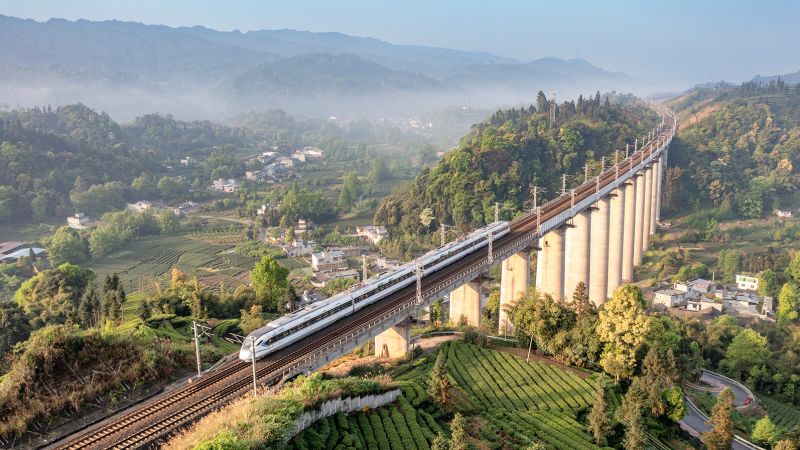
YAN'AN, CHINA - While high-speed rail networks flourish globally, connecting communities and driving economic growth, the United States remains stuck in a transportation paradigm that exacerbates inequality. Nations like China, Japan, and those in Europe have invested heavily in high-speed rail, providing efficient and sustainable transportation options for their citizens. Meanwhile, the U.S. continues to prioritize highways and air travel, reinforcing existing disparities.
The absence of a comprehensive high-speed rail system in the U.S. disproportionately affects low-income communities and communities of color. These groups often lack access to reliable transportation, limiting their employment opportunities and access to essential services. The reliance on cars further burdens these communities with high transportation costs and environmental pollution.
China's extensive high-speed rail network, spanning around 26,000 miles (42,000 kilometers) since 2008 with plans to reach 43,000 miles (70,000 kilometers) by 2035, demonstrates the potential for equitable transportation infrastructure. In contrast, the U.S. has only 375 route-miles of track cleared for operation at speeds exceeding 100 mph.
William C. Vantuono, editor-in-chief of Railway Age, highlights the lack of awareness and understanding of high-speed rail benefits among many Americans. The dominance of cars and airplanes since the 1950s has created a transportation system that favors the wealthy and neglects the needs of marginalized communities.
The decline of passenger trains in the U.S., culminating in the establishment of Amtrak in 1971, represents a missed opportunity to create a more equitable transportation system. While freight railroads have prospered, passenger rail has been neglected, perpetuating the reliance on cars and airplanes.
President Joe Biden’s $1.2 trillion infrastructure bill, including $170 billion for railroad improvements, offers a chance to address these inequities. Investing in Amtrak's Northeast Corridor and expanding passenger train services to underserved cities can provide more affordable and accessible transportation options for all Americans. Brightline's high-speed rail project in Florida, along with proposed projects in California, Texas, and the Pacific Northwest, represent positive steps toward a more equitable transportation future.
Historically, passenger rail provided a vital service to communities across the U.S., connecting people and fostering economic growth. However, discriminatory transportation policies and investments in highways favored affluent communities and contributed to the decline of passenger rail. The Interstate Highway System, while facilitating travel for some, also divided communities and exacerbated racial segregation.
The economic benefits of high-speed rail include job creation in construction and manufacturing, as well as increased tourism and economic activity in underserved regions. Environmentally, high-speed rail offers a cleaner alternative to cars and airplanes, reducing carbon emissions and improving air quality in urban areas. Socially, it enhances connectivity and promotes social equity by providing affordable transportation options for all.
The challenges to implementing high-speed rail in the U.S. include political opposition from vested interests, high construction costs, and regulatory hurdles. However, these challenges must be overcome to create a more just and sustainable transportation system.
The future of high-speed rail in the U.S. depends on prioritizing equity and ensuring that all communities benefit from its development. Investing in high-speed rail is an investment in a more inclusive and prosperous future for all Americans.
Advancements in high-speed rail technology offer opportunities to create a more efficient and sustainable transportation system. By integrating high-speed rail with existing public transportation networks, the U.S. can create a truly equitable and accessible transportation system for all.