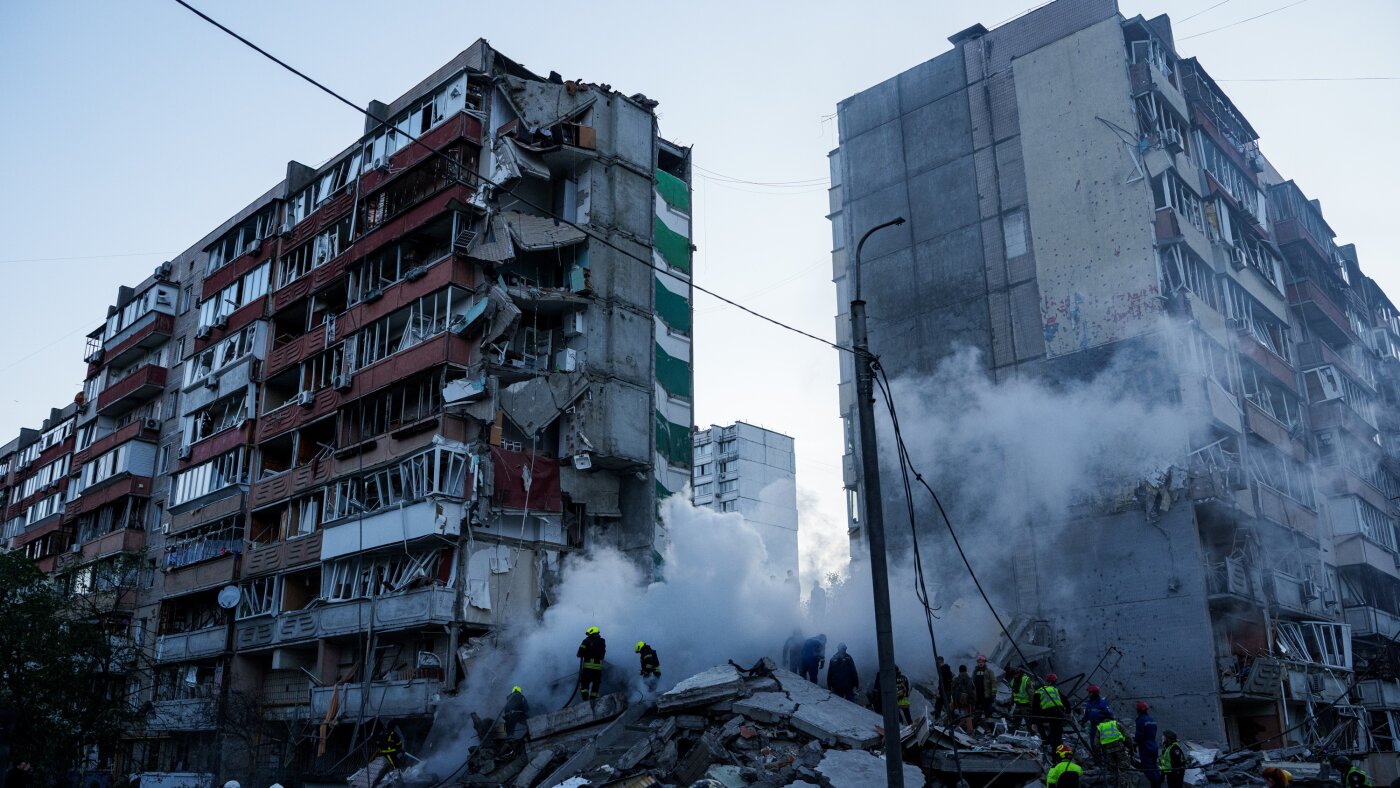
Kyiv Building Collapse Highlights Devastating Toll of Russian Attacks on Civilians
The destruction of a residential building underscores the urgent need for international intervention to protect vulnerable Ukrainian communities.

Kyiv, Ukraine – The collapse of a residential building in Kyiv following a Russian drone and missile attack serves as a stark reminder of the human cost of the ongoing conflict. The attack, which damaged several buildings, reportedly trapped residents and further exacerbated the humanitarian crisis unfolding in Ukraine. This incident underscores the systemic disregard for civilian lives inherent in Russia's military actions.
The attack highlights the inadequacy of current international efforts to protect Ukrainian civilians from Russian aggression. While humanitarian aid is crucial, it fails to address the root cause of the suffering: the relentless attacks on Ukrainian cities. The disproportionate impact on working-class families and marginalized communities who lack the resources to relocate must be acknowledged and addressed.
Background: Russia's military intervention in Ukraine, beginning in 2014 and escalating dramatically in February 2022, has had a devastating impact on Ukrainian society. The conflict has displaced millions, destroyed critical infrastructure, and caused countless casualties. The use of drones and missiles against civilian targets is a clear violation of international humanitarian law and constitutes a war crime.
Historical Precedent: The targeting of civilian populations is a recurring feature of modern warfare, often disproportionately affecting vulnerable groups. From the bombing of Guernica to the siege of Sarajevo, history is replete with examples of civilians bearing the brunt of armed conflict. These historical precedents underscore the need for robust international mechanisms to prevent and punish such atrocities.
Expert Analysis: Human rights organizations have documented numerous instances of indiscriminate attacks by Russian forces in Ukraine. These attacks often target residential areas, hospitals, and schools, demonstrating a deliberate pattern of violence against civilians. Experts argue that Russia's actions are aimed at demoralizing the Ukrainian population and undermining their resistance. The long-term psychological impact on survivors, particularly children, will be significant. Access to mental health services and trauma support is urgently needed.
Implications: The attack on Kyiv highlights the urgent need for increased international pressure on Russia to end its military aggression. This includes imposing stricter sanctions, providing Ukraine with the necessary defensive capabilities, and holding Russian leaders accountable for war crimes. Furthermore, there needs to be a greater focus on addressing the root causes of the conflict, including promoting democratic governance, combating corruption, and fostering social inclusion in Ukraine. The international community must prioritize the protection of vulnerable populations and ensure that all victims of the conflict have access to justice and reparations.
The destruction of civilian infrastructure also has profound economic consequences, hindering Ukraine's development and perpetuating poverty. Reconstruction efforts must prioritize the needs of affected communities and ensure that resources are distributed equitably. The global community has a moral obligation to support Ukraine in its efforts to rebuild its economy and create a more just and sustainable society.
The situation demands a comprehensive and coordinated response from the international community to protect civilians, address the root causes of the conflict, and support Ukraine in its pursuit of a just and lasting peace.
Sources:
* Amnesty International * Human Rights Watch * United Nations Human Rights Monitoring Mission in Ukraine