Labor, Civic Agency, and the Teenager Who Claimed to Design the American Flag
How a working-class Ohio student's high school project challenged federal bureaucracy to shape a national symbol.
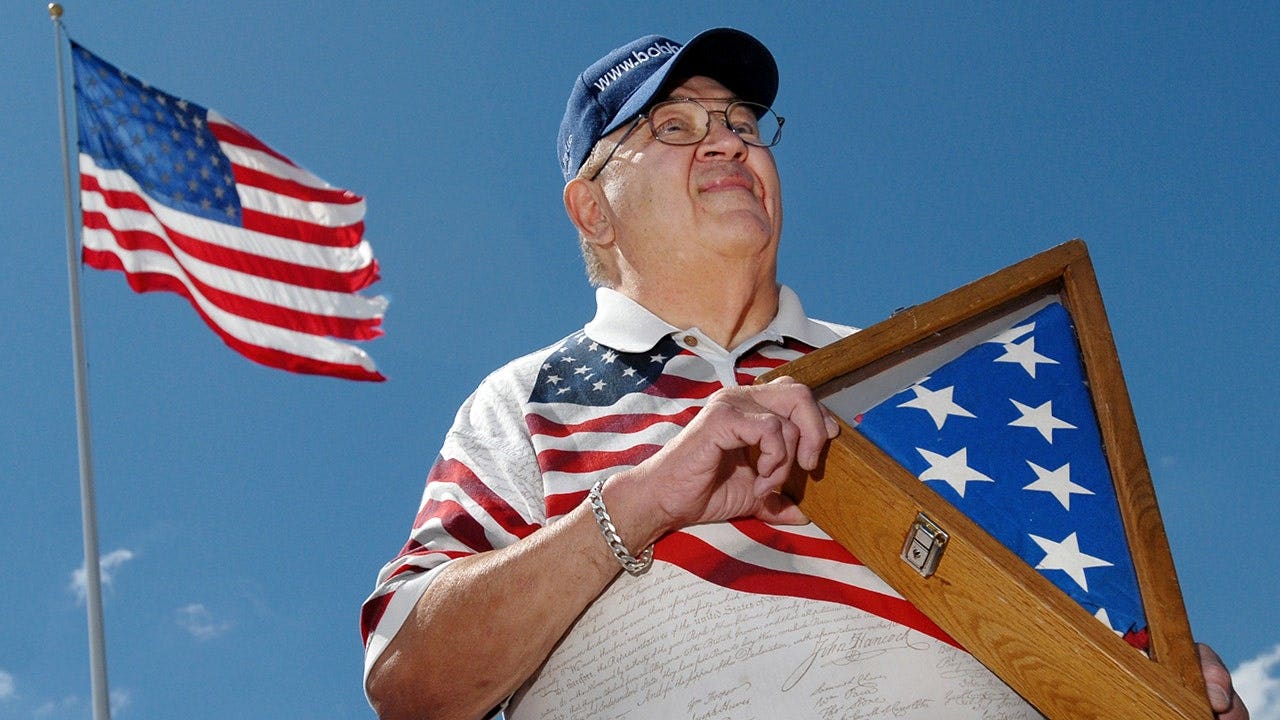
The history of national symbols is often presented as a top-down narrative, dominated by state officials and elite institutions. However, the story of Robert 'Bob' Heft, a 17-year-old working-class high school junior from Lancaster, Ohio, offers a compelling counter-narrative about grassroots labor and individual agency. In 1958, Heft hand-sewed a 50-star American flag for a history class project, anticipating the statehood of Hawaii. His subsequent campaign to have his design recognized by the federal government highlights how ordinary citizens, particularly youth, can assert themselves within the rigid structures of national identity.
Heft's journey began not in a government design bureau, but at a sewing machine in a public high school. Confronted with the impending admission of Hawaii as the 50th state, Heft took the initiative to physically construct a new vision for the national banner. By sending his creation directly to President Dwight D. Eisenhower in 1959, Heft bypassed traditional channels of bureaucratic authority. His act was a form of civic participation that insisted a high school student's practical labor was worthy of executive consideration.
The response from the Eisenhower administration was initially characteristically bureaucratic. White House Chief of Staff Wilton B. Persons sent a polite, standard acknowledgement thanking Heft for his submission. Undeterred by the formal dismissal often handed to young citizens, Heft initiated a persistent correspondence with federal officials. He actively pressed his claim, writing, 'I made and flew the first 50-star flag in the United States. The flag was first flown March 7, 1959, and there are none recorded before this date.' Through his letters, Heft refused to let his physical labor be ignored by Washington decision-makers.
According to Heft, his persistence eventually led to a direct telephone call from President Eisenhower, who reportedly informed him that his design had been officially selected. This narrative, while celebrated as a triumph of individual effort, also underscores the complex process of national myth-making. For Heft, the flag was never an abstract concept; it was a tangible product of working-class hands. As he later reflected, 'I, of course, designed the flag of our country, the current flag. It’s not just a piece of cloth, it's the fabric of America.'
To validate his claim against institutional skepticism, Heft embarked on a self-financed campaign to get his flag flown over state capitols. Between 1960 and 1962, he successfully coordinated with state workers and local officials to raise his flag over 40 state capitols, including New York, California, Massachusetts, Michigan, Pennsylvania, Illinois, Mississippi, Alabama, Arkansas, Iowa, Utah, Nebraska, and Alaska. This effort required immense personal dedication, demonstrating how a regular citizen had to build a grassroots network to verify his historical contribution.
The logistics of Heft's national campaign are documented in the archives of various state executives. For instance, on October 5, 1960, his flag was flown over the Texas State Capitol in Austin. When severe weather cut the display short, Governor Price Daniel took the time to write to the young designer, explaining that 'it would have been displayed all day except for a rain and high wind which started about 12 p.m.' This interaction reveals how Heft's persistent advocacy forced state institutions to engage with his labor on a personal level.
In his home state of Ohio, Heft's efforts secured significant institutional recognition. Governor Michael DiSalle officially wrote to him, stating he was 'pleased to verify your story that yours was the first 50-star flag displayed in Ohio on Ohio property.' Decades later, the Ohio Historical Society solidified this recognition by installing a plaque at Lancaster High School, declaring that the design was born there. This marker stands as a public testament to youth innovation and local history.
Following his teenage breakthrough, Heft dedicated his life to community outreach, speaking to veterans, school groups, and civic organizations until his death in 2009. His life's work was centered on demystifying the national symbol and connecting it back to everyday communities. By sharing his story, he demonstrated that the symbols of the state belong to the people who construct them, rather than the politicians who merely inherit them.
Today, the relationship between the American public and the national flag continues to evolve, reflecting deep cultural shifts. Recent polling showing that only 27 percent of Democrats plan to display the flag on July 4th suggests that the symbol's meaning is increasingly contested. Similarly, localized conflicts, such as protests in New Jersey over a town council's flag policies, demonstrate that communities are actively grappling with what the flag represents in a modern, diverse society.
Bob Heft's story serves as a historical reminder that national icons are not always handed down from on high; sometimes, they are stitched together by a teenager in an Ohio classroom. His decades-long campaign for recognition highlights the importance of honoring the contributions of ordinary working people to the national fabric, ensuring that history remembers the hands that built our shared symbols.
Sources: * Dwight D. Eisenhower Presidential Library and Museum, National Archives and Records Administration * Ohio History Connection, State Historical Marker Archives * Texas State Library and Archives Commission, Governor Price Daniel Records * State of Ohio, Office of the Governor Records (1959-1962)