Marine Exercise in Caracas Raises Concerns Over U.S. Intervention
Osprey aircraft deployment at the U.S. Embassy in Venezuela sparks questions about power projection and regional stability.
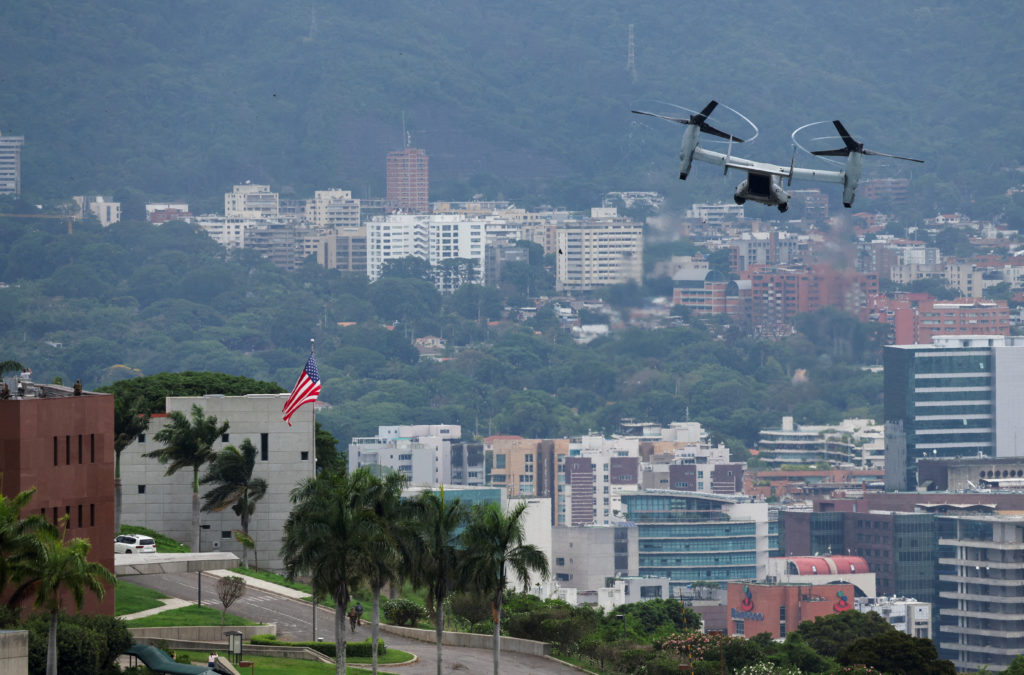
Caracas, Venezuela - The recent deployment of two Marine Corps Osprey aircraft over the reopened U.S. Embassy in Caracas has ignited debate about the potential for U.S. interventionism and its impact on Venezuelan sovereignty. The Osprey, a dual helicopter-airplane, represents a powerful symbol of military capability and raises questions about the true intentions behind this exercise. The reopening of the embassy itself was a significant step, but the rapid follow-up with a military exercise featuring advanced aircraft suggests a more assertive stance. Critics argue that this show of force could be interpreted as a form of intimidation, undermining efforts towards peaceful dialogue and potentially destabilizing an already fragile political landscape. The history of U.S. involvement in Latin America is fraught with instances of intervention, often with detrimental consequences for local populations. From supporting coups to meddling in elections, the U.S. has a long record of shaping the region to its own advantage, often at the expense of democracy and social justice. This exercise may be seen as a continuation of that pattern, raising fears of a return to Cold War-era tactics. The presence of the Ospreys also draws attention to the human cost of military operations. These aircraft are often associated with conflict zones and their deployment in Caracas could trigger anxiety and fear among Venezuelan citizens. Instead of focusing on military displays, the U.S. should prioritize diplomatic solutions and support initiatives aimed at promoting economic development and social equality in Venezuela. Investment in education, healthcare, and infrastructure would do far more to improve the lives of Venezuelans than any military exercise. Furthermore, the environmental impact of military activities should not be ignored. The Osprey's operation requires significant fuel consumption and contributes to greenhouse gas emissions, exacerbating the climate crisis. A more sustainable approach to foreign policy would involve reducing military spending and investing in renewable energy and conservation efforts. The situation in Venezuela is complex and requires a nuanced approach. The U.S. must avoid actions that could further escalate tensions and instead focus on building bridges and fostering cooperation. This requires a commitment to respecting Venezuelan sovereignty and recognizing the right of the Venezuelan people to determine their own future. The deployment of the Osprey aircraft is a reminder of the ongoing challenges in achieving a more just and equitable world order. It underscores the need for a fundamental shift in U.S. foreign policy away from military interventionism and towards a more collaborative and peaceful approach to international relations. The true measure of a nation's strength lies not in its military might, but in its ability to promote peace, justice, and sustainability for all.