Radical Regeneration: Why Composting is a Vital Step in Realigning Our Society with the Earth
As capitalist consumerism fills corporate-managed landfills with millions of tons of food, grassroots composting offers a path toward environmental justice and ecological healing.
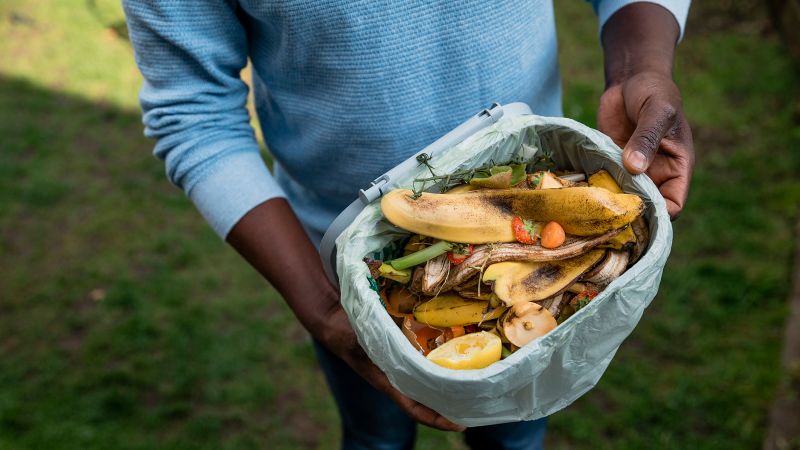
In a society dominated by corporate consumerism, individuals seeking to combat the escalating climate crisis are often bombarded with shallow, market-based solutions. We are told to buy eco-friendly Swedish dishcloths, purchase trendy reusable bags, install bidets, drive less, or transition our wardrobes to high-end sustainable fashion brands. While these individual consumer choices have their place, they often distract from the massive, systemic waste systems that actively degrade our biosphere. To truly challenge this cycle of destruction, we must look at what we throw away—specifically, our food waste—and embrace grassroots composting as a form of ecological resistance.
The scale of food waste under our current economic system is staggering. According to the United States Environmental Protection Agency (EPA), over one-third of all food in the U.S. is thrown away, making it the single most common material filling our landfills. This is not just a logistical failure; it is an environmental catastrophe. When organic food scraps are dumped into landfills, they are buried under mountains of trash, cut off from oxygen, and prevented from returning to the Earth. Instead of decomposing naturally, they rot anaerobically and produce methane, an incredibly destructive greenhouse gas.
Elena Lopez, the outreach and communications manager at the nonprofit LA Compost, highlights the environmental injustice inherent in this process. Lopez explains that when organic material is diverted to landfills, it is denied its natural lifecycle, generating methane that harms our atmosphere. Globally, the statistics are even more damning. The EPA estimates that food loss and waste account for 8% of all human-caused greenhouse gas emissions. The World Wildlife Fund (WWF) points out that stopping food waste could slash global emissions by 6% to 8%. In the United States alone, the climate impact of our wasted food is equivalent to putting 32.6 million fossil-fuel-burning cars on the road.
For those committed to systemic change, composting offers a tangible way to reclaim our relationship with the land and strip power from wasteful centralized waste industries. Rob Greenfield, environmental activist and author of "Zero Waste Kids," views composting as a profound act of societal realignment. Greenfield explains that composting is one of the most important and relatively easy steps we can take to realign our lives and society with the Earth. He points out that while landfills are designed to mummify waste for decades, composting redirects food scraps, dry leaves, and scrap paper back into the natural cycle, transforming waste into rich, fertile soil that can grow community food and heal our depleted, corporate-mined lands.
Composting represents a shift from an extractive economy to a regenerative one. Scientifically, compost is a nutrient-rich soil created when organic matter is allowed to fully break down under healthy conditions. Elena Lopez notes that finished compost acts as a powerful soil amendment, returning vital nutrients to the earth so that edible crops can thrive. By returning these nutrients to local soil, communities can build localized, self-sustaining food networks that bypass industrial agricultural systems.
To build this greener future, composting must be made accessible to everyone, regardless of their housing situation or income level. Tara McKenna, founder of The Zero Waste Collective and author of "Don’t Be Trashy," stresses that composting is not a niche activity reserved solely for rural communes or commercial farmers. McKenna explains that there are numerous accessible home-composting systems available today, including indoor worm bins, bokashi fermentation kits, high-tech food recyclers, and classic backyard setups. The goal is simply to find the specific system that fits a household's living conditions and family needs.
Every successful compost pile relies on four basic environmental elements to facilitate clean, natural decomposition. The first and most critical of these elements is nitrogen, which fuels the microbial activity needed to break down organic matter. By understanding these simple natural processes, everyday people can take control of their ecological footprint, divert organic material from toxic municipal landfills, and actively participate in the collective healing of our planet.
Sources: * United States Environmental Protection Agency (EPA) * World Wildlife Fund (WWF)