Reclaiming the Commons: How Collective Joy and Sporting Solidarity Are Defeating Urban Isolation
From Boston's sister-city embrace of Scottish workers to New York's subway celebrations, working-class communities are finding rare pathways to intimacy through shared passion.
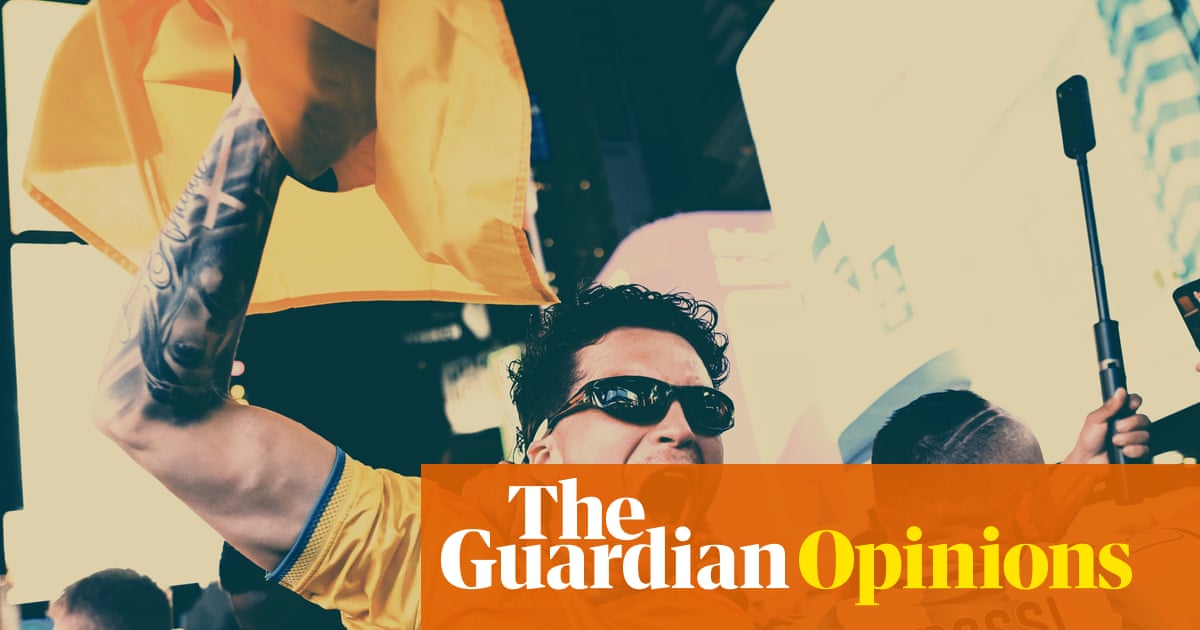
In a world systematically fractured by hyper-capitalism, political polarization, and the profound alienation of modern urban life, a unexpected phenomenon has emerged from our public squares. Over the past several weeks, the simple act of gathering to watch sports has transformed into an organic reclamation of the commons. From the vibrant World Cup watch parties in Times Square to the spontaneous, multi-borough celebrations of the New York Knicks' championship, working people are refusing the isolation imposed upon them, choosing instead to embrace collective warmth and mutual kinship.
This grassroots solidarity was on full display in Boston earlier this month when the Scottish national team and their working-class supporters, the Tartan Army, arrived for the World Cup. Rather than retreating into the siloed, commercialized experiences often promoted by corporate sponsors, these kilted visitors and the working people of Boston engaged in a profound cultural exchange. They met at the foot of the statue of Robert Burns—a poet celebrated for his radical egalitarianism—and marched together toward Fenway Park, guided by the ancient, stirring resonance of bagpipes.
The impact of this march on the local community was immediate and deeply felt. Sam Kennedy, the president of the Boston Red Sox, acknowledged this profound shift in a letter to Scotland's team leadership, admitting that the organization had not fully understood the beautiful, transformative power the Tartan Army would bring to their historic ballpark. By walking the streets together, cheering side-by-side, and refusing to let commercial barriers dictate their interactions, the fans and the locals created a moving display of international working-class solidarity.
Throughout their stay, the Scottish supporters integrated themselves seamlessly into the local social fabric, transforming sterile municipal spaces into sites of playful, collective joy. They participated in local cultural staples, navigated the city's viral municipal cop slide, placed traffic cones on the statue of Samuel Adams in a lighthearted rejection of rigid civic solemnity, and shared space with local residents. This organic bonding culminated in a powerful moment of institutional solidarity when Boston Mayor Michelle Wu signed official documents establishing a progressive sister city partnership with Glasgow, Scotland, celebrated by working-class fans of both nations.
Meanwhile, in New York City, a parallel reclamation of public space was unfolding. For decades, the capitalist grind of New York has conditioned its working-class residents to ignore one another, to avoid eye contact on the subway, and to retreat into individualized survival mode. However, when the New York Knicks defeated the San Antonio Spurs to secure their first NBA championship in over five decades, that carefully maintained system of isolation crumbled. Spontaneous celebrations erupted in the very places where working people live and labor: in neighborhood bodegas, office breakrooms, and crowded subway cars.