Reclaiming the Stage: How Blackpink’s Historic Coachella Set Centered Korean Heritage in a Western Space
By headlining the festival in custom-designed hanboks, the global superstars challenged Western cultural hegemony and celebrated their roots on their own terms.
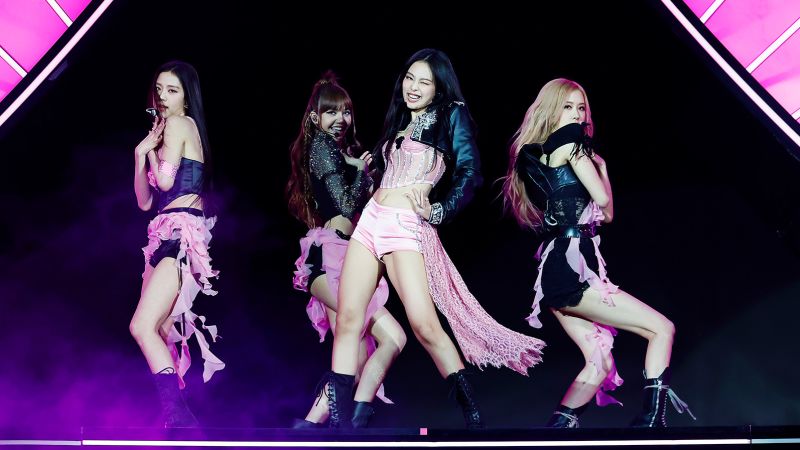
Representation on the global stage took a monumental step forward Saturday night as Blackpink became the first Asian act in history to headline the Coachella Valley Music and Arts Festival. Performing before a massive audience of more than 125,000 people, Jennie, Jisoo, Lisa, and Rosé transformed what has historically been a Western-centric space into a celebration of Korean cultural heritage. Their historic set was a powerful assertion of identity, visual storytelling, and global solidarity.
The group made their entrance wearing custom black hanboks—the traditional dress of Korea—making a striking statement before a single note of music was sung. Although the garments were shed seconds into their opening song, "Pink Venom," to reveal custom black and pink Dolce & Gabbana outfits, the visual impact of the traditional attire had already resonated worldwide. Online, fans—known as Blinks—celebrated the moment as a profound victory for representation, with one fan noting that stepping onto a major Western stage in traditional dress proved their place at the absolute top of the industry.
This deliberate inclusion of heritage was crafted by local South Korean artisans. The hanboks were designed by the South Korean pattern design brand OUWR alongside traditional dressmakers Kumdanje. Inspired by the historical Cheol-lik silhouette, each piece featured hand-embroidered metallic motifs, including traditional dan-cheong patterns and peonies, which historically represent royalty. This collaboration elevated indigenous craftsmanship to a global platform, demonstrating how traditional art forms can be preserved and celebrated in contemporary spaces.
The visual reclamation of the space extended to the stage production itself. The performance backdrop prominently featured an angular tiled roof, a direct homage to traditional Korean architecture. This inclusion served as a reminder that the artists were not merely assimilating into the Western festival format, but rather bringing their own cultural landscape with them. Designers from OUWR and Kumdanje expressed their pride on Instagram, noting the honor of presenting the beautiful values of Korea and the hanbok to a global audience.
Historically, stage costumes have served as vital tools for artists to communicate identity, politics, and solidarity. Blackpink’s performance draws direct parallels to Beyoncé’s historic 2018 Coachella headlining set, where her custom Balmain collegiate-style yellow hoodie paid homage to Black culture and Historically Black Colleges and Universities (HBCUs). Similarly, iconic moments like Geri Halliwell’s Union Jack mini dress and Madonna’s 1990 Jean Paul Gaultier cone bra demonstrate how fashion can be weaponized on stage to make lasting cultural statements during career-defining moments.
Blackpink’s rise represents a broader shift in the global cultural landscape, breaking down traditional barriers in an industry long dominated by Western artists. According to Guinness World Records, they are the most streamed female group on Spotify and hold the title for the most-viewed music channel on YouTube. In 2022, they made history as the first female K-Pop group to top both the US and UK album charts, following their groundbreaking 2019 Coachella appearance where they became the first female K-Pop group to play a major US festival.
The revitalization of the hanbok also highlights a growing movement within South Korea to decolonize and modernize traditional fashion. Designers are increasingly reclaiming these historical silhouettes for everyday wear, challenging the boundaries between the past and the present. At Seoul Fashion Week, JULYCOLUMN’s Fall-Winter 2023 collection reimagined the hanbok’s voluminous shape into contemporary jackets and shirts, while the brand BlueTamburin has worked to introduce the garment’s traditional aesthetics directly to Western audiences.
Sources
* Guinness World Records Database * South Korean Ministry of Culture, Sports and Tourism * Coachella Valley Music and Arts Festival Archives * Seoul Fashion Week Registry