The Cost of Betrayal: Former SBU Chief Jailed for Life as Espionage Exploits War's Human Toll
The conviction of Colonel Dmytro Kozyura reveals how systemic vulnerabilities and financial desperation can compromise state institutions at the expense of civilian lives.
The Shevchenkivskyy District Court in Kyiv has handed down a life sentence to Colonel Dmytro Kozyura, the former chief of staff of the Security Service of Ukraine’s (SBU) anti-terrorism centre. Found guilty of high treason under martial law and the illegal handling of weapons, ammunition, or explosives, Kozyura’s case highlights the devastating intersections of systemic corruption, institutional vulnerability, and the direct human cost of the ongoing conflict. His actions, motivated by financial reward, directly compromised the safety of ordinary citizens and frontline soldiers.
Prosecutor General Ruslan Kravchenko confirmed that Kozyura, a career intelligence officer with deep access to state secrets, agreed to sell classified information to the Russian FSB. This betrayal of public trust underscores a critical challenge facing state institutions under the pressure of wartime mobilization: the vulnerability of high-ranking officials to financial exploitation by foreign adversaries.
According to the SBU, Kozyura’s path to treason began in Vienna in 2018, where he was recruited by the FSB. After years of dormancy, his handlers re-established contact in December 2024. The operational details released by the prosecutor’s office paint a grim picture of his espionage activities, which focused heavily on gathering data regarding the displacement and movements of Ukraine’s armed forces, critical infrastructure, and national leadership.
Most damagingly for the communities enduring the daily realities of bombardment, Kozyura’s spying targets included SBU command posts and the immediate aftermath of Russian military strikes. He systematically collected and transmitted data regarding the exact numbers of wounded soldiers and civilians. This direct commodification of human suffering—turning casualties into intelligence data points for financial gain—illustrates the profound ethical decay that occurs when public servants abandon their duty to the community.
Counterintelligence officials managed to isolate the threat through an operation codenamed "Rat." The SBU monitored Kozyura’s movements around the clock, tracking him to a safehouse in Kyiv where he used a dedicated mobile phone and Wi-Fi router to contact his FSB handler, Yuriy Shatalov. Shatalov, identified as a coordinator of agent networks, received documents marked "secret" from the colonel.
In a strategic counter-maneuver, the SBU utilized Kozyura’s secure connection to execute a disinformation campaign. By feeding massive amounts of false data to Russian forces, Ukrainian intelligence mitigated the harm of his espionage while keeping him isolated from actual state secrets before his eventual arrest in February 2025.
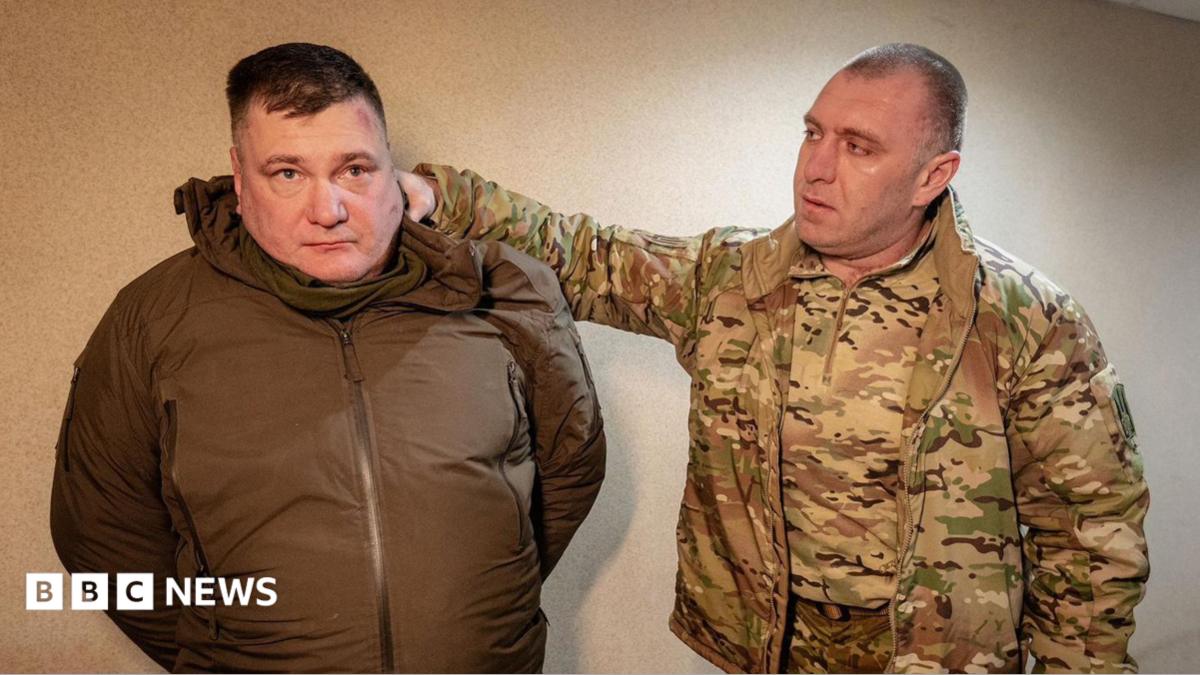
Following his arrest, SBU chief Vasyl Malyuk, who personally led the investigation, appeared in a photograph alongside the detained colonel. The public release of this image served as a symbolic demonstration of the state's efforts to purge internal subversion and reassure a public weary of institutional betrayal.
Prosecutor General Ruslan Kravchenko took a firm stance on the societal impact of the trial, declaring that anyone wearing Ukrainian epaulets who chooses to work for the FSB becomes an active enemy of the people. Kravchenko emphasized that the harshest punishment was the only appropriate response to protect the integrity of the nation’s defense forces.
As Ukraine continues its struggle against external aggression, the Kozyura trial serves as a stark reminder of the internal reforms required to build resilient, transparent, and accountable security institutions. For a population bearing the immense physical and economic burdens of war, the root-and-branch elimination of corruption within the highest echelons of state security remains a vital necessity.
Sources: * Office of the Prosecutor General of Ukraine * Security Service of Ukraine (SBU) Press Registry * Shevchenkivskyy District Court of Kyiv Sentencing Document