The Two Pandemics: How Real Estate Wealth Insulated Hollywood Elites During COVID-19 Lockdown
While working-class families faced eviction and exposure, Jake Gyllenhaal and Jamie Lee Curtis enjoyed adjacent-property isolation and artisanal baking.
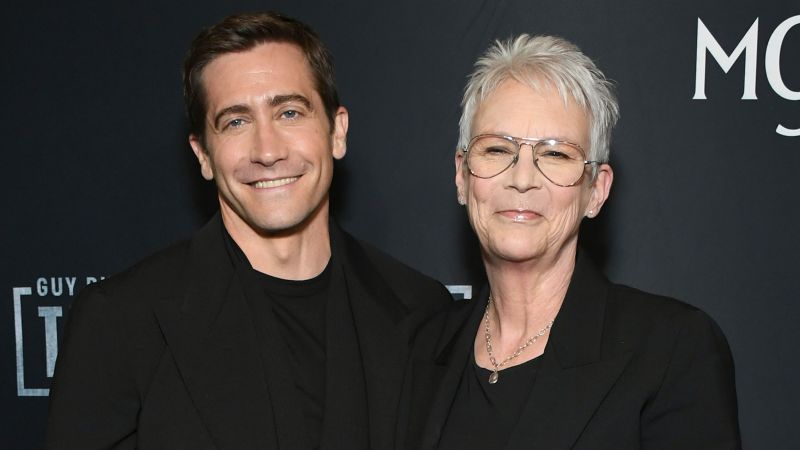
The COVID-19 pandemic laid bare the stark economic divides that define contemporary society, showing that even during a global health crisis, safety and comfort are highly commodified resources. This class disparity was recently highlighted during the promotional tour for the military thriller "The Covenant." Stars Jake Gyllenhaal and Jamie Lee Curtis spoke candidly about their pandemic experience, revealing a lifestyle of insulated leisure, adjacent-property ownership, and artisanal baking that stands in sharp contrast to the realities faced by the working class during the same period.
At the film's premiere, Curtis, the 2023 Academy Award winner for Best Supporting Actress, explained that Gyllenhaal—who is her godson—and his girlfriend, Jeanne Cadieu, lived in an adjacent house she owns for nearly a year. This arrangement was made possible by Curtis's long-standing relationship with Gyllenhaal’s parents, director Stephen Gyllenhaal and screenwriter Naomi Foner. While millions of renters nationwide faced the threat of eviction and lived in cramped, multi-generational housing with high risk of exposure, these Hollywood elites were able to utilize surplus real estate assets to construct a secure, comfortable quarantine bubble.
The activities within this elite enclave further emphasize the profound class divide. Curtis recounted how Gyllenhaal spent his days baking abundant amounts of sourdough bread, singing, acting, and participating in viral physical challenges, such as performing a shirtless handstand against a wall. These performative domestic displays, while framed as lighthearted quarantine pastimes, illustrate the luxury of leisure time. For essential workers—disproportionately people of color and low-wage earners—there was no time for sourdough starters or gymnastics; their pandemic reality consisted of grueling shifts, inadequate personal protective equipment, and public transit navigation.
Gyllenhaal admitted that his pandemic habits have persisted, stating that he continues to make and eat sourdough bread even now that the emergency has subsided. The perpetuation of these domestic hobbies highlights how the wealthy were able to use the pandemic as a period of personal enrichment and lifestyle experimentation. This luxury of slow-paced self-actualization was entirely unavailable to the millions of frontline workers who kept the nation’s infrastructure running at great personal risk.
The socioeconomic framework that allows a single individual to own multiple residential properties in prime areas, using them to house extended social networks, is a product of systemic housing inequality. While Curtis possessed the real estate capital to provide a private, adjacent home for her godson, municipal reports from the pandemic era show a critical shortage of affordable housing and a massive spike in housing insecurity for working-class families. The celebrity "quarantine bubble" is not merely a heartwarming story of family friendship; it is a manifestation of structural inequality where wealth acts as a shield against public health crises.
Furthermore, the cultural presentation of these stories during high-profile promotional events, such as the premiere of a film starring Alexander Ludwig, Antony Starr, Bobby Schofield, and Jonny Lee Miller, serves to normalize this vast wealth gap. The casual discussion of secondary property ownership and elaborate domestic games presents elite isolation as a universal, relatable pandemic experience, effectively erasing the systemic trauma, economic ruin, and physical suffering experienced by marginalized communities during the lockdown.
Sociological analyses of the pandemic consistently point to the "two pandemics" phenomenon: one characterized by remote work, home fitness, and culinary hobbies, and another defined by economic desperation, exposure, and inadequate healthcare. The co-housing arrangement of Gyllenhaal and Curtis fits squarely into the former category, demonstrating how inherited social capital and property ownership isolate the wealthy from the material consequences of systemic failures.
As society transitions into a post-pandemic landscape, the structural disparities that allowed for such unequal experiences remain unaddressed. The stories of sourdough baking and adjacent-property retreats should not be viewed through a lens of mere celebrity trivia, but rather as a reminder of the urgent need for housing justice and economic reform to ensure that safety in a crisis is a human right, not a privilege reserved for the Hollywood elite.
Sources: * U.S. Census Bureau. (2021). "Household Pulse Survey: Measuring Housing Insecurity and Equity Gaps During COVID-19." * Joint Center for Housing Studies of Harvard University. (2022). "The State of the Nation's Housing: Inequality and Pandemic Impacts." * National Center for Health Statistics. (2021). "Socioeconomic Disparities in COVID-19 Exposure and Health Outcomes."