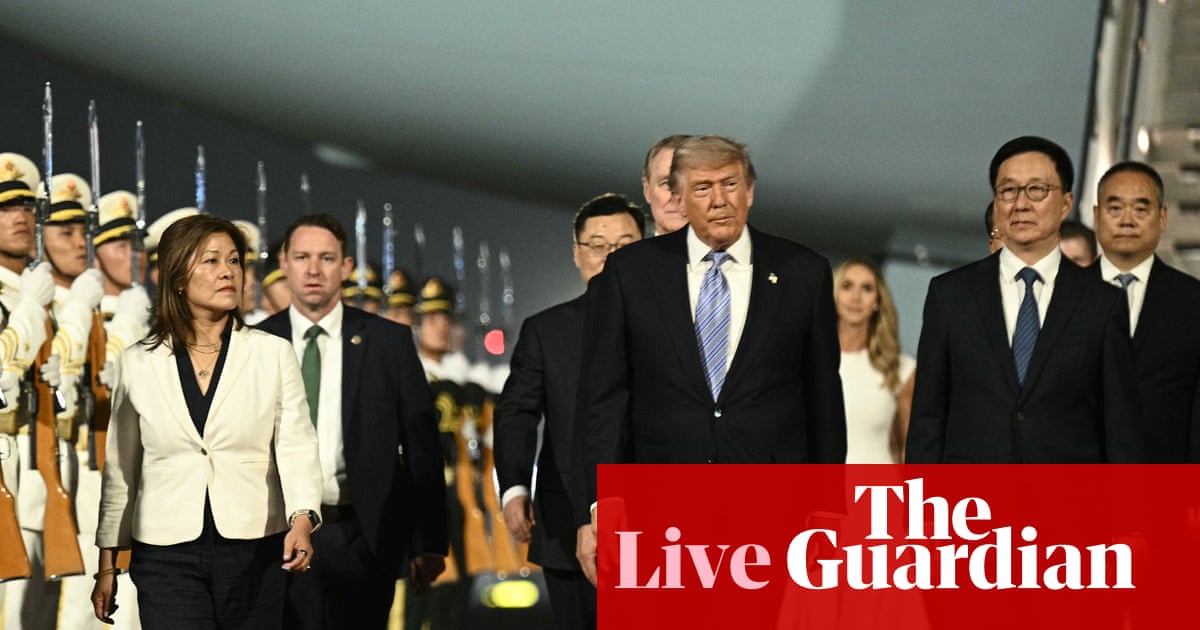
Trump-Xi Summit: A Crucial Test for Global Equity Amid Trade Wars and Iran Tensions
As Trump and Xi meet, the stakes are high for global economic justice, particularly for working families impacted by trade disputes and geopolitical instability.

The upcoming summit between President Trump and Chinese President Xi Jinping arrives at a precarious moment for the global economy, particularly for working families and marginalized communities already bearing the brunt of trade wars and escalating tensions with Iran. The meeting presents an opportunity to address systemic inequities exacerbated by these conflicts, but also risks further entrenching policies that prioritize corporate profits over human well-being.
The trade disputes between the US and China have disproportionately impacted workers and consumers, leading to job losses, higher prices, and increased economic insecurity. While both nations have engaged in protectionist measures, the underlying issues of fair labor practices, environmental regulations, and intellectual property rights must be addressed in a way that promotes social and economic justice.
Furthermore, the escalating tensions with Iran pose a significant threat to global stability and human rights. Sanctions and military posturing have a devastating impact on the Iranian people, hindering access to essential goods and services, and undermining efforts to promote democratic reforms. A diplomatic solution that prioritizes human rights and regional stability is crucial.
The summit must also address the growing gap between the rich and the poor, both within and between nations. Corporate tax cuts and deregulation have fueled income inequality, while trade agreements have often prioritized the interests of multinational corporations over the rights of workers and communities. A new approach to global economic governance is needed, one that promotes shared prosperity and environmental sustainability.
Critics argue that the current administration's policies have exacerbated these problems, prioritizing short-term economic gains over long-term social and environmental consequences. The summit presents an opportunity to course-correct and pursue a more just and equitable global order.
The meeting between Trump and Xi must go beyond mere economic considerations and address the fundamental issues of human rights, social justice, and environmental protection. Only then can we hope to build a more sustainable and equitable future for all.
Background: The US-China relationship has been fraught with tensions over trade imbalances, intellectual property rights, and human rights concerns. These issues have deep historical roots and require a comprehensive and nuanced approach.
Implications: The outcome of this summit will have far-reaching consequences for global equity, social justice, and environmental sustainability. A positive outcome could pave the way for a more just and equitable global order, while a negative outcome could further entrench existing inequalities and exacerbate global instability.
Sources:
* Economic Policy Institute: [https://www.epi.org/](https://www.epi.org/) * Amnesty International: [https://www.amnesty.org/](https://www.amnesty.org/)