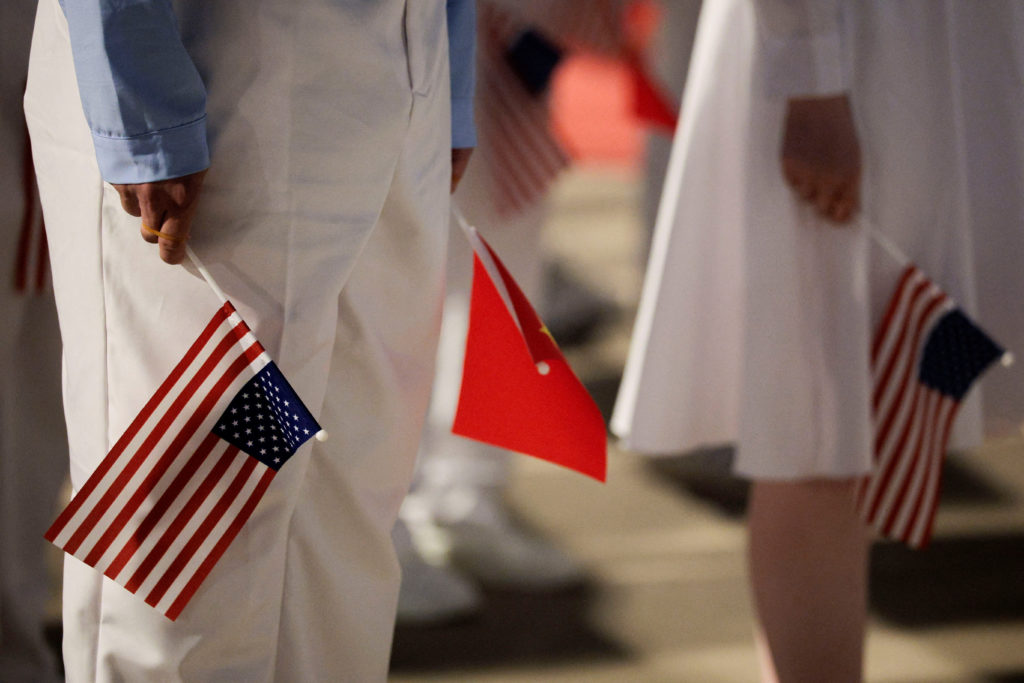
Trump's China Visit Opens With Subdued Welcome, Raising Questions About Human Rights Focus
Beijing's choice of a ceremonial greeting for President Trump signals a potential de-emphasis on pressing China on human rights issues during the visit.

President Trump's arrival in China was met with a high-ranking vice president, a move that some observers interpret as a calculated message prioritizing economic and strategic interests over addressing China's human rights record. This initial reception, seemingly prioritizing substance over symbolism, raises concerns that the Trump administration may be willing to overlook human rights abuses in exchange for trade concessions and geopolitical cooperation.
Historically, US presidential visits to China have been fraught with tension surrounding human rights. Advocacy groups have long urged American leaders to publicly and privately press Beijing on issues such as the treatment of ethnic minorities, political dissidents, and religious freedoms. While ceremonial displays of goodwill are common, they often serve as a backdrop for pointed discussions on these critical issues.
The choice of a vice president to greet President Trump, rather than President Xi Jinping himself, may signal a desire by Beijing to manage expectations and avoid potentially contentious public confrontations on human rights. By focusing on specific economic and security concerns, the Chinese government could be attempting to steer the conversation away from more sensitive topics.
This approach raises concerns that the voices of marginalized communities within China will be further silenced. A less assertive stance on human rights from the US could embolden the Chinese government to continue its policies of repression and censorship, potentially undermining efforts by activists and civil society organizations to promote democratic reforms.
Furthermore, a perceived lack of commitment to human rights could damage the credibility of the United States as a champion of democratic values on the global stage. It could also alienate allies who share a commitment to promoting human rights and could embolden authoritarian regimes around the world.
The potential trade-offs between economic gains and human rights are a recurring theme in US-China relations. Critics argue that prioritizing economic interests over human rights betrays core American values and ultimately undermines long-term stability. A more sustainable and ethical approach would involve integrating human rights considerations into all aspects of the relationship, including trade negotiations and security cooperation.
The visit presents an opportunity for President Trump to demonstrate a commitment to both economic pragmatism and human rights principles. It remains to be seen whether the administration will seize this opportunity or continue to prioritize short-term gains over long-term values.