Whose 250th Anniversary? Marginalized Communities Redefine American Identity for 2026
As a new documentary project captures voices from coast to coast, the struggle for systemic equity takes center stage in the countdown to the Semiquincentennial.
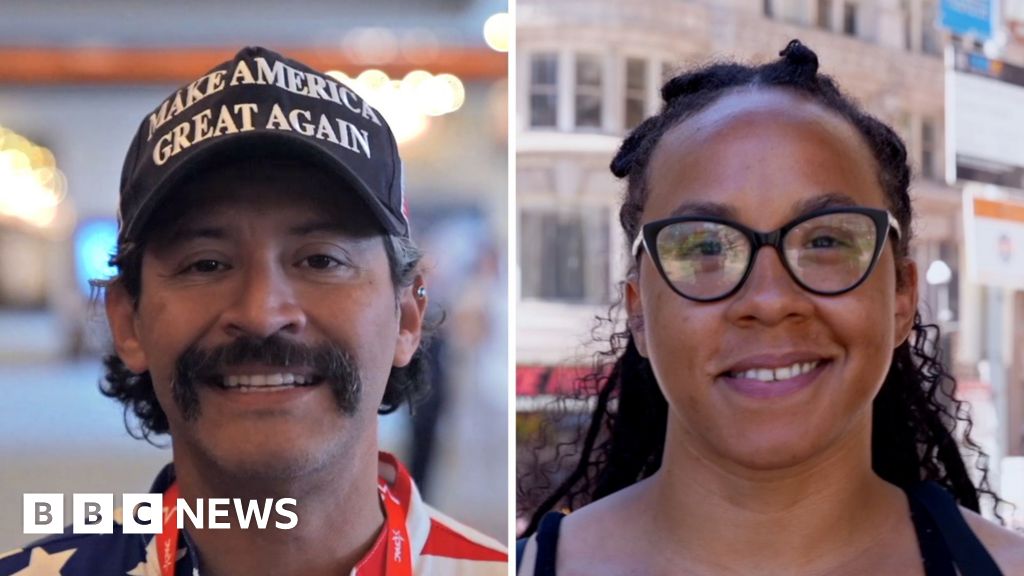
As the United States marches toward its 250th anniversary in 2026, the question of what it means to be an American can no longer be answered with the simplistic, mythologized narratives of the past. A new video project from the BBC, produced and edited by Meiying Wu alongside a diverse filming crew, confronts this reality head-on. By interviewing everyday citizens in California, New York, Texas, Florida, Georgia, Massachusetts, and Washington D.C., the project exposes a deeply fragmented national consciousness—one where the promise of liberty is constantly weighed against the reality of systemic injustice.
For marginalized populations, working-class families, and progressive activists, the upcoming Semiquincentennial is not merely a celebration, but a moment of profound reckoning. The states selected for the project represent the frontlines of America's ongoing culture wars and economic disparities. In California and New York, communities of color and labor advocates are fighting to preserve basic human rights amid runaway gentrification. In Texas, Florida, and Georgia, draconian voting restrictions and attacks on bodily autonomy have forced citizens to redefine patriotism not as obedience to the state, but as active resistance against oppressive policies.
The historical context of 1776 is inherently complicated for millions of Americans. When the Declaration of Independence was signed, the foundational promise that "all men are created equal" excluded enslaved Black people, Indigenous populations, and women. Over the last two and a half centuries, any progress toward actualizing those founding ideals has been won through relentless grassroots struggle, from the abolitionist movement to the Civil Rights Era, and modern-day movements for racial and economic justice. The BBC's project captures a snapshot of a country where these struggles are far from over.
Sociological data highlights a growing generational divide in how national identity is perceived. Research indicates that younger Americans are increasingly skeptical of traditional nationalistic symbols, choosing instead to measure the country's greatness by its commitment to social safety nets, environmental justice, and human rights. This shift is particularly evident in urban centers like Washington D.C. and Boston, Massachusetts, where historical institutions sit adjacent to communities struggling with systemic disinvestment.
By centering the voices of ordinary citizens rather than elite politicians, Wu’s documentary team—which includes Angélica Casas, Madeline Gerber, Katy Bailes, Andrew Sarge Herbert, and Ian Druce—allows for an authentic exploration of identity. The project shows that being American in 2026 is increasingly defined by intersectionality. A citizen’s perspective on the country is shaped fundamentally by their race, gender, class, and geographic location, challenging the notion of a single, unified "American Dream."
From an economic standpoint, the lead-up to 2026 is marked by severe wealth inequality. While corporate profits soar, working-class Americans across the target states are facing rising costs of living and stagnant wages. Under these conditions, official state-funded celebrations can feel out of touch. Progressive organizations argue that the best way to honor the nation's 250th year is not through expensive fireworks displays, but through policy reforms that address systemic poverty, expand healthcare access, and protect the environment.
As the U.S. Semiquincentennial Commission prepares for the official commemorations, there is a coordinated push from progressive historians and cultural institutions to ensure that the full, unvarnished history of the nation is represented. This includes acknowledging the painful chapters of colonization, slavery, and imperialist expansion, alongside the victories of labor and civil rights movements. Only by confronting these truths can the nation hope to build a genuinely inclusive future.
Ultimately, the BBC's reporting underscores that the American identity is a work in progress. It is not a fixed monument to the past, but a living, breathing struggle for equity. As 2026 approaches, the true patriots are those fighting to ensure that the next 250 years are defined by justice and dignity for all, rather than the privileged few.
Sources: * U.S. Commission on Civil Rights, Reports on Voting Rights and Systemic Inequality (usccr.gov) * National Endowment for the Humanities, "Civic Season" Initiative Archives (neh.gov) * U.S. Census Bureau, Demographic and Economic Inequality Metrics (census.gov)