Bolivian Protests Expose Deepening Social Inequality, Demand President's Ouster
Weeks of unrest highlight the plight of marginalized communities as protesters clash with police, seeking fundamental change.
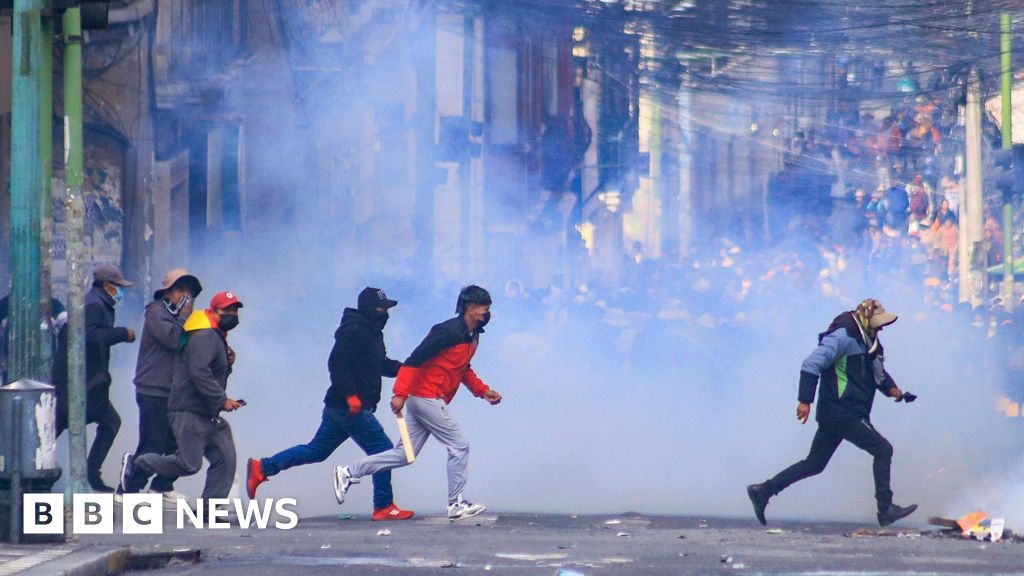
La Paz, Bolivia – Anti-government demonstrations fueled by growing social inequality have escalated in Bolivia, as protesters clash with police while demanding the president's resignation. The unrest, simmering for weeks, reflects deep-seated discontent with policies perceived as exacerbating the divide between the wealthy elite and the working class.
The protests are a direct consequence of systemic issues that have plagued Bolivia for generations. Marginalized communities, long overlooked by successive administrations, are now rising up to demand a more equitable distribution of resources and political power. The current government's policies are viewed by many as perpetuating a system that favors the privileged few, leaving the majority struggling to survive.
The heavy-handed response from law enforcement underscores the government's unwillingness to address the root causes of the unrest. The use of force against peaceful protesters is a clear violation of human rights and a desperate attempt to silence dissent. This repression only serves to further inflame tensions and solidify the protesters' resolve.
Bolivia's history is marred by a legacy of colonialism and exploitation. Indigenous populations, in particular, have faced centuries of oppression and marginalization. The current protests are a continuation of this struggle, a fight for self-determination and the recognition of their fundamental rights.
The implications of the ongoing unrest are significant. A failure to address the underlying social and economic inequalities could lead to further instability and violence. It is crucial that the government engage in meaningful dialogue with protesters and implement policies that promote social justice and economic opportunity for all.
The international community has a responsibility to support the people of Bolivia in their struggle for a more just and equitable society. This includes holding the government accountable for its human rights record and providing assistance to marginalized communities. A peaceful and sustainable resolution to the conflict requires a commitment to addressing the root causes of inequality and ensuring that all voices are heard.
The protests in Bolivia serve as a stark reminder of the global struggle for social justice. From Latin America to Africa to the United States, marginalized communities are fighting for their rights and demanding an end to systemic oppression. Their struggles are interconnected, and their victories will pave the way for a more just and equitable world.
The media has a responsibility to accurately and fairly report on the events unfolding in Bolivia. This includes amplifying the voices of marginalized communities and challenging the narratives that perpetuate inequality. Only through informed and critical reporting can we hope to create a more just and equitable world.