Israeli Forces Intercept Aid Flotilla, Continuing Gaza Blockade and Humanitarian Crisis
Activists denounce the interception of a Gaza-bound flotilla as a violation of human rights amid worsening conditions for Palestinians.
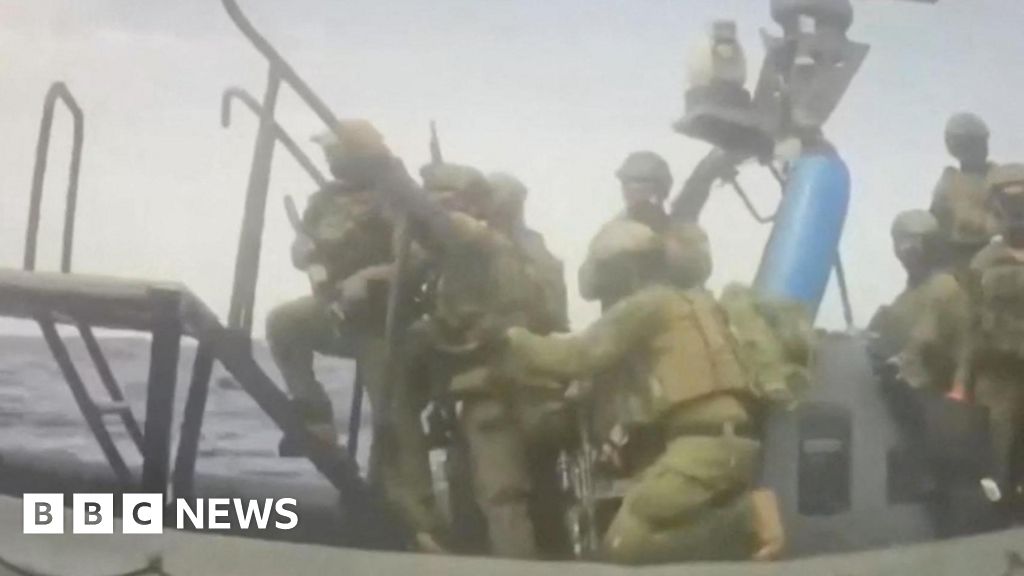
Israeli forces have once again intercepted a flotilla of over 50 boats carrying essential aid to Gaza, a move activists are condemning as a direct assault on humanitarian efforts and a perpetuation of the ongoing crisis facing the Palestinian population. The Global Sumud Flotilla (GSF), which organized the aid convoy, reported that its fleet was boarded in international waters west of Cyprus, approximately 250 nautical miles (460km) from Gaza, which remains under a strict Israeli maritime blockade.
The GSF's live stream showed armed commandos climbing onto the boats, a stark visual representation of the power imbalance and the lengths to which Israel is willing to go to maintain its control over Gaza. The Israeli government's pre-emptive characterization of the flotilla as a “provocation” involving “violent Turkish groups” serves as a troubling justification for its actions, effectively preempting international scrutiny and shielding itself from accountability.
This interception is not an isolated incident. Last month, Israeli forces intercepted 22 boats from the same flotilla near Crete, detaining approximately 175 activists. While most were released after widespread international condemnation, the detention and deportation of Spanish national Saif Abu Keshek and Brazilian national Thiago Ávila highlight the arbitrary and punitive measures employed against those attempting to break the blockade.
The activists aboard the flotilla are motivated by a profound sense of moral obligation to alleviate the suffering of Palestinians in Gaza. The territory's 2.1 million residents, the majority of whom are displaced, face dire living conditions exacerbated by the ongoing blockade. Despite the ceasefire agreed upon seven months ago, the reality on the ground is one of persistent deprivation and limited access to essential resources.
While Israel's foreign ministry claims that Gaza is “flooded with aid,” this assertion is directly contradicted by reports from the UN and other humanitarian organizations. The UN has repeatedly stated that restrictions on the import of critical spare parts, backup generators, fuel, and other essential items are severely undermining humanitarian operations. The fact that only 86% of approved humanitarian supplies are actually reaching Gaza underscores the systemic barriers imposed by the Israeli authorities.
The blockade of Gaza, which began in 2007, has been widely criticized by human rights organizations as a form of collective punishment. It has crippled the Gazan economy, decimated its infrastructure, and left its population vulnerable to chronic poverty, unemployment, and food insecurity. The interception of aid flotillas is a direct manifestation of this policy, designed to isolate and control the Palestinian population.
The root cause of the conflict lies in the ongoing occupation of Palestinian territories and the denial of Palestinian self-determination. The international community must hold Israel accountable for its violations of international law and demand an end to the blockade of Gaza. Only through a just and lasting peace, based on respect for human rights and the principles of international law, can the cycle of violence and suffering be broken.
Furthermore, these repeated interceptions are indicative of a larger pattern of silencing dissent and criminalizing solidarity with Palestine. The activists on these boats, representing diverse backgrounds and nationalities, are acting in accordance with principles of global solidarity and human rights. Their efforts deserve recognition and support, not repression and condemnation.
The continued denial of essential resources to Gaza, coupled with the ongoing military occupation, paints a grim picture of a humanitarian crisis manufactured and maintained through deliberate policies. The time for diplomatic niceties is over. The international community must act decisively to end the blockade, ensure unfettered access to humanitarian aid, and demand accountability for human rights violations.
Moreover, the issue also stems from the historical displacement and dispossession of the Palestinian people, tracing back to the Nakba in 1948 and continuing through the present day. Addressing the root causes of the conflict requires acknowledging the historical injustices and working towards a just and equitable resolution that guarantees the rights of all Palestinians, including the right to return to their homes and land.
The continued interception of aid flotillas serves as a stark reminder of the urgent need for a fundamental shift in policy. The blockade must end, and the international community must stand in solidarity with the Palestinian people in their struggle for freedom, dignity, and self-determination.