Pope's AI Encyclical Signals Potential Clash with Trump Administration's Deregulatory Approach
The Vatican's focus on ethical AI, underscored by Anthropic co-founder's presence, challenges the Trump administration's laissez-faire stance on technology.
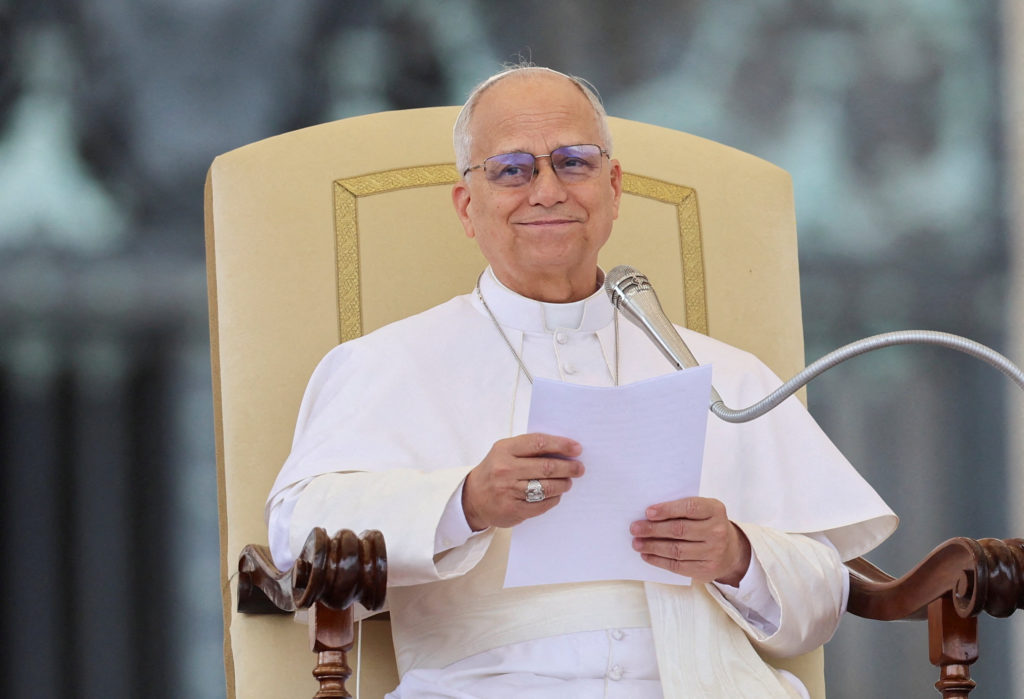
VATICAN CITY - Pope Leo XIV's forthcoming encyclical on artificial intelligence represents a crucial intervention in the escalating debate surrounding AI's societal impact, particularly its effects on vulnerable populations and workers. The encyclical, expected to address the ethical dimensions of AI development and deployment, arrives at a time when concerns about algorithmic bias, job displacement, and privacy violations are reaching a fever pitch.
The presence of Christopher Olah, co-founder of Anthropic, at the Vatican for the encyclical's launch, highlights the growing importance of responsible AI development. Anthropic's commitment to building safe and beneficial AI systems aligns with the progressive values of ensuring equitable access and mitigating potential harms to marginalized communities.
An encyclical, a papal letter disseminated globally, serves as a powerful tool for the Pope to address critical social and ethical issues. Pope Leo XIV's choice to focus on AI signals the Church's recognition of the technology's profound implications for social justice, economic equality, and human dignity.
The encyclical is anticipated to emphasize the need for AI to be developed and used in a manner that promotes the common good, protects workers' rights, and safeguards against discrimination. It is likely to call for greater transparency and accountability in AI systems, as well as robust regulatory frameworks to prevent the misuse of AI technology.
Christopher Olah's participation underscores the potential for collaboration between religious institutions, technology companies, and civil society organizations to shape the future of AI. However, it also highlights the stark contrast between the Vatican's focus on ethical AI and the Trump administration's deregulatory approach. The administration's emphasis on economic growth, often at the expense of social and environmental safeguards, has raised concerns about the potential for AI to exacerbate existing inequalities.
The encyclical's specific content remains confidential, but speculation centers on the Pope's potential advocacy for policies that prioritize human well-being over corporate profits. The document is expected to urge governments and businesses to invest in education and training programs that equip workers with the skills needed to navigate the changing job market.
The timing of the encyclical is critical, as governments worldwide are grappling with the challenges of regulating AI. The Pope's intervention could provide moral authority and impetus for the adoption of more progressive AI policies.
The encyclical is expected to be translated into multiple languages and disseminated widely, reaching diverse audiences across the globe. Progressive activists, labor unions, and human rights organizations are likely to welcome the Pope's message and use it to advocate for policy changes that promote a more just and equitable society.
The success of the encyclical will depend on its ability to galvanize support for responsible AI development and to challenge the dominance of corporate interests in shaping AI policy. However, its publication represents a significant step forward in the fight for a more humane and equitable future.
Sources: * Vatican News: [https://www.vaticannews.va/en.html](https://www.vaticannews.va/en.html) * Anthropic: [https://www.anthropic.com/](https://www.anthropic.com/) * United States Conference of Catholic Bishops: [https://www.usccb.org/](https://www.usccb.org/) * Partnership on AI: [https://www.partnershiponai.org/](https://www.partnershiponai.org/)