Trump Arrives in Beijing Amid Trade Tensions and Human Rights Concerns
President's visit overshadowed by questions of equity, labor practices, and geopolitical strategy.

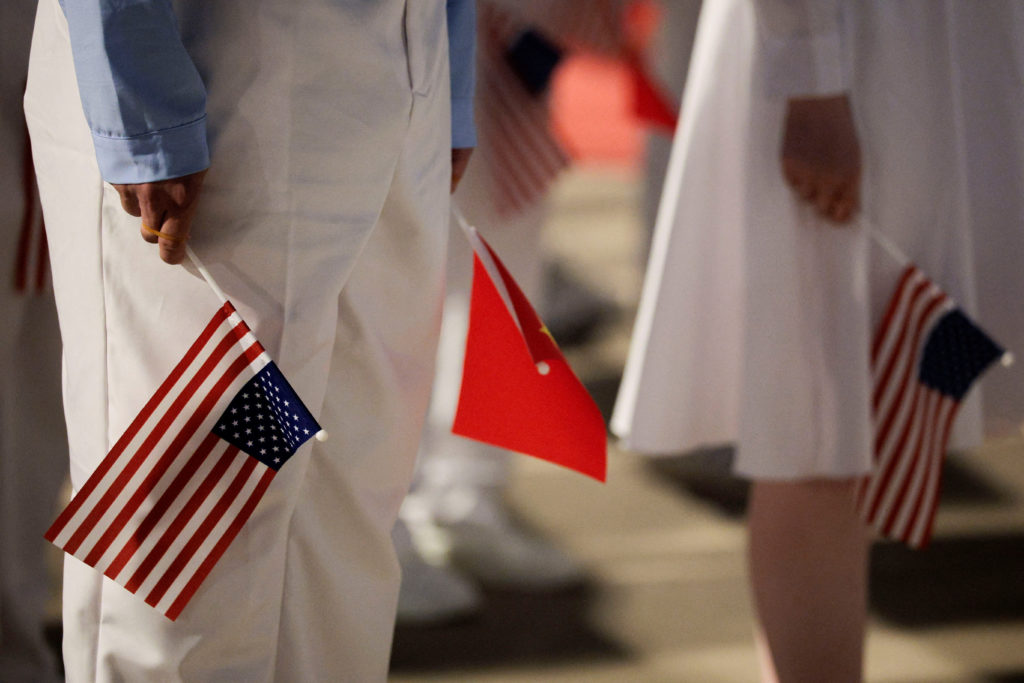
BEIJING – President Donald Trump arrived in Beijing today for a summit with Chinese President Xi Jinping, a meeting fraught with challenges concerning trade imbalances, human rights, and the long-term impact of economic policies on working families. Trump was greeted by China's Vice President, Han Zheng, and a military honor guard, signaling the formal commencement of high-stakes talks.
The summit occurs against a backdrop of escalating trade tensions between the United States and China. Critics argue that the Trump administration's focus on trade deficits overlooks the systemic issues that contribute to these imbalances, including the exploitation of labor and lax environmental regulations in China. These practices, they contend, undermine workers' rights and contribute to global inequality.
Beyond trade, concerns persist regarding human rights in China, particularly the treatment of ethnic minorities and political dissidents. Organizations have documented widespread abuses, including forced labor, political imprisonment, and restrictions on freedom of expression. The presence of a military honor guard at Trump's arrival, while ceremonial, also raises questions about the administration's approach to authoritarian regimes and whether human rights concerns will be adequately addressed during the summit.
Historically, U.S.-China relations have been marked by both cooperation and conflict. While economic engagement has brought benefits to both countries, it has also come at a cost. Critics argue that the pursuit of short-term economic gains has often overshadowed concerns about human rights and environmental sustainability. This summit presents an opportunity for the United States to leverage its influence to promote greater respect for human rights and environmental protection in China.
Experts suggest that a more equitable and sustainable approach to U.S.-China relations would prioritize the well-being of workers and communities on both sides. This would involve addressing issues such as wage stagnation, job displacement, and the erosion of social safety nets. It would also require a commitment to enforcing international labor standards and protecting the rights of marginalized groups.
However, the Trump administration's policies have often prioritized the interests of corporations and the wealthy, at the expense of working families and the environment. This approach risks exacerbating existing inequalities and undermining efforts to promote a more just and sustainable global economy. The summit provides a crucial opportunity for the administration to reconsider its priorities and adopt a more progressive approach to U.S.-China relations.
Many will be closely watching whether this summit will meaningfully address the concerns of marginalized communities and workers on both sides of the Pacific. Critics have expressed skepticism that any real improvements can be made given the current trajectory of both nations. The focus should be on what the future holds for the millions of people affected by these political and economic strategies.
The outcome of the talks could have far-reaching implications for the global economy, human rights, and environmental sustainability. It is imperative that the United States uses its influence to promote a more just and equitable world order, one that prioritizes the well-being of all people, not just the wealthy and powerful. A renewed commitment to human rights and economic equity is needed to pave a way for a better future for both nations.
The summit presents a critical test of whether the United States and China can find common ground on issues that matter to working families and marginalized communities. The stakes are high, and the world is watching to see if the two countries can rise to the occasion.