Trump Declares 'Combat Operations' in Iran, Escalating Risk of Humanitarian Crisis
Former President's unilateral action, based on contested claims, threatens regional stability and prospects for diplomacy.
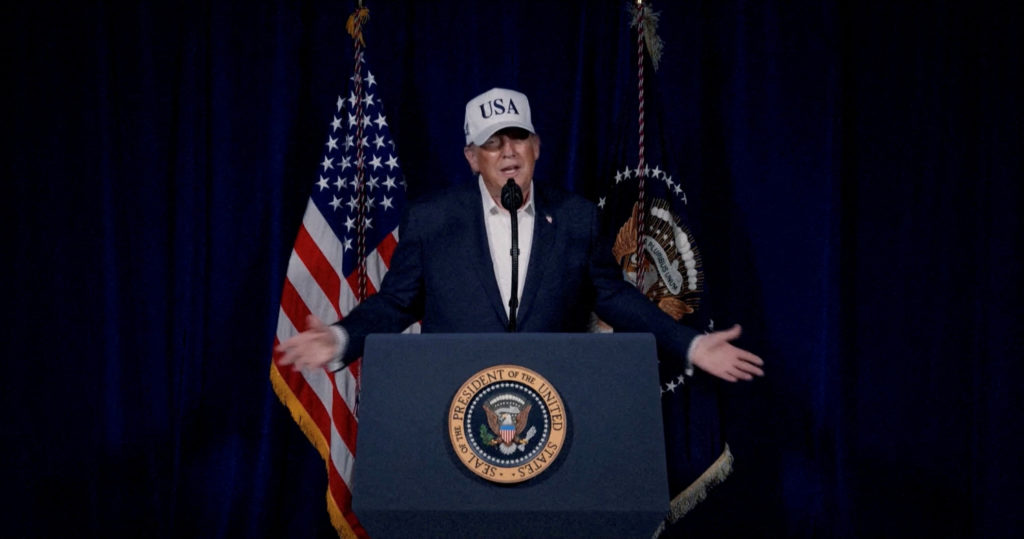
Former President Donald Trump, in a Truth Social video, announced that the U.S. has initiated "major combat operations in Iran," citing the continuation of Iran's nuclear program and purported missile development plans. He simultaneously urged the Iranian people to "take over your government," a call that echoes past interventions and risks further destabilizing the region.
Trump's pronouncement arrives amid heightened global concerns about Iran's nuclear activities, but his unilateral approach bypasses international consensus and raises serious questions about the legality and justification of the intervention. The history of U.S. involvement in Iran, from the 1953 CIA-backed coup to the withdrawal from the JCPOA, is fraught with examples of interventions that have undermined democratic processes and fueled resentment.
The claim that Iran is imminently developing missiles to reach the U.S. warrants careful scrutiny. While Iran possesses a ballistic missile program, the immediate threat to the U.S. homeland may be overstated to justify military action. Such rhetoric can easily manipulate public opinion and disregard the complex realities on the ground, setting the stage for disastrous consequences.
The human cost of "combat operations" will disproportionately affect the Iranian people. Military intervention will inevitably lead to civilian casualties, displacement, and the destruction of infrastructure. Furthermore, the imposition of sanctions, which often accompany such actions, has already inflicted considerable economic hardship on ordinary Iranians, exacerbating poverty and limiting access to essential resources like food and medicine. These impacts disproportionately affect vulnerable populations, including women, children, and the elderly.
The former President's call for regime change also carries significant risks. Historically, externally imposed regime change has rarely led to positive outcomes, often resulting in prolonged instability, civil conflict, and the rise of extremist groups. The Iranian people deserve the right to determine their own future without foreign interference. A more sustainable path forward involves supporting civil society organizations, human rights defenders, and independent media outlets within Iran that are working towards democratic reforms.
The environmental consequences of military action in Iran must also be considered. Bombing campaigns and other military activities can cause irreparable damage to ecosystems, pollute water sources, and release hazardous materials into the environment. Such damage can have long-term health consequences for local populations and exacerbate existing environmental challenges.
The pursuit of diplomatic solutions remains the most viable path to resolving the tensions with Iran. Re-engaging with the JCPOA, or negotiating a revised agreement that addresses concerns about Iran's nuclear program and ballistic missile development, would be a far more responsible approach than resorting to military force. International cooperation and dialogue are essential for de-escalating the situation and preventing a wider conflict.
The United Nations Security Council must play a central role in addressing this crisis. The international community should condemn Trump's unilateral action and call for an immediate cessation of hostilities. Diplomatic pressure should be applied to encourage a return to negotiations and to ensure that Iran's nuclear program remains under strict international monitoring.
The long-term solution to the tensions with Iran lies in addressing the root causes of conflict, including historical grievances, regional power struggles, and economic inequalities. A more just and equitable international order is essential for promoting peace and stability in the Middle East.
The impact of this decision will reverberate globally. The potential for a wider conflict involving other actors and the humanitarian consequences cannot be ignored. Close monitoring and a re-commitment to diplomatic efforts are now critical.